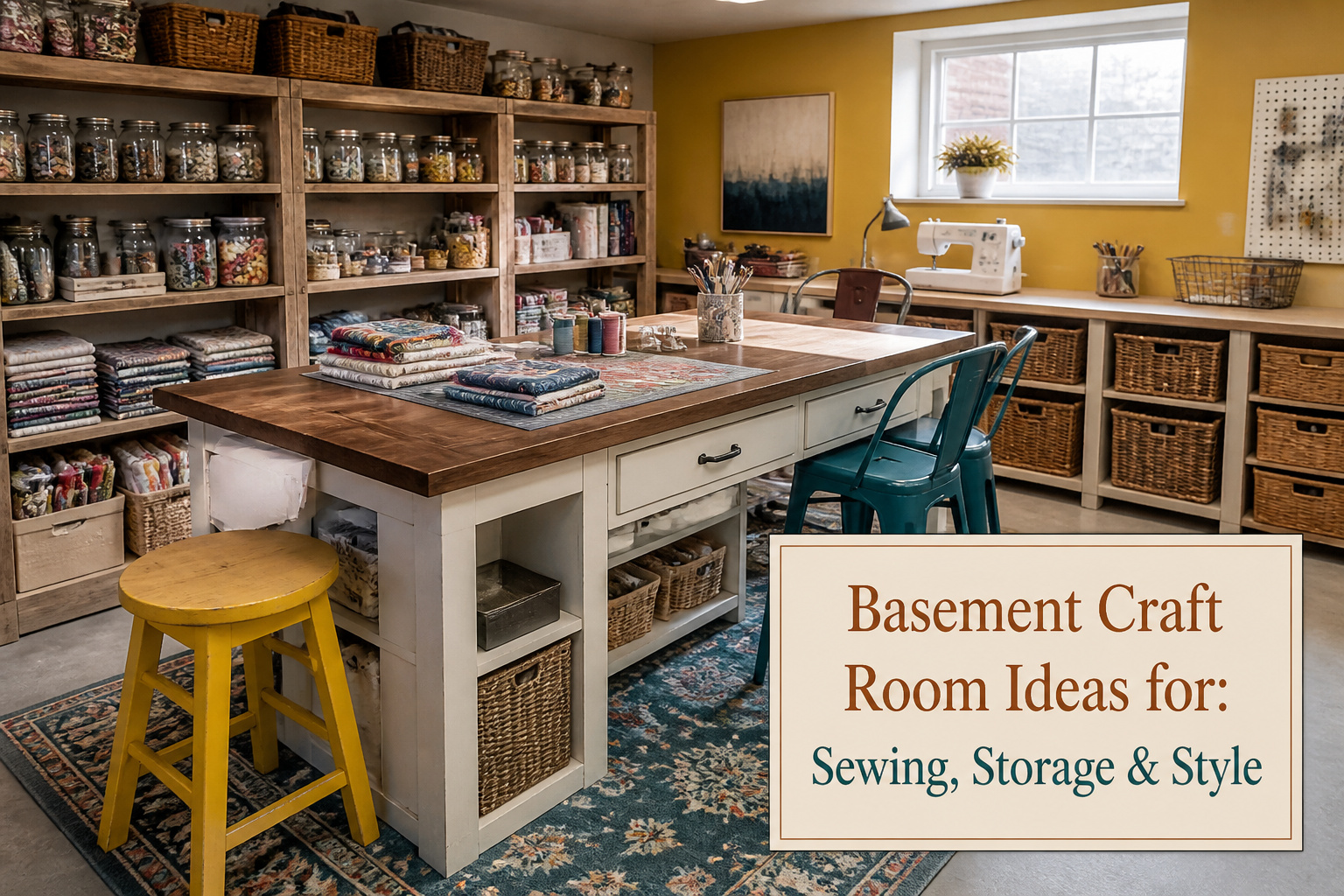
A basement craft room works only if the floor stays dry year-round; moisture turns carpet padding into mildew and stains concrete with every ignored leak. The difference between a space you avoid and one you descend into willingly comes down to color placed intentionally: a canary yellow stool, teal industrial seating, or a single wallpapered wall that fights the gray flatness below grade. That tradeoff, dry foundation against creative investment, is what separates the ideas that survive from the ones that sour.
1. Dedicated Sewing Space

Dragging a sewing machine out of a closet every time you need it is the fastest way to stop sewing altogether. I learned that the hard way after three years of leaving mine in the hallway closet. A basement corner can become a permanent sewing station without a single framed wall.
IKEA Sektion cabinets form the base of a desk that stores the machine below and gives you a flat work surface above. One source used them specifically because the line accepts a pull-out trash bin, which turns out to be just as useful for fabric scraps as it is for kitchen waste. Paint the cabinet fronts with Valspar cabinet paint if the raw finish feels too utilitarian.
Zoning the space without construction means using what is already there. A Kallax unit to one side holds a serger and boxes of supplies. A Bror cart on casters keeps cutting machines mobile. The pegboard you already own mounts to the wall above the desk for tools within arm’s reach. A Besta cabinet with doors hides fabric from sight, which matters in a basement where every surface can start to feel cluttered fast.
Arrange these three or four pieces in an L shape and you have a sewing corner that reads as a room. Leave a two-foot gap for the chair to roll back. The rest of the basement stays open for whatever comes next.
Recommended Products
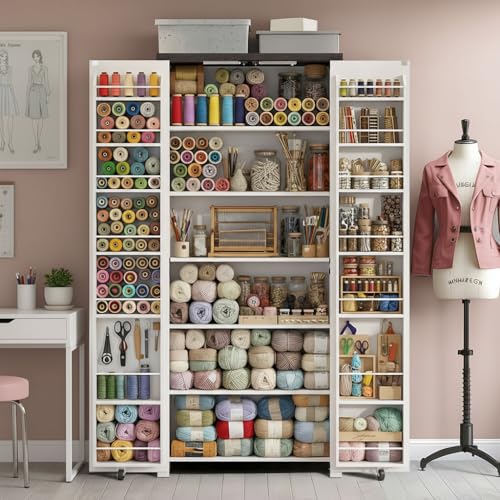
Multi-Functional Craft Organizers and Storage Cabinet: This 30"W x 16"D x 72"H craft storage cabinet doubles as a sewing cabinet with storage, offering dedicated compartments for fabrics, tools, and sewing machines - the ultimate organizational solution for creative spaces, ideal for empty nesters returning to sewing and small business owners managing Etsy inventory

UNLEASH YOUR CREATIVITY WITH EASE – This versatile craft cart features a spacious work surface and a drop leaf for extra space, allowing you to tackle any sewing project without feeling cramped

All-in-One Craft & Sewing Room Workstation: This versatile craft storage cabinet transforms any corner into a highly organized craft room workstation. Say goodbye to scattered sewing supplies and tangled threads. It’s the perfect craft room storage and organization solution for quilting, scrapbooking, and all your creative projects, keeping everything within reach yet out of sight.
2. Pegboard Storage

Concrete basement walls look like they want nothing to do with your craft supplies, but a pegboard changes that relationship entirely. The trick is giving it something to grip: furring strips anchored with masonry screws create a half-inch gap that keeps the board off damp block and gives hooks room to seat fully. Without that standoff, the pegs tilt and supplies sag.
Bulldog clips on standard hooks turn acrylic paint tubes into a color wall you can scan in a glance instead of rummaging through bins. For lighter gear, washi tape and scissors hang neatly on straight hooks; heavier rolls of Cricut vinyl need the deeper J-hooks or small shelving brackets designed for slatwall systems. The mix-and-match part matters more than the board itself: one wall can hold six different holder types, all repositioned without new holes when your next project shifts from sewing to vinyl work.
Paint the board if the basement ceiling is still bare studs and bulbs, or leave it raw for contrast against finished walls. Either way, the flexibility pays out when a January quilting phase replaces December’s gift-wrap station, and nothing is fixed in place from the year before.
Recommended Products

【Superior Sound Dampening】Art3d wood wall panels are engineered to significantly minimize noise levels in any setting. Crafted from high-density polyester fiber, these panels absorb sound waves, enhancing acoustics and fostering a more serene and comfortable environment
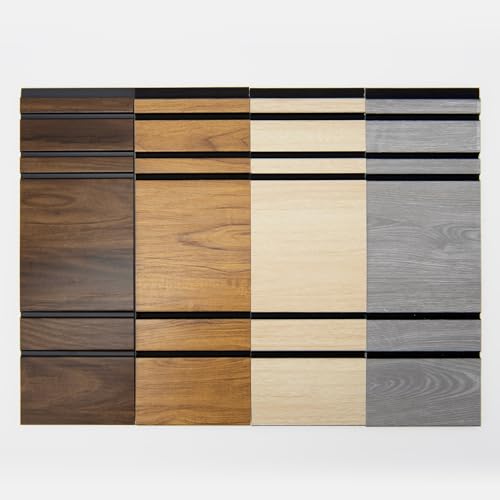
Durable & Lightweight: Crafted from recycled polystyrene, these wall panels are both sturdy and lightweight. They offer long-lasting performance without warping or cracking, ideal for home upgrades with less environmental impact

Cordless & Child‑Safe Design:Cordless mini blinds create a tangle‑free look while keeping homes safer for children and pets.
3. Colorful Decor

Basements drain color from everything. The same fabric that reads cheerful upstairs goes flat and gray below grade, so intentional color is not optional in a basement craft room; it is the difference between a space that invites you down and one that you avoid.
I learned this after painting my own basement craft area in SW Reflective White, the same shade Semigloss Design used for their reveal. It is a warm white with enough yellow in it to keep from going sterile under fluorescent tubes, and it bounces what little natural light exists back into the room. White ceilings and trim in the same tone do more of that work, essentially becoming your light source.
Where the color actually lives matters in a small footprint. One source went heavy on a canary yellow stool against white surfaces; another used teal industrial seating and a blue table against a single accent wall. Both approaches work because they concentrate the saturation in movable or limited elements rather than wrapping every vertical surface. Paint one wall, not four. Buy the bright chair, the red task stool, the painted lamp base from a thrift store. The Semigloss room added color through DIY projects and affordable IKEA pieces rather than built-in commitment, which means you can swap the palette when your tastes shift or when that mustard yellow starts feeling less creative and more caution tape.
Wallpaper is another concentrated play, like the Cole & Son Allium pattern one space used with sage green trim. It gives you pattern and saturation in one rectangle of wall rather than scattering both across the room. The key is keeping the surrounding cabinets and counters quiet so the eye has somewhere to rest. A basement already fights visual clutter from low ceilings and exposed systems; color should solve that problem, not add to it.
Recommended Products

Value Package: Our pegboard tool organizer comes with 120pcs pegboard accessories,16 different type pegboard hooks including 5pcs pegboard bins, curved hooks, angled hooks, straight hooks, and ring tool holder, multi tool rack. 49pcs of them are peg locks for fixing hooks

Value Package: Our pegboard tool organizer comes with 278pcs pegboard accessories, 16 different type pegboard hooks including 12pcs peg board bins, curved hooks, angled hooks, straight hooks, and ring tool holder, multi tool rack. 109pcs of them are peg locks for fixing hooks

COMPLETE KIT – Packed with 297 premium pieces, our peg board organizer accessories kit features 16 types of pegboard hooks including curved, angled, and straight hooks, along with 20 pegboard bins, a ring tool holder, a multi-tool rack, and peg locks to ensure secure, stable mounting for efficient garage organization
4. Multi-Functional Furniture

A basement craft room lives or dies on whether the table can shift from cutting fabric to packing up a half-finished bag without a forty-minute reset. I learned that the hard way after watching a friend spend an entire evening clearing one project just to start another. The piece that solved it for her was a simple desk with a shallow drawer underneath: rulers and rotary cutters slid in, the machine stayed put, and the top cleared in about ninety seconds.
The budget marker that actually matters is fabric at $6 per yard; that leaves room for furniture that earns its floor space. A cutting mat that lives on the table surface protects it without adding a step, and a silicone trivet dropped near the edge becomes a glue-gun rest that wipes clean. I saw that trick in a setup where the maker had hot-glued a $6-a-yard cotton cover right to the table edges so it never shifted mid-cut, then layered scrap paper over it for messy work. The whole thing peeled off when she moved out.
What separates usable from frustrating is height. A desk at standard writing height forces your shoulders up for precision work; an adjustable chair helps, but a surface that can stand in for a cutting station wins over a prettier piece every time. If it has to be one or the other, pick the one that lets you sew sitting and cut standing.
Recommended Products

Universal Compatibility: These L-size peg accesories work seamlessly with standard 9/32" pegboards (holes measuring 6.6mm to 7.15mm). These hole Inserts ensure snug holds on thicker wooden/fiber/plastic pegboards (2mm or more). (Tip: Use drill bits or cable heads to check hole size)

Compatible with wood or plastic pegboards with 1/4 inch holes (excluding steel)

Universal Compatibility: These S-size peg accesories work seamlessly with standard 1/4" pegboards (holes measuring 5.8mm to 6.35mm). These hole Inserts ensure snug holds on thicker wooden/fiber/plastic pegboards (2mm or more). For metal pegboards under 2mm thick, spacer shims are included for stable grips. (Tip: Use drill bits or cable heads to check hole size)
5. Lighting Solutions

Basements swallow light whole, so a craft room down there needs more than the single fixture most builders install. I learned this after squinting at fabric colors that looked completely different upstairs, where the sun actually reached them.
The fix is layering, and three separate switches controlling three separate sets of lights. One switch runs bright overhead LEDs for ambient glow. A second controls task lights: a swagged brass fixture over the main work table, maybe a glass lamp on a side station. The third switch handles color-accurate bulbs, the kind that show true thread and paint colors instead of the yellowed cast standard bulbs leave behind.
An electrician adding outlets anyway can run these circuits without much extra cost. The real mistake is waiting until everything is built to think about where shadows fall. Task lights belong directly over the spots where hands actually work, not vaguely in the room’s center. Color-accurate lighting matters most at the cutting table and the machine, where matching matters.
Basements need more light than above-ground rooms because walls are concrete or earth-backed, ceilings are lower, and windows, if they exist at all, sit at ground level catching almost no direct sky. What reads as adequate in a upstairs bedroom reads dim and flat below grade. Plan for roughly double the lumens you would use upstairs, then put them on those three switches so you are not blasting full brightness for every small task.
Recommended Products

Made of heavy duty molded ABS plastic.Fit shallow and deep sockets,Metric and SAE sockets.
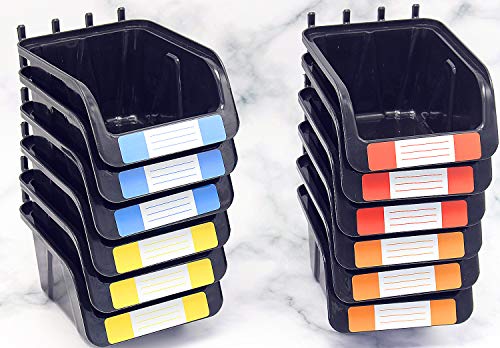
Fits any standard pegboard,and fit 1/8" hole diameter and 1/4 inch board thickness or less.

METAL NAILBOARD: Our peg board panels are made of high quality steel with a powder coated finish that is strong, scratch resistant and easy to clean. Each small pegboard has a weight capacity of up to 50 lbs. This is a favorite product for tool organizers, DIY enthusiasts, store owners and office workers.
6. Flooring Options

Concrete basement floors pull heat from your feet faster than you think, which is why the flooring decision matters more down here than in any upstairs room. Two approaches work, and the choice depends on how much moisture you are actually dealing with.
Warm concrete stain keeps the floor hard, easy to sweep, and free of seams where beads and pins disappear. It reads as intentional rather than unfinished, and it does not trap humidity the way a full carpet can. The catch is what happens when water comes through anyway: stained concrete shows every ring and dark patch, and by then the moisture has already been ignored too long. A dry basement is a prerequisite, not a hope.
If the space stays dry year-round, the thickest carpet pad you can buy changes how long you can stand at a cutting table. One sewer who finished her basement chose the best pad available specifically because cement underneath transmits cold straight up through thinner layers. The comfort difference is real, but the pad will hold water like a sponge if the foundation ever weeps. Ignoring moisture turns that soft warmth into mildew and a floor that smells like a basement no matter how pretty the rug on top.
Test the concrete for a full year, through spring thaw and heavy rain, before committing to anything that cannot survive a wet week.
Recommended Products

CRAFT YOUR DREAM SPACE – Tame your crafting chaos with the Sauder Craft & Sewing Armoire, designed to bring order and inspiration to your creative endeavors
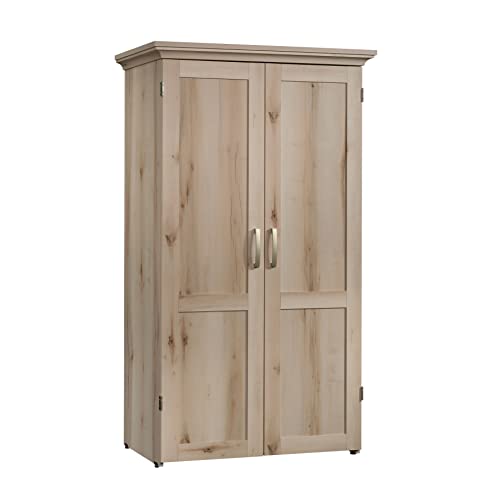
CREATE YOUR IDEAL CRAFT SPACE – This multi-purpose armoire features a spacious fold-out table, perfect for crafting, sewing, or working from home, allowing you to unleash your creativity in any room

CREATE YOUR IDEAL CRAFTING SPACE – Unleash your creativity with this versatile craft and sewing table, designed to inspire and accommodate all your artistic endeavors
7. Storage Solutions

Shelves earn their place first because they cost almost nothing secondhand and hold the supplies you reach for daily. A small three-shelf unit from a thrift store, maybe four dollars, sits right on the craft table and keeps acrylic paints visible and within arm’s reach. Open storage beats closed cabinets for craft rooms because you cannot use what you cannot see; a jar of buttons or a spool of lace tucked behind a door stays forgotten until you have already bought a replacement.
Paper stores flat in cubbies or upright in bins, the same way vintage shops file records. Fabric does better rolled or folded on open shelves where color and weight are obvious at a glance. Small tools, paint tubes, and spice-rack organizers mount on walls or the sides of existing units, turning the narrow gaps between work zones into usable territory. A repurposed window frame becomes rack and display for trims and laces at once.
The wall opposite your main workspace can carry built-in cupboards for the bulky, awkward, or unfinished projects you would rather not look at, but the working wall stays open. Closed storage hides the brewing supplies and the pantry overflow; open storage runs the room you actually work in.
Recommended Products

【Superior Sound Dampening】Art3d wood wall panels are engineered to significantly minimize noise levels in any setting. Crafted from high-density polyester fiber, these panels absorb sound waves, enhancing acoustics and fostering a more serene and comfortable environment

【Superior Sound Dampening】Art3d wood wall panels are engineered to significantly minimize noise levels in any setting. Crafted from high-density polyester fiber, these panels absorb sound waves, enhancing acoustics and fostering a more serene and comfortable environment

【Superior Sound Dampening】Art3d wood wall panels are engineered to significantly minimize noise levels in any setting. Crafted from high-density polyester fiber, these panels absorb sound waves, enhancing acoustics and fostering a more serene and comfortable environment
Heating and Cooling

A basement craft room sits below grade, so temperature swings hit harder down there than they do upstairs, and your supplies feel it before you do. Glue turns sluggish below 60°F. Paint thickens and skins in the can. Even thread can go brittle if the room stays cold long enough.
For heat, a wall-mounted ceramic heater keeps the floor space clear and puts warmth right where you stand. The cement slab underneath will always pull some of it away, which is why pairing it with a thick carpet pad buys back a few degrees through your feet. In summer, most basements stay cool enough that a simple fan does the job; the real fight is usually humidity, not heat.
The mistake is treating climate control as an afterthought and finding out in January that your adhesives have gone tacky and useless. Plan for it when you lay out the room, not after the shelves are full.
Recommended Products

EFFICIENT ORGANIZATION - Maximize space and minimize clutter with this pegboard organizer. Very suitable for garages, workshops, and craft rooms, these pegboard hooks and bins keep tools, screws, and accessories in perfect order.

Versatile Pegboard Accessory – A huge step up from peg board drill hooks, The MADD Tools pegboard drill holder rack is designed to fit up to 3 drills, making it a versatile addition to your pegboard accessories. Universal drill holder accommodates all brands and sizes of drills.

Suitable for organizing garage tools or garden tools and all kinds of tools. Fits all standard 1/8" and 1/4" pegboard hooks. A nice choice for storing and holding your tools in home, garage, apartment, utility room, basement or shed.
DIY Projects for Custom Pieces

A sturdy work table matters more than almost anything else in a basement craft room, and building one yourself takes less time than most people assume. One approach that has worked well for others: repurpose an old interior door as the tabletop, then add a simple frame and legs beneath it. The door gives you a large, flat surface and the cavity underneath becomes instant storage for bins or a rolling cart. The whole project runs about a weekend if you have the door already, and the materials list stays short: two-by-fours for the frame, four legs cut to standing height, and a plywood shelf if you want that lower deck enclosed.
Wooden drawers pulled from old furniture work the same way for smaller storage. They stack, they slide, and a drawer with its front still on looks intentional sitting on a shelf. Dividers inside can be cut from old wooden slats or scrap trim; the slats need only a handsaw and wood glue to turn one open box into compartments for paper, ribbon, or tools. Cigar boxes take dividers the same way if you want something smaller for a desktop.
The mistake to avoid is oversizing the table for the room. A door sounds generous until it blocks the path to your shelving. Measure your floor space and cut the door down, or build the frame to leave walking clearance on all sides.
Recommended Products

Ring style design: each pegboard metal hook has 12 ring style pegboard hooks, and each side can be placed 6 rings, they can store screwdrivers, pliers and other daily necessities, very suitable for hanging light items and common tools, saving time and space

<b>🔩【Pegboard mounting kit】</b>: package comes with 172Pcs Pegboard mounting kits, including 43Pcs Screws, 43Pcs Washers,43Pcs Spacers and 43Pcs Lock Clips, enough quantity to meet your needs and replacements,The length of the nail is 2 inch / 50mm, the depth of the spacer is 0.48 inch / 12mm, and the diameter of the gasket is 0.48 inch / 12mm

Ring style design: each pegboard metal hook has 12 ring style pegboard hooks, and each side can be placed 6 rings, they can store screwdrivers, pliers and other daily necessities, very suitable for hanging light items and common tools, saving time and space
Budget Storage That Looks Intentional

Thrift stores are where the best basement craft room storage hides in plain sight. A small three-shelf unit, the kind meant for bathroom corners or kitchen nooks, sits perfectly on a craft table and keeps acrylic paints within arm’s reach. I look for these near the housewares section, usually priced at a few dollars, and the narrow footprint means they do not eat workspace.
China cabinets and display shelves are another thrifted piece worth repurposing. The glass fronts that once held gravy boats now show off button jars and works in progress, turning storage into something that looks styled rather than stuffed away. The trick is editing what goes inside: too many mismatched items and it reads as clutter, but a limited palette of containers in two or three materials reads as intentional.
For rolls of paper, ribbon, or vinyl, grocery bag storage holders mounted vertically get material off the floor and onto wall space. The vertical orientation keeps rolls from creasing and the slim profile tucks beside a door or between studs. Cheap hardware-store versions work; the modification that saves them is spacing them at a consistent height and choosing one color of holder instead of mixing white, chrome, and black.
Recommended Products

WallPeg Kit has - 4 Large bin (4” x 7” x 3”) & 4 Medium bins (4" x 5" x 3") Pegboard accessories for storing Office - Workshop - Crafts - Hardware Items - Large Heavy Duty Bins mount to Standard Pegboard

LARGE CAPACITY STORAGE – The SWANLAKE Magnetic Wrench Organizer holds up to 24 combination wrenches, offering a convenient and efficient storage solution. Perfect for your toolbox, chest, truck, or workbench, keeping all your ratchet and stubby wrenches neatly organized

COMPLETE KIT - Includes 120 pegboard accessories with 16 hook styles, 5 pegboard bins, ring tool holders, multi-tool racks, and stainless steel peg locks, providing an organized storage solution for tools, hardware, and workshop essentials.
Making a Basement Room Feel Inviting

A basement craft room lives or dies on whether you actually want to spend time down there. Bright paint helps, and the spaces that pull this off tend to go bold: a canary yellow stool against white built-ins, teal industrial stools at a blue table, or a full floral wallpaper like the dramatic pattern in Amber Oliver’s room. Paint the ceiling dark, not white — brown or green tones hide the ductwork and pipes that basements can’t lose, and an industrial painted exposed beam treatment turns that liability into a deliberate look rather than a reminder that you’re underground.
The real difference comes from what you add after the color. Living elements that survive low light soften the bunker feeling; a pothos or snake plant on a shelf does more for the mood than another storage bin. A warm concrete stain on the floor reads as intentional, not unfinished, and keeps the space from feeling like a workshop you tolerate. The craft rooms that feel inviting hide the utilities without disguising them entirely — painted beams acknowledge the infrastructure, but a coat of dark paint lets it recede so the bright furniture and projects become the focus.
Frequently Asked Questions
What are some budget-friendly craft room storage ideas?
Thrifted shelves and repurposed china cabinets work well for under a few dollars. A small three-shelf unit sits right on the craft table and keeps paints visible and within arm’s reach. Grocery bag holders mounted vertically store rolls of paper, ribbon, or vinyl without creasing them, and old wooden drawers stack for compartmentalized supply bins.
How can I make my basement craft room more inviting?
Paint the ceiling dark brown or green to hide ductwork and pipes, then add bright furniture like a canary yellow stool or teal industrial seating against white surfaces. Living elements help too; a pothos or snake plant on a shelf softens the bunker feeling more than another storage bin would. Warm concrete stain on the floor reads as intentional rather than unfinished.
What type of lighting is best for a basement craft room?
Layer three separate switches controlling three separate sets of lights. One switch runs bright overhead LEDs for ambient glow, a second controls task lights directly over work spots, and the third handles color-accurate bulbs that show true thread and paint colors. Plan for roughly double the lumens you would use upstairs, since concrete walls and low ground-level windows swallow light whole.