
Wainscoting is decorative paneling that covers the lower third of a wall, and in a basement it does more than look finished: it protects drywall from the moisture, scuffs, and wear that below-grade walls collect. The catch is that basements rewrite the material rules. Real wood rots against concrete that holds humidity; PVC beadboard survives it, though it trades some warmth for that waterproofing. Most homeowners never budget for the sealing step, but MDF swells like a sponge if end grain touches damp air unprimed.
Beadboard for a Cozy Family Room

Beadboard wainscoting painted white or a soft pastel brightens a basement family room without feeling formal. The vertical grooves catch light and add texture that reads as charm rather than finish carpentry, which matters when the space doubles as a TV room and a place kids crash with snacks.
PVC beadboard is the practical move below grade. It is 100% waterproof and mold-resistant, so the same paneling that looks casual in a beach house survives the humidity that concrete walls hold onto. Real wood rots in that environment; PVC does not, though it sacrifices some of the warmth and variation of actual lumber.
The traditional height for beadboard follows the rule of thirds, with the wainscoting covering roughly one-third of the wall. That proportion keeps the room from feeling chopped in half, and it leaves enough painted wall above to carry color or artwork without competing with the paneling. In a low-ceilinged basement, that vertical breathing room matters more than it would upstairs.
Recommended Products

Includes Deluxe Style Top & Bottom Rail

Dimensions: 94-1/2 in. Width x 44 in. Height x 0-5/8 in. Thickness x 28.92 Sq. Ft.

Japandi & Scandi Style: the light oak wood grain finish embodies the essence of japanese and scandinavian design— clean, natural, and calming, ideal for creating a zen space, yoga studio, spa like bathroom, or an airy organic modern living area
Raised Panels for a Home Bar

Raised panel wainscoting reads as intentional in a basement bar, where the molding catches low light and gives the wall actual depth. Solid wood carries the richest stain, usually the most expensive of the material options, and dark walnut or espresso finishes hide the scuffs that collect behind a row of stools. That same wood swells if the basement runs humid, so sealing every surface, top and back and groove, is not a step to trim. The usual rule for height, the one-third mark measured from the floor, keeps the panels below eye level when someone is seated at the bar. Below that line, the panels ground the room; above it, open wall or shelves handle the rest.
If you’re adding wall panels to a room without wainscoting, make sure at least one-third of your wall is covered, starting from the floor up.
For a bar area, that proportion puts the cap rail roughly at chair-back height, which is where you want it. MDF and PVC cost less and skip some of the sealing, but they do not take stain the same way. The dark-stained wood look is the one that sells the room as finished, and in a basement project that is usually the whole point.
Recommended Products

MDF Material for Lasting Use: this board and batten wall panel kit is made from MDF, offering sturdiness and water resistance; The surface is smooth, providing a comfortable touch for interior wall applications

Pre-Cut Arch Wainscoting Panel Board:A complete set of 4 pre cut arched wall decorative strips, each set containing 9 components: one arched component and 8 vertical strips, totaling 36 components; These 9mm thick panels can be easily connected, adding a delicate touch to doors or walls

PVC WALL PANELS, 6-PIECE KIT: Elevate your walls with Plastpro’s 3-ft wainscoting panel kit. The complete solution for bathrooms, kitchens, bedrooms & living rooms. Includes 6 reversible PVC panels (3 ft high × 7¼ in wide), each pre-finished, pre-grooved, and ready to interlock. No nails or adhesive required.
Board-and-Batten for a Home Office

Board-and-batten wainscoting brings a vertical rhythm that works especially well in basement offices, where low ceilings and long walls can feel boxy. The stripes draw the eye upward, and the grid pattern gives enough structure to anchor a desk without turning the room into a paneled vault.
For this style, MDF is the budget move, running roughly a third less than solid wood boards. The tradeoff is moisture: MDF swells like a sponge if basement humidity finds an edge. Seal every cut, front and back, with an oil-based primer before anything touches the wall. Skip this step and the battens will telegraph seams within a season.
Caulk matters down here too. Standard acrylic latex holds water against the board edges; a mildew-resistant formula, labeled for bathrooms or exterior use, buys insurance against the damp corners every basement collects. Paint follows the same rule. Semigloss or satin in a mildew-resistant interior formula wipes clean and sheds moisture better than flat finishes. Two coats over that sealed MDF, and the wall behaves almost like wood at half the price.
Recommended Products

Board and Batten Layout: Create classic board and batten wall panels with structured rectangular sections, eliminating the need to cut and measure raw lumber

Board and Batten Layout: Create classic board and batten wall panels with structured rectangular sections, eliminating the need to cut and measure raw lumber
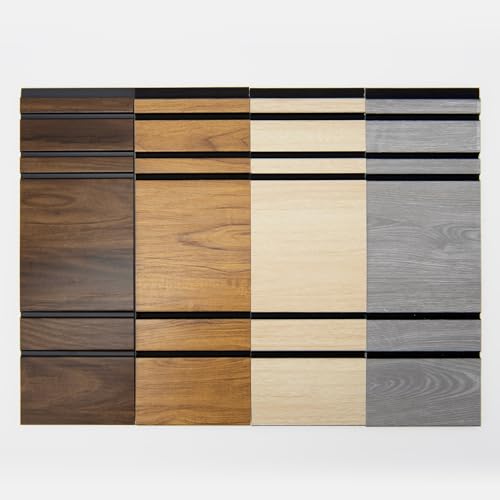
Durable & Lightweight: Crafted from recycled polystyrene, these wall panels are both sturdy and lightweight. They offer long-lasting performance without warping or cracking, ideal for home upgrades with less environmental impact
Two-Tone in a Kids’ Playroom

Two-tone wainscoting turns a basement playroom into a space that can handle real kid life without looking like an afterthought. The lower panel takes the scuffs and crayon marks while the upper wall stays light enough to fight that below-grade heaviness. Off-white above the chair rail keeps things airy where natural light is already scarce, and a deeper tone below, something like a warm gray or navy, hides the wear that starts showing up around week three.
Washable finishes matter more than the color itself. Eggshell or satin on the upper wall wipes clean without the glare of full semi-gloss, and the wainscoting itself should carry something tougher, a scrubbable paint or a pre-finished PVC that doesn’t mind bleach wipes. I have seen the same combo, pale upper and charcoal lower, work in three different basements now, and the ones that held up best were the ones where the owner spent the extra hour on a proper moisture seal behind the boards. Without that step, the prettiest color split in the world starts bubbling at the baseboard by spring.
Recommended Products

Premade Board and Batten Paintable Wainscoting Kit: Package includes 10 premade molding trim slats, 2 decorative edge strips, and two pairs of gloves for convenient installation

MDF Material for Lasting Use: this board and batten wall panel kit is made from MDF, offering sturdiness and water resistance; The surface is smooth, providing a comfortable touch for interior wall applications

Premade Board and Batten Paintable Wainscoting Kit: Package includes 20 premade molding trim slats, 4 decorative edge strips, and two pairs of gloves for convenient installation
Upholstered Wainscoting in a Home Theater

Most basement theater builds fixate on the screen and seating while the walls stay bare drywall that throws sound everywhere. Upholstered wainscoting fixes that by turning the lower wall into a soft surface that soaks up echo before it bounces. The panels sit at the height where voices and low-frequency rumble hit hardest, so the difference is immediate: dialogue clears up, and the cheap subwoofer you already own suddenly sounds like it belongs in the room.
The catch is basement air. Fabric against a concrete foundation wicks moisture straight into the padding, and within a season you smell it. Rigid foam backing with a vapor barrier between the panel and the wall buys you time, but only if the fabric itself can tolerate a damp cycle. Outdoor-rated performance fabrics or vinyl-backed suedes survive where standard upholstery rots; I would skip anything with a natural jute or cotton backing entirely. Mold-resistant batt inside helps, though it adds cost most people do not budget for.
Installation runs trickier than wood wainscoting because every panel needs to come off for cleaning or drying if humidity spikes. Magnetic or cam-lock frames beat permanent adhesive for that reason alone. The look is quieter than leather recliners and acoustic foam would suggest, more finished lounge than DIY cave, which is why it works best when the basement theater doubles as a guest space or the room you actually want to sit in.
Recommended Products

Crafted from premium solid MDF material, these arched wall decorative strips feature smooth burr-free edges, sturdy textured construction for long-lasting use. The blank unfinished surface supports custom painting, letting you match any wall color and interior aesthetic.

Stylish Wall Upgrade: This wainscotting wall panel kit adds texture and charm to any space. The 37.8” tall beadboard panels create a beautiful decorative accent for living rooms, bedrooms, kitchens, studies, and more
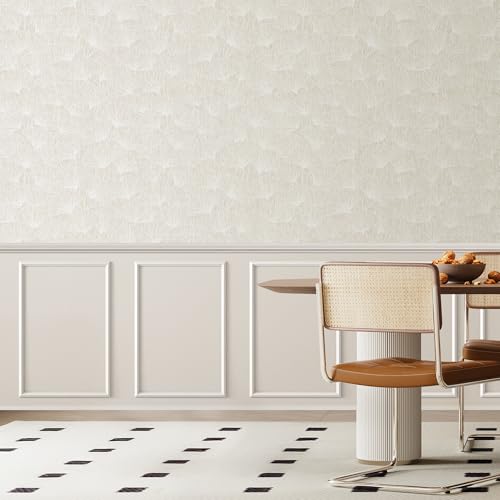
Transform Your Space: The peel and stick wall panels will completely change the aesthetic of the entire space, easily convert the drab space into a classy, high-end look space. These wainscoting panel is ideal for living room, bedroom, dining room, hallway, bathroom, office, etc.
Shiplap for a Rustic Game Room

Horizontal boards give a basement game room the relaxed, barn-adjacent feel that makes pool cues and dartboards look like they belong there. Shiplap wainscoting runs the boards edge-to-edge with a slight gap, catching shadow and giving the wall something to do below chair rail height without demanding attention.
Solid wood swells and shrinks with basement humidity, so most weekend builds I read through went with MDF or PVC instead. MDF stays smooth and takes paint beautifully, though it must be sealed properly or it can swell in moisture. PVC carries its own moisture resistance and asks for less upkeep near the concrete line where basements stay damp longest. Either way, a quality primer and semi-gloss or satin finish repel the handprints and drink rings that collect in a room built for hanging out. Skip the high-gloss; it reads rec-room fluorescent under overhead bulbs.
Paint the boards before cutting if you can. The tongues hide once installed, but the gaps between courses stay visible, and touch-up with a brush never quite matches the factory-flat of a sprayed coat.
Recommended Products
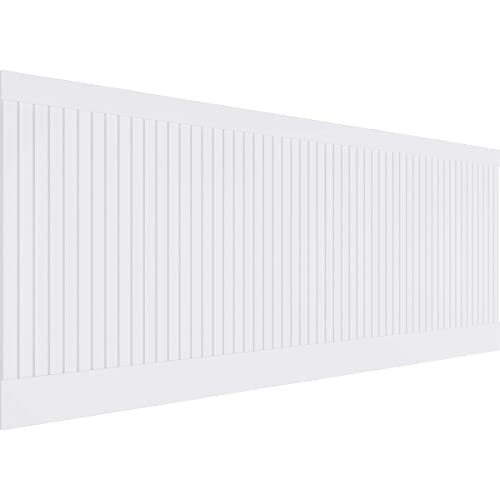
Dimensions: 94-1/2 in. Width x 40 in. Height x 0-5/8 in. Thickness x 26.24 Sq. Ft.
Includes Deluxe Style Top & Bottom Rail

Flexible Sizing, Easy Cutting: reversible PVC wainscoting panels are approximately 7 inches/18 cm wide, 3 ft/ 91.44 cm high, and 0.25 inch/0.65 cm thick, with a set of 10 panels; The panels can be easily cut to any length to fit various corners and spaces, achieving a seamless, professional installation
Tile Wainscoting in a Wine Cellar

Tile wainscoting up to three feet high handles the damp corner of a basement where nothing else survives. In a wine cellar, that height clears most bottle racks and leaves masonry above to breathe. 100% waterproof and mold-resistant properties matter more down here than in any finished room upstairs, because concrete sweats and small floods happen.
The install runs differently than wood-based wainscoting. You are not sealing edges against humidity; you are working with a material that does not care about humidity at all. No mildew-resistant caulk in the joints for protection, no semigloss paint or polyurethane finish to maintain. PVC tile goes up with standard adhesive and grout, the same process as a bathroom, and cleaning means a damp cloth without the two-parts-vinegar solution wood demands. The tradeoff is the look. Real beadboard or raised panels carry a warmth that PVC tile does not pretend to match. In a cellar with dim lighting and wood shelving, that clinical surface can read utilitarian rather than atmospheric. For some homeowners the durability wins outright. For others, the compromise shows.
Recommended Products

PRIMED & READY TO PAINT: Factory-primed solid pine planks are ready for your chosen paint color, helping you create beautiful beadboard wall panel designs for wainscoting, bathrooms, hallways, and interior wall panels. Each box includes 12 individual wainscoting planks that install one by one to create a wainscot look. One box covers up to 3.5 linear feet of wall when installed vertically. As a natural wood product, allow 48–72 hours for acclimation before installation.

Transform Your Space with Ease - The wall panels for interior wall decor will help bring blank walls to life and create a sophisticated wall paneling look that elevates your home's aesthetic
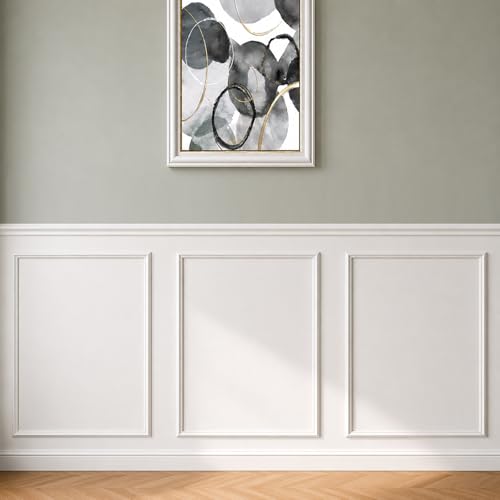
Pre-cut Wall Molding Kit : Our wall moldings include 6 pieces of 24 inch decorative strips and 6 pieces of 32 inch decorative strips.Can be freely matched according to your needs,bringing an elegant finished appearance to doors or walls
Dark Wainscoting for a Dramatic Look

Dark wainscoting in a basement reads as intentional, not accidental. The lower half of the wall absorbs light instead of reflecting it, which can flatten the space visually if you are not careful. Dark colors need more light than you think, especially below grade where window wells already struggle. A single overhead fixture leaves the panels looking like a black hole at knee height; sconces or picture lights aimed downward bring the texture back to life. I have seen rooms where the wainscoting was painted charcoal and the upper walls stayed warm white, and the contrast worked because the trim and the ceiling stayed bright enough to read the room’s edges. Stain shows grain, paint shows geometry; either way, the drama costs you some perceived depth. In a narrow basement, that trade usually favors keeping the dark treatment to one feature wall rather than wrapping the room. The finish also matters more with dark colors. Brush marks catch light unevenly, and dust sits on flat paint like a chalk line. A satin or semi-gloss sheen wipes clean and bounces enough light to keep the panels from swallowing the floor whole.
Recommended Products

All-in-One Design - Package of 20 premade molding trim slat + 4 decorative edge strip create instant board & batten walls
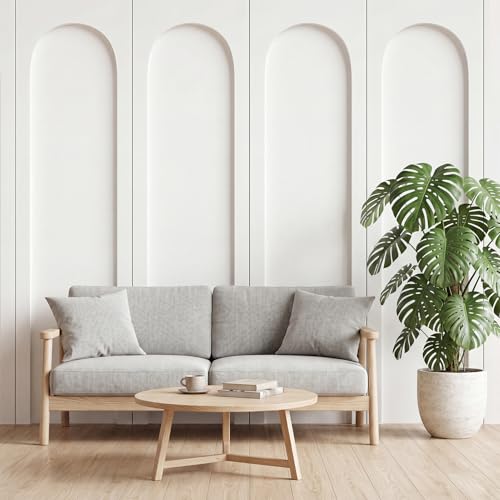
Transform Your Space with Ease - The wall panels for interior wall decor will help bring blank walls to life and create a sophisticated wall paneling look that elevates your home's aesthetic
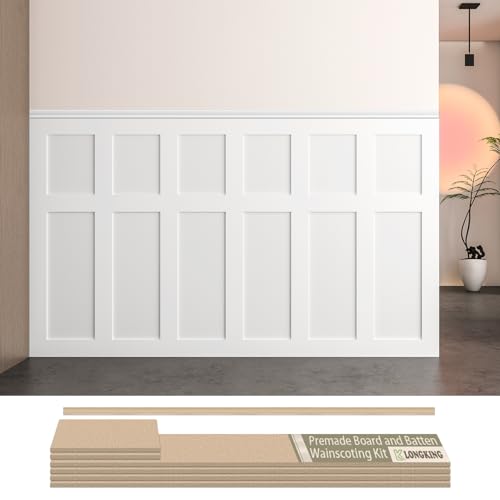
Board and Batten Wainscoting Kit – LONGKING pre-cut MDF wall panel kit is designed for easy DIY installation. Create a stylish accent wall with classic board and batten molding trim, perfect for modern and traditional home décor.
Monochromatic Wainscoting

Painting the wainscoting and the wall above it the same color removes one visual line your eye has to process. In a basement with an eight-foot ceiling or a small window, that simplification matters more than most people expect. The paneling still adds texture and protects the drywall from chair backs and moving boxes, but the room reads as larger because the color doesn’t chop it in half.
White or off-white is the default for a reason. It reflects what little light the space gets, and finding a matching trim paint is straightforward. But a monochromatic scheme doesn’t have to mean white. A soft gray like Feather Gray on both surfaces keeps the calm while adding more depth than stark contrast would. The key is keeping the values close enough that the transition between panel and wall feels intentional, not like a mistake you haven’t fixed yet.
Keep the sheen consistent too; satin wainscoting against flat walls will break the effect even when the color matches.
Recommended Products
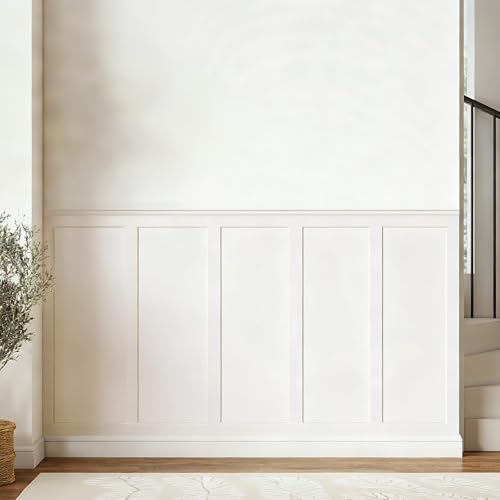
【Coverage】Includes 10 pre-cut wall molding slats and 2 shelf edge strips to create a clean board & batten look. (No peel-and-stick adhesive or nails included)

ALL-IN-ONE WALL PANEL KIT:Includes 10 premade molding trim pieces and 2 decorative edge strips, providing everything needed to create a stylish board and batten accent wall with a clean, professional finish

Wall Molding Kit: the MDF board and batten wall panel kit includes 1 set of wall trim strips; The strips are 4cm wide and 9mm thick, consisting of 21 strips of 87cm width, 12 strips of 100cm width, and 6 strips of 75cm width, for a total of 39 strips; The finished size is 118 x 103 inches; You can paint, stain, or further decorate them according to your preferences to achieve your desired style and color
Wainscoting with Wallpaper

Wallpaper above wainscoting breaks up the flat planes of a basement wall without closing the space in, which matters when ceilings sit lower than upstairs. The chair rail gives you a clean stopping point for the paper, so the pattern stays where eyes naturally rest rather than creeping into territory that would feel busy overhead.
Basement humidity is the practical wall you hit. Standard paper paste softens in damp air, so vinyl-coated or solid-vinyl papers hold up where uncoated stock peels within a season. Some homeowners run a small dehumidifier year-round and treat the wainscoting itself as the moisture buffer, keeping the lower wall in paintable MDF or PVC while the paper lives in the drier air above.
Installation order matters more than in above-grade rooms. The wainscoting goes up first, level and secure, with the chair rail cap installed as the finish edge. Paper follows, cut to terminate under that rail cap by a quarter inch so the wood covers any slight waver in the cut. A bead of paintable caulk along the top edge of the rail seals the gap without calling attention to itself.
For color direction, coastal hues pair cleanly with white beadboard. Benjamin Moore’s Aquarius 788, Mustard Field 377, Outer Banks 1206, or Pomegranate AF-295 each give the upper wall presence without fighting the paneling below.
Recommended Products

What You Will Receive: you will receive 3 sets of pre cut wall decorations, each set has 10 pcs, total 30 pcs, which can be freely matched according to your needs, they attaches easily and gives doors or walls elegant finished look .
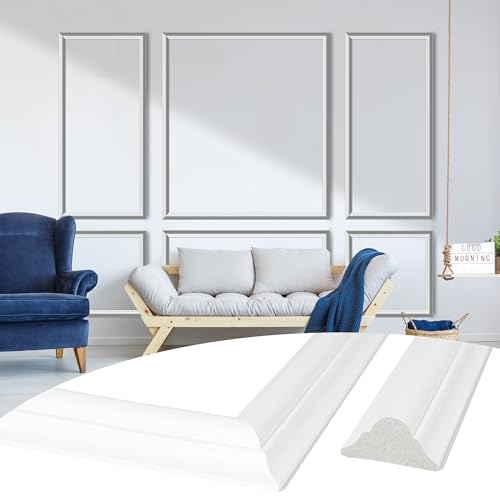
【Premade Wall Molding Kit】Our wall moldings come pre-cut, removing the hassle of cutting and aligning, which streamlines the installation process and makes it simpler for you to adorn your walls, offering a blend of traditional elegance with a touch of modern sophistication.

Instant Wall Makeover: Tired of boring, flat walls? Our pre-cut molding kit adds instant depth and architectural detail, turning your living room or bedroom into a magazine-worthy space
Accent Walls with Wainscoting

Covering just one wall with wainscoting keeps the basement open while still giving it a finished feel. A single accent wall draws the eye to a fireplace, built-in shelving, or the back of a sofa without closing in a room that already fights low ceilings. The sources back this directly: wainscoting only covers the lower section, which maintains openness in lower-ceiling spaces while adding that immersive depth.
Budget plays into this too. One wall of raised panels or board-and-batten costs a fraction of wrapping the room, and in a mixed-use basement that splits between a play area and a guest corner, stopping the paneling at a logical break keeps each zone from shouting over the other. Paint the wainscoting in Atrium White OC-145 against a deeper upper wall like Beacon Hill Damask HC-2, and the contrast does the work of defining the space without extra walls.
The trick is knowing where to stop. Run wainscoting to the edge of a doorway or the end of a seating group, never mid-wall where it looks like you ran out of material. That stopping point should line up with something the eye already accepts as a boundary.
DIY "Feign"-Scoting Ideas

Paint can fake the architecture where boards would eat too much budget or weekend. Feign-scoting costs a fraction of real millwork and finishes in hours, not days. The trick is a crisp line between two colors, lower and upper, with the break standing in for a chair rail. Benjamin Moore suggests pairings like Cushing Green HC-125 below and Crystalline AF-485 above, or Shadow 2117-30 against Palest Pistachio 2122-60, the contrast doing the visual work that molding usually handles.
Basements complicate this. The painted illusion reads flat up close, and concrete walls with slight moisture movement will telegraph every seam or tape edge over a season or two. Real wainscoting at least gives you a physical buffer; paint gives you only the image, and the image chips. For a dry basement with smooth drywall already in place, feign-scoting is a fast Saturday project. Where walls show any history of damp, the savings probably do not justify the touch-ups.
Color Combinations for Wainscoting

Most wainscoting gets painted white or off-white, and that choice makes sense in a basement where light is already scarce. White beadboard against gray walls bounces what little daylight there is back into the room, and the contrast creates depth without closing the space in. Pastels work the same way if solid white feels too sterile for a family hangout.
Bold colors are a risk below grade, but they pay off when the lighting is right. Green, blue, even a dramatic purple can turn the lower wall into a focal point instead of a blank. The catch is that color absorbs light, so a dark wainscoting in a dim corner will read as a shadow eating the floor. Pair bold wainscoting with brighter walls and good overhead lighting so the color reads as intentional, not gloomy.
The height of the paneling matters too. Wainscoting that stops at chair-rail height leaves most of the wall open, which keeps a low-ceiling basement from feeling boxed in. That upper expanse is where you want your lighter color doing the work.
Traditional vs. Modern Wainscoting

Traditional wainscoting leans on ornate profiles, raised panels, and decorative chair rails that read as formal and finished. White or off-white painted paneling against a contrasting upper wall is the classic pairing, and in a basement with generous ceiling height it can make the space feel intentionally designed rather than retrofitted. The detail adds character, but it also adds visual weight. In a basement where the ceiling sits lower, all that molding can start to feel like it is pressing down.
Cleaner modern lines skip the heavy profiling for flat panels, simple board-and-batten, or even a single horizontal divide. The look stays quieter, which keeps the eye moving upward and preserves what ceiling height you have. Sources back this consistently: traditional wainscoting immerses a room in detail, while stripped-back versions maintain openness.
How you use the basement matters too. A home bar or guest suite can carry the formality of traditional work. A playroom or casual TV space usually benefits from the simpler approach. The architecture does not dictate the choice, but it should steer it. A low-ceilinged basement forced into ornate paneling looks decorated against its will; a tall, airy one flattened into minimalist lines can feel like a missed opportunity. My own leaning, reading through enough of these projects, is to let the ceiling call the style and let the use case confirm it.
Materials for Basement Wainscoting

Solid wood carries the highest price tag among basement wainscoting materials, with walnut and cherry sitting at the top of that range and pine offering a more affordable entry point. MDF costs less upfront but needs sealing before it goes below grade or it will swell the first time the basement air turns heavy. PVC solves that entirely; it is fully waterproof and mold-resistant, which makes it the safest bet for walls that might see seepage or humidity spikes. Plywood lands in the middle on cost, though the quality swings widely between sheets and you will want to inspect each layer before cutting.
| Material | Cost | Moisture Resistance | Durability | Notes |
|---|---|---|---|---|
| Solid wood | Highest | Moderate; requires sealing | High | Walnut, cherry premium; pine budget option |
| MDF | Lowest | Poor; must seal before install | Moderate | Budget-friendly, not forgiving in damp basements |
| PVC | Mid-range | Excellent (100% waterproof, mold-resistant) | High | Best for below-grade moisture risk |
| Plywood | Mid-range | Variable; depends on grade | Variable | Inspect layers; quality inconsistent |
For a weekend project on a few hundred dollars, PVC or sealed MDF usually wins. Solid wood only makes sense if the basement stays bone-dry year-round and the budget stretches toward the thousand-dollar mark.
Wainscoting Height and Placement

The traditional rule of thumb puts wainscoting at one-third of the wall height, a proportion that has held up in formal rooms for generations. Chair-rail height, where most wainscoting tops out, typically falls somewhere in the 30–36 inch range depending on the room’s scale. But basements rewrite some of these conventions. Lower ceilings compress the vertical space, and a strict one-third measurement can leave the upper walls looking cramped rather than balanced. In my own reading through finished basement projects, the ones that felt right often dropped the height slightly, letting the eye read more ceiling.
Windows and utility access create the real constraints down there. A section of wainscoting that butts into a basement window well needs to terminate cleanly below the sill, or the rail itself becomes a visual obstacle. The same goes for panels in front of electrical panels, sump pumps, or shut-off valves: the point of wainscoting is that it covers the lower wall while remaining separable from it. Full wall paneling would hide these elements entirely, which is exactly why wainscoting, stopping at chair-rail height, gets the call in most basement finishes. The gap above keeps the room open and keeps the mechanicals reachable.
Sealing and Maintenance for Basements

Basements punish any wainscoting that is not sealed before it goes up. Wood or MDF will wick moisture straight from the concrete and swell inside the wall where you cannot see it. The maintenance list is short, but skipping any one item shortens the life of the whole install:
- Seal every cut and face of wood or MDF before installation, not after; end grain drinks water fastest
- Use mildew-resistant caulk at every seam where the panel meets the wall or floor
- Choose semigloss paint or a clear polyurethane finish; a damp microfiber cloth with two parts vinegar to one part water cleans it safely
- Inspect quarterly for bubbling paint, soft spots, or any musty smell behind the baseboard
- PVC wainscoting skips this entire routine and survives damp basements without sealing or special paint
Above-grade wainscoting forgives a missed step. Below grade, the margin is thinner, and the damage shows up after the warranty has expired.
Frequently Asked Questions
What is wainscoting?
Wainscoting is decorative wall paneling that covers the lower portion of a wall, typically stopping at chair-rail height rather than extending to the ceiling like full wall paneling. In basements, it protects drywall from scuffs and moisture while adding texture and a finished look to concrete or framed walls.
What is the best color for wainscoting?
Most wainscoting is painted white or off-white, which reflects scarce basement light and keeps the space from feeling closed in. Bold colors like green, blue, or purple can work as accents if you have strong overhead lighting and brighter walls above the paneling.
Does wainscoting make a room look bigger or smaller?
Wainscoting itself should not dramatically change how large a room appears, though the color choice matters more than the paneling. Off-white wainscoting with matching upper walls creates an airy, continuous surface that helps low-ceilinged basements feel less chopped up.