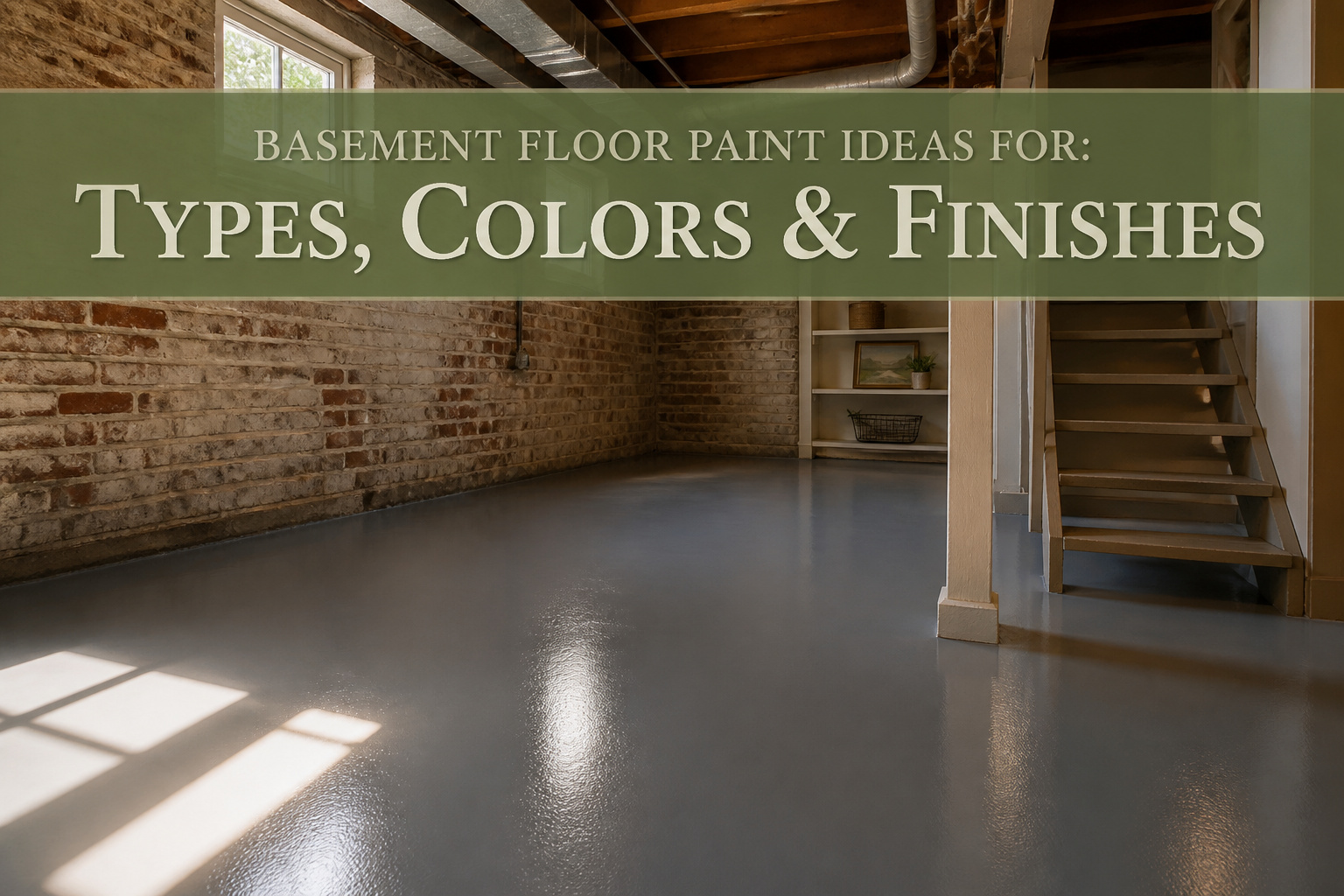
Epoxy is the basement floor paint to beat if you need twenty years out of the coating and do not mind giving up your weekend to the prep. The Rust-Oleum Epoxyshield kit covers roughly 400 square feet and chemically bonds to concrete, but skip the tinting step and you have laid down a layer of glue instead of a finished floor. If your slab pulls moisture or the project has to wrap by Sunday night, acrylic or stain is the smarter route.
1. Epoxy Paint for Heavy Traffic and Long Life

Epoxy sits at the top of the stack for basement floor paint ideas if you need something that will take a beating and stay put. A two-part system like the Rust-Oleum Epoxyshield Garage Floor Coating Kit chemically bonds to concrete and covers roughly 400 sq. ft. per kit. Applied correctly, it can hold up for two decades.
The catch is the work. The kit arrives with a base gallon, a quart of activator, concrete etch, and decorative chips, but the prep is exacting and the timing matters. One mistake I noticed reading through project accounts: skipping the tinting step leaves you with what is essentially a layer of glue, not the color you planned on. Home Depot mixes the tint in-store, or you can order premixed Gray Gloss, Dark Gray, or Tan direct for pickup.
Epoxy also demands dry concrete. If your basement pulls moisture through the slab, this coating will fail from below. And if your whole goal is a finished floor by Sunday night, look elsewhere. The surface needs etching, precise mixing, and cure time that stretches past a single weekend. For a gym, workshop, or any space where traffic is relentless, the durability is worth the wait. For a quick refresh, it is not.
Recommended Products

2-PART EPOXY COATING: Water-based epoxy kit finishes concrete garage floors in good, sound condition with a gloss, color-flecked finish
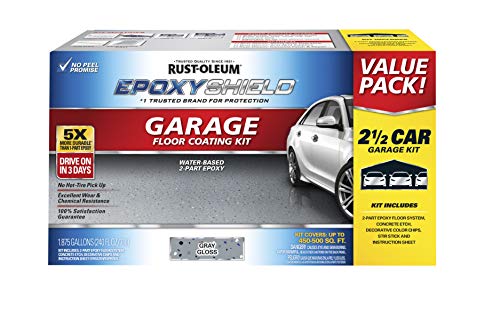
Durable, 2-part epoxy formula works on interior concrete surfaces, such as garage floors, workshops, basements and more
2-PART EPOXY COATING: Water-based epoxy kit finishes concrete garage floors in good, sound condition with a gloss, color-flecked finish
2. Acrylic Paint for a Fast Weekend Project

Acrylic paint sits at the bottom of the basement floor paint ladder for good reason: it costs less and asks less of your Saturday. A gallon of KILZ Porch & Patio Latex Floor Paint runs 200–300 sq. ft., which stretches farther than most epoxy kits, and the low-lustre finish hides the kind of surface flaws that basement concrete tends to collect. The catch is the 3–5 year lifespan before you are back down there with a roller.
This is paint for the low-traffic zone. A guest bedroom that sees use twice a month, a storage area where you wheel in bins on rubber casters, a finished corner with a desk and a rug covering most of the floor anyway. The mildew resistance helps in damp basements, though the product itself admits it is less moisture-resistant than the marketing suggests by needing that primer layer first.
Skip this route if your basement is the path the dog takes to the backyard, if teenagers shoot hoops down there, or if you want to paint once and never think about it again. The recoating cycle is built in. For some households that is a fair trade; for others it becomes the project they wish they had spent another hundred dollars to avoid.
Recommended Products
Clean, degrease and etch bare concrete in one step to prep for coating
HIGH GLOSS GRAY FINISH: Self-leveling polycuramine coating creates a durable, showroom-quality garage floor finish
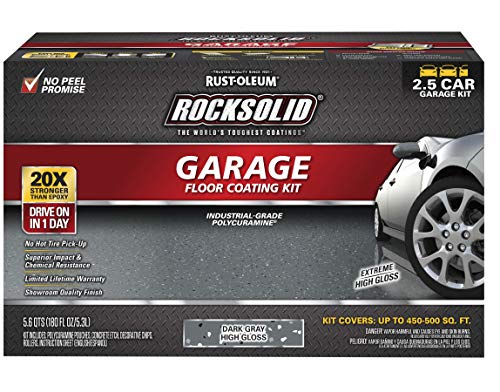
HIGH GLOSS DARK GRAY FINISH: Self-leveling polycuramine coating creates a durable, showroom-quality garage floor finish
3. Concrete Stain for a Natural Look That Wears In

Concrete stain sinks into the floor rather than forming a skin on top, which changes how the basement looks and how it ages. The finish stays translucent, so the floor’s texture and minor variations stay visible, and wear tends to blend in instead of chipping or showing scuffs at the edges.
That same transparency means stain will not hide cracks, patched areas, or old adhesive residue the way a solid paint coat can. Someone hoping for a uniform slate-gray or bright white basement will also end up disappointed; the color range runs earthier and softer, and the result shifts slightly depending on what was already in the concrete.
For basements where the concrete is in decent shape and the goal reads more "finished workshop" or "polished utility space" than "showroom," stain offers a durable decorative option that does not raise the floor height or create a separate layer to fail. The trade is control: you get less of it over the final appearance than paint allows.
Recommended Products

PORCH and PATIO PAINT: KILZ Porch and Patio Floor Paint is a 100% acrylic latex product providing a durable, long-lasting finish that is ideal for both interior and exterior applications.

Durable Epoxy Acrylic Formula: Resists hot tire pickup, scuffing, cracking, peeling, and fading. KILZ 1-Part Epoxy Floor Paint delivers long-lasting protection and a satin finish that looks great on concrete surfaces.

Durable Epoxy Acrylic Formula: Resists hot tire pickup, scuffing, cracking, peeling, and fading. KILZ 1-Part Epoxy Floor Paint delivers long-lasting protection and a satin finish that looks great on concrete surfaces.
4. Stenciling, Faux Finishes and Painted Patterns

A plain painted floor can look finished, but stenciling or a faux finish makes it look intentional. The painted faux rug is the idea that stops people mid-scroll: a border and central motif in contrasting colors, sealed with the same topcoat as the rest of the floor. It reads like textile without the moisture risk of an actual rug on concrete.
Stencils need a bonding primer first, or the pattern lifts at the edges within a season. I learned that watching a neighbor’s Moroccan tile stencil peel in strips where she skipped that step. For durability, keep the design to high-traffic areas you can touch up, or push the bolder patterns toward the edges where feet land less.
Faux finishes, marbling or weathered concrete, hide uneven substrate better than solid color does. The tradeoff is time: a convincing marble veining takes two days of layering and drying, not the afternoon a single coat does. If the basement doubles as a workshop, a busy pattern also conceals the scuff marks that a flat color highlights.
Recommended Products

INDUSTRY'S MOST POWERFUL OIL STAIN LIFTING FORMULA: Chomp! Pull It Out uses a deep penetrating formula to lift stains from porous flooring surfaces like concrete and brick. It is effective on oil or petroleum-based stains (transmission fluid, brake fluid, etc. ) commonly found on concrete and paver driveways, garage floors, parking lots, and drive-through lanes.

Provides floor with stain-resistance from food and drink spills and tracked-in dirt.

Stain Resistance: Offers a durable, gloss layer that enhances stain resistance, ensuring long-lasting protection for unfinished vinyl (VCT), concrete, rubber, and tile flooring surfaces
5. Anti-Slip Additives for Safety

Anti-slip additives stirred directly into the paint cost about $15 per bag and give the finished floor enough grit to matter on the spots where a wet shoe meets concrete. The time to mix them in is during the final coat, not the primer, so the texture sits right at the surface where feet actually land. Stairs leading down from an exterior basement entrance are the obvious place for this, since those steps collect every bit of rain and slush tracked in from outside. Laundry areas matter too; a dropped sock or a detergent spill turns smooth painted concrete into a hazard fast. The additive will not change how the paint dries or cures, so the weekend timeline stays intact. One bag typically covers a standard two-car garage worth of floor, which for most basements means a single bag handles the high-traffic strip and the landing without forcing you to buy more than you need.
Recommended Products

Package: This package includes 1 pack of epoxy floor flakes weighing 453 g (1 lb), featuring a selection of understated yet versatile colors. It effectively caters to a wide range of your decorative requirements, whether for partial accents or full-area coverage.

Enhance & Customize Surfaces: Adds a professional, decorative touch to coated concrete floors, creating a unique, stylish finish

Enhance & Customize Surfaces: Adds a professional, decorative touch to coated concrete floors, creating a unique, stylish finish
6. Gray, Beige, Blue and Custom Color Tints

Gray dominates basement floors for the same reason it dominates rental listings: it hides dust, matches anything, and reads as finished without trying too hard. DRYLOK Latex Concrete Floor Paint comes in 16 colors, including the standard grays plus beige, blue, red, and white, so the neutral default is a choice, not a trap. Beige warms up a basement that doubles as a guest space or playroom. Blue works when the room already has a purpose, a home gym or a craft corner where color signals intent rather than afterthought.
The white base version opens into custom tinting, which matters more than the mixed colors if you are matching existing trim or carrying a wall color down to the floor. Paint-plus-primer formulas like DRYLOK’s accept tints at the counter the same way wall paint does, but the floor-grade resin changes how the color reads. A tint that looks soft on a swatch can turn industrial once the non-slip flat finish and concrete substrate flatten it out. Test a quart before committing to the full coverage math. I have learned to order the custom mix, brush out a two-foot square near the stairs where light is worst, and live with it for a day before buying the rest.
Recommended Products
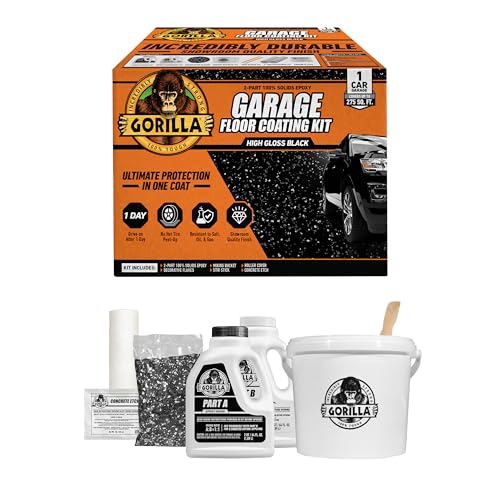
Ultimate Protection in One Coat: 2-part 100% solids epoxy delivers, incredibly durable, exceptional resistance to chemicals, abrasions, salt, oil, gas, and hot tire peel-up that is ideal for garages, basements, workshops, & more.

2-PART EPOXY COATING: Water-based epoxy kit finishes concrete garage floors in good, sound condition with a gloss, color-flecked finish

Durable, 2-part, water-based epoxy formula works on interior concrete basement surfaces
7. Moisture-Resistant Formulas for Damp Basements

Any basement floor paint job lives or dies on what happens before the first drop hits concrete. Moisture vapor passing through the slab will lift ordinary paint within a season, so a moisture test comes first, full stop. Tape a square of plastic sheeting to the floor for twenty-four hours; condensation underneath means the surface is too damp to coat.
For basements that pass, moisture-resistant formulas are built for this exact environment. Benjamin Moore’s INSL-X Sure Step is one that trades coverage for thickness: about 100 sq. ft. per gallon, roughly half what standard floor paint promises, because the film it leaves behind is dense enough to block the humidity that does reach it. The finish also carries anti-slip grit, which matters more than it sounds on basement stairs or utility areas.
This path is not for every basement. Active water intrusion, puddling after rain, or efflorescence that returns after cleaning means the problem is structural, not surface-level. Paint over that and you have a failing coating plus the original leak to fix. Seal the intrusion first, then retest, then paint.
Recommended Products
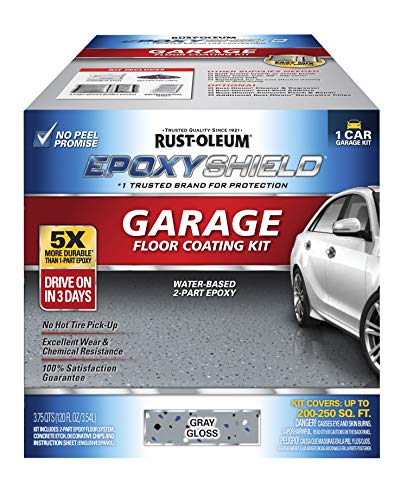
2-PART EPOXY COATING: Water-based epoxy kit finishes concrete garage floors in good, sound condition with a gloss, color-flecked finish

HIGH GLOSS BLACK FINISH: Self-leveling polycuramine coating creates a durable, showroom-quality garage floor finish
What Floor Prep Actually Looks Like

Concrete paint lives or dies on what happens before the lid comes off. Sweeping and vacuuming gets you to bare concrete, but that surface still holds dust, grease, and the invisible residue that lets water bead instead of soak in. A cleaner and degreaser scrubs away what plain water misses, and the floor needs to be bone dry before anything else happens. I run a dehumidifier and a fan for at least a full day; rushing this is where weekend projects peel by March.
Cracks matter more in basements than anywhere else. Hydraulic cement or quick-setting cement fills structural damage, and a concrete crack sealer handles the smaller ones. The cement has to cure completely before paint touches it, or the patch breathes moisture straight through your new finish.
Etching is the step most people skip, and the one that separates paint that sticks from paint that flakes. Dense concrete is naturally non-porous; an etching solution, whether H&C’s product or a powder mix like DRYLOK’s safer alternative to muriatic acid, opens the surface so paint can grip. Without it, you’re coating glass.
Thoroughly sweep and vacuum the painting area.
That line sounds obvious until you’re picking bristles out of wet epoxy at 10 PM. Remove every obstacle, inspect for loose chipping paint, and grind old layers off if the floor’s been painted before. The paint choice only matters after the floor is ready to receive it.
Recommended Products
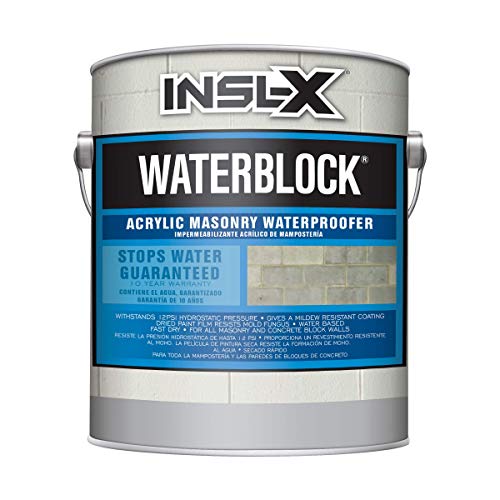
1) Water Based coating for sealing vertical interior and exterior concrete walls. Great for basement walls, foundations and retaining walls.

PORCH and PATIO PAINT: KILZ Porch and Patio Floor Paint is a 100% acrylic latex product providing a durable, long-lasting finish that is ideal for both interior and exterior applications.

Durable Acrylic Formula: Resists hot tire pickup, scuffing, cracking, peeling, and fading. SENVEN 1 Part Floor Paint delivers long-lasting protection and a satin finish that looks great on concrete surfaces. COVERAGE: Professional-grade floor coating covers up to 120 square feet per gallon with excellent durability and scratch resistance
Applying Paint with Rollers, Brushes and Air

A roller loads best when the tray sits a little over half-full. Too much paint slops over the edges, and the roller spins instead of picking up an even coat. I start in the corner farthest from the door and work in three- to four-foot sections, rolling straight back without reloading to even out the coat, then overlapping the next row and blending the build-up lines the roller edges leave behind. Brushes handle the cut-in along walls and any spots the roller cannot reach, but the floor itself goes faster than wall paint: even large basements take about an hour once prep is done, though the roughness of concrete swallows more paint than a smooth wall would. Concrete grooves drink paint, so calculating quantity carefully matters more than with standard wall coverage.
Ventilation is not optional. The sources flag ignoring airflow during application as a common mistake that ruins an otherwise solid upgrade. I keep windows open and fans running, not just for the fumes but because paint cures through evaporation, and stagnant, humid basement air traps moisture in the film. Epoxy and acrylic each carry their own temperature and humidity limits on the label, and the second coat waits for the first to hit the recoat window, not just "dry to the touch." Too soon and the solvents lock underneath; too late and the surface needs scuffing for the next layer to bond. I check the plastic-wrap moisture test before any of this, because paint applied over a damp slab, whether from above or below, traps water that will bubble and peel within months.
Recommended Products

Durable, 2-part, water-based epoxy formula works on interior concrete basement surfaces

Stain & fade resistant; mold, mildew & moisture resistant

Easy DIY & Low Maintenance: This self leveling epoxy floor paint for concrete Features a self-leveling formula for a flawlessly smooth surface, As durable epoxy garage floor paint, it forms a high-gloss, stain-resistant and simplifies cleaning—making your project quick and the results long-lasting
How Long Each Finish Lasts and What Maintenance Means

Epoxy and acrylic basement floor paint ideas diverge sharply once the work is done. Epoxy holds up to 20 years under normal use; acrylic typically needs attention in 3 to 5 years, sooner if the space sees steady foot traffic or moisture pushes through the slab.
Maintenance for either finish is mostly prevention. Sweeping regularly and wiping spills before they sit keeps the surface intact. Epoxy’s hard shell resists stains and chemicals, so cleanup stays simple even in a workshop or gym setup. Acrylic demands more vigilance; the recoat window arrives every few years, not decades.
The signal to recoat acrylic is visible wear in the paths you walk most, or a dull, porous look where the original sheen has worn through. Epoxy gives fewer warnings before it fails; chips or lifting at the edges mean moisture got underneath, and patching beats waiting for the whole coat to separate. For renters or anyone planning to move within five years, acrylic’s shorter life is not necessarily a flaw; it is a finish matched to a timeline.
Recommended Products

Customize any concrete coating with decorative color for the perfect finish

YOU WILL GET - You will receive a pack of 1 lb/16oz of epoxy flakes, which including Black, White, Red, Gray blend colors, the beautiful colors can can nicely satisfy your different decoration needs.

1.Hybrid Epoxy Floor Flakes:You’ll get one convenient pack weighing 5.9lb (2.7kg), crafted with a gray, white and black hues. This classic color combination strikes the perfect balance of modern and versatile, effortlessly matching a wide range of home decor styles and meeting all your personalized decorative needs. These 3-5mm epoxy chips are the ideal decorative accent to refresh your floors and create a sleek, customized look for your home.
When to Repaint Over Old Paint

Old basement floor paint that still clings tight and covers evenly is usually fine to paint over, which saves a weekend of scraping. The surface needs to be clean, dry, and free of grease or efflorescence; a quick sweep and vacuum followed by a thorough mopping handles most of that. What stops the project cold is paint that is already failing: peeling, flaking, or bubbled areas mean the bond underneath is broken, and fresh paint will follow the old stuff right off the floor.
A simple test is the tape test. Press a strip of masking tape firmly onto the old paint and rip it off fast. If paint comes up with it, the adhesion is poor and you need to remove the old coating, usually with a wire brush or a side grinder with a wire wheel attachment if there are multiple layers. Another check matters for compatibility: oil-based and water-based paints do not play well together. If the existing paint is oil-based and you roll latex over it, the new coat can wrinkle or flake within weeks. When in doubt, a small test patch in a corner tells the story in 24 hours.
Moisture is the hidden reason paint fails even when the surface looks sound. If the old paint is bubbling or lifting near walls or low spots, water is moving through the slab, and no new paint will stick until that is resolved. The plastic-wrap test, taping down a 2–3 foot square of plastic wrap for a day or two, reveals vapor coming through the concrete. Trapped moisture means stopping to find the source before any paint goes down.
Frequently Asked Questions
What is the best paint for a basement floor?
Epoxy paint is the toughest choice for basements that see heavy use, lasting up to 20 years when applied correctly. Acrylic paint works for low-traffic spaces and costs less upfront, but needs recoating every 3 to 5 years. The right pick depends on how you use the space and whether moisture moves through your concrete slab.
How do I prepare my basement floor for painting?
Start by sweeping and vacuuming thoroughly, then clean with a degreaser and let the floor dry completely, which usually means running a dehumidifier and fan for at least a full day. Fill cracks with hydraulic or quick-setting cement and allow full cure time. Etch the surface to open the pores so paint can grip; skipping this step is the main reason paint flakes off later.
How long does painted basement floor paint last?
Epoxy holds up about 20 years under normal conditions, while acrylic typically shows wear in 3 to 5 years and needs a fresh coat. The lifespan shrinks if moisture pushes through the slab or if the space gets steady foot traffic. Regular sweeping and quick spill cleanup help either finish go the distance.
Can I paint over old paint on my basement floor?
Yes, if the old paint is still stuck tight and covers evenly. Clean it well, then do the tape test: press masking tape down firmly and rip it off fast. If paint comes up with the tape, the bond is failing and you need to strip it first. Also check that the old coating and your new paint share the same base; oil-based and water-based paints do not layer well together.