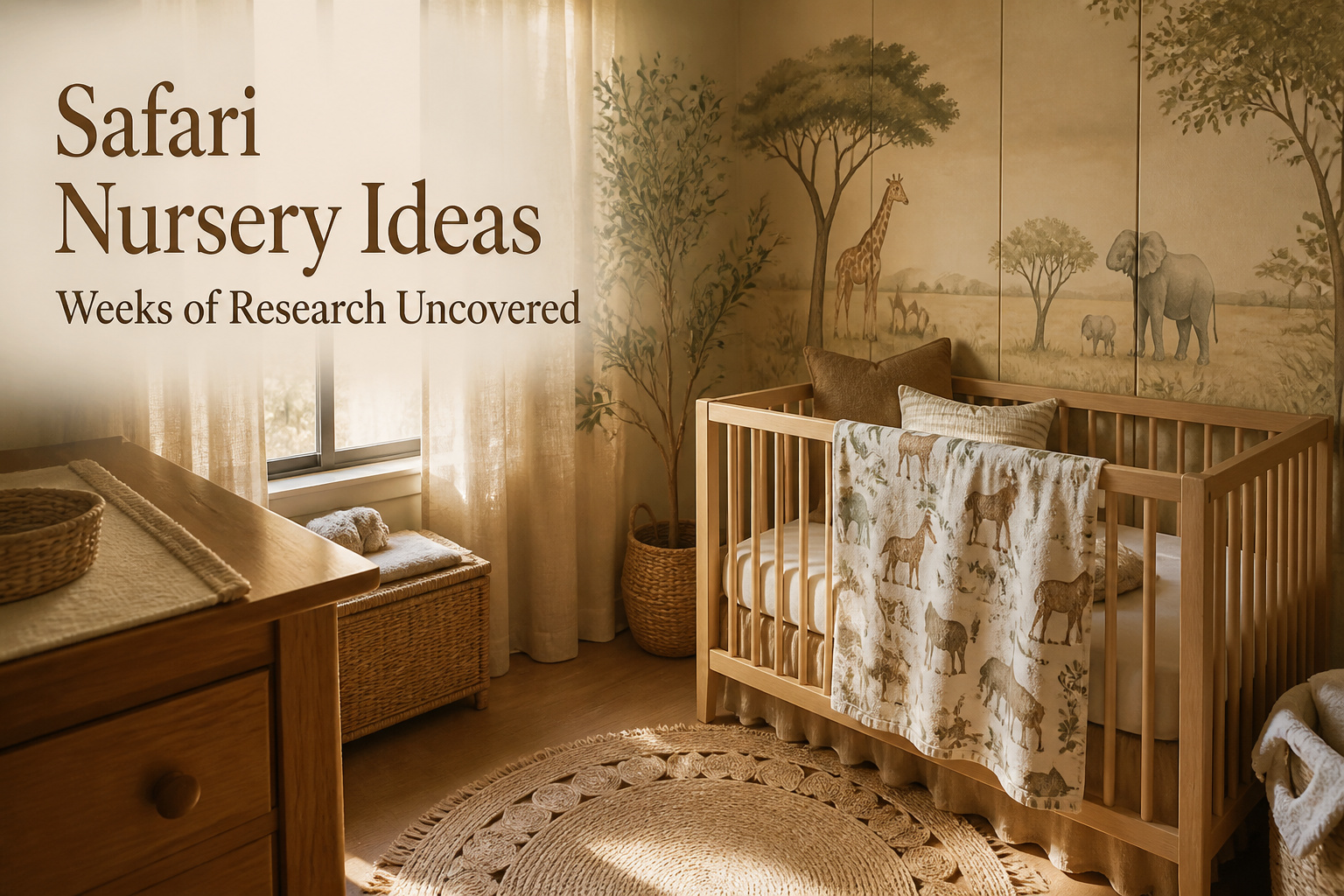
Safari nurseries run from a $30 rug swap to full-room wallpaper, and the deciding factor is whether you own the walls. Renters who cannot paint still need the room to feel finished, which is where peel-and-stick savanna panels and a portable cotton crib set earn their keep. I blew past my $60 accent budget before I finished the dresser.
1. Start With Your Hero Animal

Every safari nursery I looked at that came together cleanly started with one animal, not four. Giraffe, elephant, or lion: pick one and let it drive the wall treatment, the lamp, the mobile, and whatever large accent piece anchors the room. That single decision keeps the theme from drifting into generic "animal" territory, and it stops the budget from bleeding into mismatched impulse buys.
The wall piece built around your chosen animal goes up first, establishing the palette and the scale. From there, the matching lamp at dresser level, then bedding and mobile, each speaking back to that first choice. The faux animal-skin rug and figurines come last; they are the layer that signals "safari" rather than simply "animal themed," and they only work once the room already knows what it is.
Recommended Products

Size: You will get 2 set Animals Educational Wall Decals. The size is 11*33(27cm × 83cm). The Size of each anaimal had been showed in the image, you can also diy it by your own idea.

【BOHO ANIMAL WALL DECALS】These charming wall decals feature a delightful group of woodland animals including a Monkey, elephant, lion and giraffe,illustrated in a soft watercolor style. animals' coordinated peeking-out poses make them perfect for decorating the walls of a child's room

SAFARI ANIMAL DESIGN: Features a cute and whimsical pattern with elephants, giraffes, and balloons, perfect for a child's room or nursery
2. Wallpaper That Grows With Them

Wallpaper turns a nursery into a room that actually feels finished, and safari patterns have enough range that you do not have to pick between baby elephants and something too grown-up for a two-year-old. The trick is choosing a motif that reads as nature rather than nursery. Oversized tropical leaves in soft watercolor, like the white foliage backdrop one family used for their son’s safari hideaway, carry the theme without locking you into infant-specific imagery. Burke Decor’s "On the Savanna" print works the same way: animals in a stylized landscape that a child can grow into rather than past.
I spent time trying to find someone, anyone, who listed exactly how much extra wallpaper to order for pattern repeat on an eight-foot wall versus a nine-foot one. Nothing. So you will need to measure your wall height yourself and check the repeat distance on the roll you choose, then add enough length so the pattern lines up at the seams. A standard rule of thumb is to order one extra roll for a feature wall, but the exact math depends on your ceiling height and how large the pattern is. Order from somewhere with a forgiving return policy, because the cheap option only stays cheap if you do not end up buying twice.
Recommended Products

Soft Safari Animal Parade: Featuring a gentle safari animal parade with giraffe, elephant, lion, zebra, rhino, and monkey details, this kids rug brings a warm and playful look to nurseries, baby rooms, playrooms, and bedrooms.

📏 SIZE & MATERIAL: Our cartoon floor mats come in three sizes - 24x35.5 inches, 40x60 inches and 60x80 inches and are made with high-quality polyester and microfiber surface. This ultra-soft, skin-friendly material ensures a pleasant tactile experience. The dotted construction backing provides excellent security and holds the carpet securely in place.

PERFECT FOR HOME DECOR : Decorate your home with this unique, seasonal doormat. Perfect for any bedroom, kitchen, porch, veranda, and entryway and extend a warm welcome to all who enter your home
3. Paint the Room Warm

Sherwin Williams "Toasty" reads warmer on the wall than it does on the chip, which is exactly why it works for a safari nursery. The color carries enough yellow to feel sunlit without tipping into nursery cliché, and against linen or rattan textures it layers like something grown-up enough to keep for years. That warmth answers the worry about whether safari themes overstimulate a newborn. Earth tones settle the eye rather than chase it, and a golden-walled room at 3 a.m. feeds the calm a parent needs more than the decor a designer wants.
Benjamin Moore’s Black Forest Green moves the same idea in a darker register. Creams and wood accents keep it from feeling like a study, and the depth of the color actually recedes at night, which surprised me when I compared the two approaches. Either palette beats the cartoon-bright version that turns a nursery into a play zone before the child can even focus their eyes. Watercolor or naturalist renderings of animals read quieter than flat primary prints, and the room stays restful because the color does the grounding, not the characters.
Recommended Products

Jungle Animals Crib Set: our watercolor safari animal crib bed set has animal patterns like sika deer, baby raccoon, owl, little hedgehog, etc., with rich eucalyptus leaves, which are vivid and cute, adding a funny atmosphere to the neutral style nursery and helping the baby to self-soothe to sleep
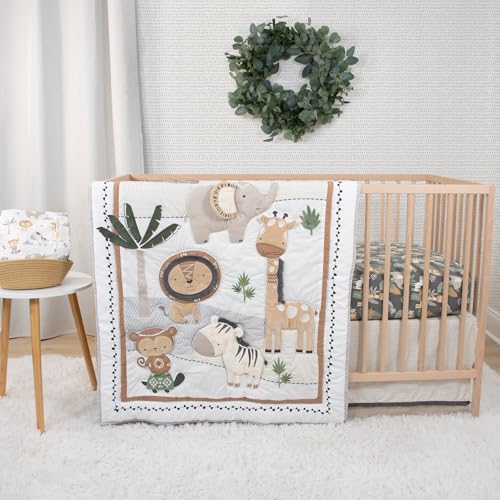
Safari Theme: Add a playful and soft touch to your toddler's or baby’s nursery with a safari theme featuring animals like lion, zebra, giraffe, monkey and elephant on neutral shades.

2-PACK FITTED CRIB SHEETS: Set includes 2 fitted crib sheets | Fits any standard crib or toddler mattress sized: 28”W x 52”L
4. Safari Bedding Sets

Bedding is where most safari nurseries commit the theme too hard, too fast. A cartoon lion on bright yellow reads like a toy store clearance rack; a watercolor giraffe on warm tan reads like someone actually designed the room. The watercolor safari animal crib set pairs painted giraffe, elephant, and lion motifs with any wood tone and any wall direction you already chose, which matters more than it should when you are assembling this at midnight between feedings.
Cotton or GOTS-certified fabric keeps chemical finishes away from newborn skin, and the softer print style buys you years before the room feels babyish. I bought a painted-style set for my own nursery, washed it on warm every week for eight months, and the giraffe still looked like a giraffe rather than a beige smear. The fitted sheet faded slightly faster than the quilt, which seems to be the standard experience with printed cotton rather than a defect in any particular brand.
What sold me on bedding over wallpaper as the main statement is the swap cost. Tastes change, or the next baby needs the room neutral, or you just get tired of looking at the same elephant. A crib set stores flat in a closet; wallpaper does not.
Recommended Products
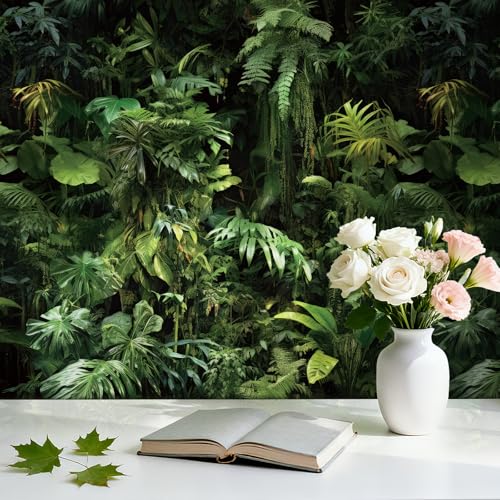
Size & Material of Forest Wallpaper: This 17.5" x 80" jungle peel and stick wallpaper roll is crafted from durable, flexible vinyl—a long-wearing material ideal for self-adhesive tropical wallpaper that resists daily wear while staying smooth and easy to handle

Tropical Wallpaper- 【Size and Material】 17.7”×118.1” and the coverage area is 14.5 Sq.Ft. Tropical wallpaper is made of the latest upgraded vinyl material, The surface is flat and slightly embossed in the grain direction while maintaining .It is good waterproof, not easy to tear.

TROPICAL WALLPAPER:This green tropical peel and stick wallpaper features watercolor monstera leaves, palm leaves, broad jungle plants, soft green leaf, dark green accents, and a clean white background, creating a fresh tropical leaf look for bright home updates
5. Animal Wall Art

Animal portraits on the wall do more heavy lifting than almost anything else in a safari nursery, and the cost stays low enough that swapping them later won’t sting. A set of four matching frames, elephant, lion, zebra, and giraffe, reads as one intentional composition from the doorway rather than four random prints you collected. The gallery wall approach anchors the whole room’s direction without touching a paint can.
For renters, peel-and-stick decals with water-based, zero-VOC adhesives protect both the wall and the newborn’s air quality. Watercolor styles in warm neutrals deliver the safari identity without the permanence of wallpaper or murals. The same goes for a single removable savanna scene panel if one wall needs to carry the visual weight.
Hobby Lobby carries animal-theme wall hangings that layer in alongside the portraits without competing. If the room needs to feel less literal, skip the cartoon styles and go with watercolor renderings. They keep the look sophisticated enough to survive past the toddler stage.
Recommended Products

Flesh Tone Acrylic Paint Set 6 Colors

【Skin Tone Model Paint Set】Nicpro acrylic model paint set designed for painting faces and skin on miniatures, busts and character models. The 10 coordinated colors cover highlights, midtones and deep shadows for natural-looking flesh tones.

DIVERSITY EXPRESSION: Express yourself and celebrate the diverse environment around you with this fun washable multicultural paint color.
6. Mobiles and What Moves

The felt giraffe mobile reads as safari faster than any other single piece, which is why it ends up on so many registry lists. Giraffes signal the theme immediately, and a handmade felt version in warm tan, with elephant, lion, and zebra alongside, lands right where a newborn actually looks. Mount it at least 16 inches above the mattress surface and remove it once the baby can push up on hands and knees. That clearance comes from CPSC safe sleep guidelines, not from overcaution.
Wooden carved silhouettes move the same idea in a Montessori direction. Lightly stained or unfinished wood feels intentional without trying too hard, and the shapes stay interesting as the baby gets older. For the first eight weeks, a monochrome black-and-white safari mobile delivers more developmental value than color; high-contrast patterns match what a newborn retina can actually process then.
I spent time on Etsy looking at personalized options, and the lead time matters. Custom felt or wood mobiles with a name woven in need at least six weeks before the due date, and that assumes no shipping delay. Miller Kyle Studios and AGreatBaby both turn up regularly for safari-themed nursery work there.
Placement splits into two schools. Directly over the crib gives the baby something to track during diaper changes, but the mobile has to come down early and the sightline is narrow. Across the room, angled where light catches it, the same mobile becomes something the baby notices from the changing table or the rocker, and it stays up longer without safety concerns. The watercolor paper mobiles spin best in rooms with no ceiling fan; irregular air current turns them into a blur instead of a gentle rotation.
Recommended Products

🏠DETAILS: Size 17.5 x78.8 Inch , total 9.57 sq.ft(44.5cmX2m), Self adhesive (no extra glue needed). Made of durable vinyl, Animal Wallpaper, Peel and Stick, Matte, Waterproof, Removable.

It can be stuck onto any clean, dry, non-textured smooth surfaces: walls, windows, tiles, furniture, mirrors, even your refrigerators.

VINTAGE SAFARI PEEL AND STICK WALLPAPER:This jungle animal wallpaper uses cream, soft green, beige, olive and brown tones with elephants, zebras, leopards and palm trees, giving walls a warm vintage look for nursery, bedroom and bathroom decor.
7. Rugs That Hide Spills

A faux giraffe spot rug from Pottery Barn Kids was the piece that made the room read safari before anything else did. The sources all pointed to it as the single most effective signal of the theme, and at $30–$60 it left room in the budget for the rest.
I went low-pile on purpose. High loops catch everything, and the spit-up era proved that fast. The flat weave let me blot instead of dig, and the pattern itself did more of the hiding than I expected. Solid cream rugs look calming in photos; in person, every dribble becomes a landmark. The giraffe spots broke up the surface enough that a shadow from a spill read as texture first, stain second.
Earth tones do the actual work here. Clay, sage, beige, ivory. They complement wood furniture and they survive the reality of a nursery better than the brighter jungle palettes that photograph well for a week. My rule became: if a color would show on a t-shirt after one wash, it will show on your floor after one feeding.
Recommended Products
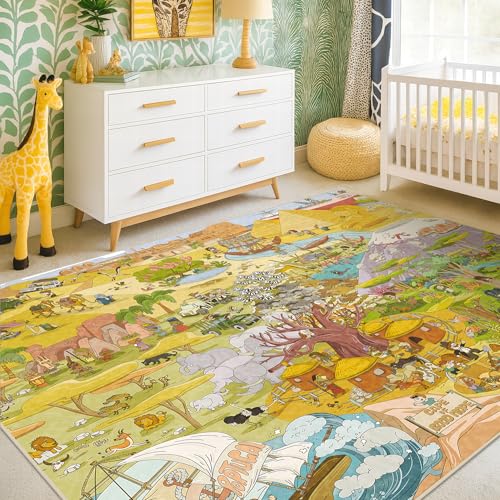
Educational Safari Map Design: This area rug features a colorful, illustrated map of desert area, showcasing wild animals, tribal life, and landmarks like the pyramids and Mount Kilimanjaro to spark learning and exploration

Material: Rug is mainly made of polyester fiber material. The surface is skin-friendly and soft fabric with hemmed edges, with fluffy sponge filling in the middle, and the non-slip dotted rubber backing makes it stick well to the floor to ensure that your children will not get hurt when playing on it

Blush Pink Safari Design: Features sweet giraffe, elephant, lion, zebra and monkey details in blush pink, cream, sage and warm beige tones for a gentle girls nursery look.
8. Lighting With Character

The giraffe ceramic table lamp gets the most search traffic of any safari nursery fixture for a reason. At dresser height, it reads as sculpture first and light second, so the theme lands the moment someone walks in.
I considered one and walked away. The ceramic body hides the bulb behind a narrow neck, which means changing it requires tipping the whole giraffe or working through a small hatch at the base. With a nursery lamp that runs most evenings, that friction adds up. Heat pools in the ceramic too, so the shade runs warmer than a metal or open-frame piece, and a wobbly dresser makes a tall narrow base a stability issue I did not want to manage.
What I chose instead was a drum shade pendant with warm wood trim. Mount it at least 7 feet from the floor for headroom later, and the natural wood ring hits the same safari lodge note without competing for dresser space. Warm-white bulbs throughout matter more than the fixture shape; cool white strips the golden quality out of every tan and camel tone in the room and flattens the warmth completely. That single choice does more for the palette than any animal silhouette.
Recommended Products
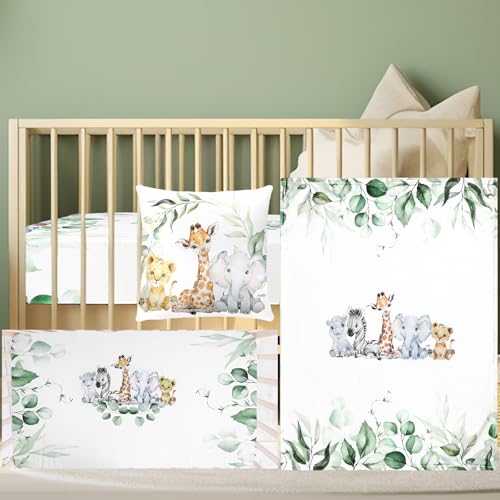
Highland Cow Baby Crib Bedding Set: highland cow themed baby crib bedding set is included a baby blanket, a sheet, and a pillowcase, it easily integrates with any nursery theme, making it a reliable choice for parents looking to provide a comfortable experience

Safari Theme: Add a playful and soft touch to your toddler's or baby’s nursery with a safari theme featuring friendly safari animals like an elephant, flamingo, and turtle, with soft and vibrant shades of pink.

🦒 INCREDIBLY SOFT & BEAUTIFUL – This beautiful custom pattern is printed on the most luxuriously soft cotton blend. Thicker elastic and deeper pockets ensure that our crib mattress sheet will NOT slip off the mattress. You’ll feel the incredibly soft, yet stretchy and silky material as you pull the sheets and snug, creating a safe and soothing space for your baby to sleep.
9. Murals You Can Undo

Peel-and-stick safari murals hit the same visual note as wallpaper without the commitment a rental lease won’t allow. I spent an afternoon comparing the two paths and the painted route lost me fast. A hand-painted savanna scene sounds romantic until you test a small patch and see how flat acrylic reads on a real wall, how the edges feather where you need them crisp, and how many hours disappear into a single zebra stripe. I painted a 12-inch square behind the crib, stepped back, and knew I would never finish a full wall before the baby arrived.
The peel options solved that timeline, but they introduced a gap no product page fills. Wall dimensions and coverage calculations are missing from every description I read. A mural labeled "large" might span six feet or ten; the repeat pattern might match at the seam or might not. You are left measuring your own wall, dividing by the panel width, and hoping the scale of the animals does not turn a gentle giraffe into something that looms over the crib like a zoo exhibit. Order one panel first and tape it up. The twenty-dollar test beats a wall-sized mistake you cannot return.
Recommended Products

Fixed size: S size is 82"x57" (210CMx145CM), divided into 20.6"x57"x4 parts.

【Size】 W x H inches (W x H) - N panels with serial number below each panel for easy assembly. Just peel and stick! No water, no paste, no mess! It is your ideal choice for wall decoration or renovation and best renter friendly room renovation idea.

➤ Roll Size & Material: Green leaf wallpaper roll, 17.5"W x 79"L, 44.5 x 200 cm, covers about 9.6 sq.ft per roll. This tropical leaf wallpaper is durable vinyl wallpaper, safe to your family. Grid lines on back paper help precisely measure and cut.
10. Faux Taxidermy and the Weirdness

Faux taxidermy sits in a strange spot for a nursery. The idea of a friendly paper-mâché giraffe head above a changing table sounds charming until you are standing in the aisle holding one, wondering if it watches you back.
What actually made it home was a small resin zebra bust with a matte white finish, nothing shiny or realistic enough to catch light at 2 a.m. during a diaper change. The pieces that stayed in the cart were the ones with glass eyes, fabric ears, or any attempt at realism. Those read hunting lodge no matter what the tag claimed. The zebra had painted eyes and a slightly cartoonish neck, which shifted it toward craft project territory.
The sweet spot for this look tends to be handmade marketplaces or the home sections of stores that sell actual art supplies. Pieces sold near children’s watercolor sets or weaving kits usually understand the assignment better than ones shelved near lodge-style candle holders. Weight matters more than price here: anything under two pounds can hang on a standard drywall anchor without finding a stud, which matters when you are mounting above furniture a baby will eventually stand up in.
I skipped the faux antlers entirely. Even painted gold, they still signal something else, and guests will ask.
Recommended Products

Boho Style: The trending boho wall decal style, with its ingenious blending of various boho nursery elements, creates a carefree and relaxed ambiance, making the kids room warm and peaceful

13-Pcs Skin Tone Paint Set: Includes 12 realistic flesh tone figure colors & 1 model paint thinner. Perfect for painting realistic faces, hands, and busts. The specialized thinner ensures seamless layering and smooth airbrushing
Boho Style: The trending boho wall decal style, with its ingenious blending of various boho nursery elements, creates a carefree and relaxed ambiance, making the kids room warm and peaceful
11. Greenery Without the Watering

Two pothos and a snake plant died in that room before I admitted the light was not on my side. Quality faux greenery is the safer bet in a nursery, and the gap between cheap plastic and the newer silk-and-wire stems has narrowed enough that I no longer feel sheepish about it.
Real tropical plants need humidity and light levels that fight a nursery’s blackout curtains and climate control. What reads jungle in a living room, a monstera with dinner-plate leaves and fenestrations, reads cluttered in a small nursery. The same oversized frond that draws the eye in an open space crowds a changing table wall. I look for smaller leaf structures, ferns and trailing pothos shapes, because dense large leaves create visual weight fast.
The overstimulation piece matters more than I expected. Babies fixate on high-contrast edges, and a wall of varied green shapes competes with the mobile, the animal art, the patterned bedding. One or two faux plants, placed where they soften a corner without becoming a focal point, does more than a cluster that turns the room into a terrarium. I keep them above reach and skip anything with detachable parts.
12. Accent Pieces That Add Up

Small safari accents carry a sneaky cumulative cost. A ceramic giraffe figurine here, a woven basket there, and suddenly the dresser holds $40 in animals alone. When I planned our nursery, I set a $60 accent budget and still blew past it by the time I added a second basket and a print set. The line between collected and cluttered sits at about three freestanding pieces per surface. A single 10–14 inch giraffe figurine reads intentional; pair it with a miniature binoculars arrangement and a second animal, and the dresser starts looking like a gift shop. Woven items soften this, since a rattan pendant or vintage hanging basket adds texture without competing for attention the way figurines do. My rule became one statement piece per zone: floor, dresser, wall. Anything more demanded that something else leave the room entirely.
13. Furniture With Staying Power

A standard crib converts to a toddler bed, which means the frame stays in the room for three to four years even after the safari theme feels babyish. I bought ours in warm white oak, no animal carving or jungle motif anywhere on it. The safari story lives in the changing pad cover, the crib sheet, the throw draped over the glider. Textiles swap for fifty dollars when tastes shift; a themed dresser does not.
The glider followed the same rule. Neutral upholstery, square arms, and the only safari element is a lumbar pillow I made from a remnant of leaf-print linen. Rockers with built-in ottomans and animal-shaped backs photograph well for nursery roundups, but the proportions get awkward once a child outgrows lap-reading. A chair that works in a living room earns its floor space.
Check the manufacturer spec for gap clearance between mattress and crib side, and between any changing table and the wall. No blog I read gave the measurement; they all said "make sure it fits" and moved on. Those millimeters matter for entrapment risk, and they vary by brand and mattress thickness. I spent twenty minutes on the phone with customer service getting the number for our frame. Worth the hold music.
14. Growth Charts and Nameplates

A moveable, oversized ruler beats marking the wall every time, especially when you are renting and the deposit matters. The safari-themed growth chart I ordered came from ThereseDekkerDesigns on Etsy, printed on canvas with giraffe silhouettes running up one edge. It arrived rolled and lighter than I expected. I hung it first, centered above the low dresser at about forty-two inches from the floor so the bottom cleared the changing pad with room to spare.
The nameplate, a handmade giraffe piece from Miller Kyle Studios, sat in its box for another week while I figured out what I had done wrong. The growth chart had gone up fast because it was the bigger item and I wanted the anchor in place. What I missed was spacing: I left a full sixteen inches between the two pieces, thinking the wall needed breathing room, and the result felt like two things floating instead of one intentional grouping. Twelve inches would have tied them together without crowding. The nameplate itself is charming, three-quarter-inch birch with a matte finish, but the sizing still irritates me. I ordered twelve inches wide for a wall that could have handled eighteen; at that width it would have balanced the ruler’s heft instead of looking like an afterthought.
15. DIY Projects I Actually Finished

Three projects made it onto my weekend list, and one actually crossed the finish line. The felt giraffe mobile seemed straightforward until the template warped and the head hung at a sad tilt. The rattan pendant light never got past the hardware store bag; matching the ceiling bracket to our 1950s junction box looked like a Monday problem, not a Sunday one. What did work was a four-print safari gallery wall above the changing table. I bought the frames at a craft store during a half-off sale and printed the watercolor animals at home on matte cardstock, keeping the whole thing under $35. The giraffe ceramic lamp stayed on my wish list at $60–$120, which felt steep for something that might get yanked off a table in a year. Gallery walls survive real budgets because the pieces are light, easy to reposition, and the frames can hold new art when the safari phase passes.
16. Earthy Tones and Textures

Warm, saturated paint on the walls only carries the room so far. The difference between a nursery that feels designed and one that feels like a toy store comes down to what you actually touch at 2 AM.
I started with bedding, where the sources split into two camps. Painterly animal prints on linen or cotton read as intentional; bright graphics on synthetic blends read as temporary. The watercolor giraffe on warm tan, the soft lion in muted ivory, those are the pieces that photograph well for the reveal. What surprised me was how different they feel at feeding time. Linen softens with washing but starts stiff; 100% cotton with a GOTS certification has the softer hand from day one, and that matters when you are running a palm across it half-asleep.
For furniture and storage, rattan, cane, seagrass, and jute add the texture that makes a warm wall color feel grounded rather than flat. A cane wall shelf or a woven basket under the changing table gives the eye somewhere to rest. The tradeoff is maintenance: woven surfaces collect dust that smooth painted wood does not, and a 2 AM wipe-down takes longer.
My own leaning after sorting through this: put the money into cotton bedding you will touch constantly, and source the wicker or rattan secondhand for character without the premium.
17. Neutral Palettes for Renters

A neutral palette was the only move that made sense once I realized how much of the nursery I would not own. The wall color, the curtain rods, even the baby-proofing hardware would stay behind, so I put my money into linens, a portable rocker, and framed prints I could pull down in ten minutes. The khaki and warm ivory base let the safari elements come in through those swappable pieces rather than anything fixed.
If I owned the place, I would have painted an accent wall in a soft terracotta and installed built-in shelving for the growing book collection. Renting meant those choices were off the table, and honestly that constraint saved me from overspending on a phase that might last two years. My one regret is the rug I bought to fit the room exactly; it will not work in the next space, and a standard size would have traveled better.
What I Spent and Where I Saved

Wallpaper ate most of the budget early, so the rest had to fight for what remained. A single "On the Savanna" panel from Burke Decor ran less than full-room rolls but still cost more than paint by a wide margin. The tradeoff was immediate: paper tied the room together, yet it left less room for the hero pieces that actually read "safari" from the doorway.
| Custom mural (Etsy) | Peel-and-stick full scene | Framed portrait set (4) | |
|---|---|---|---|
| Cost range | $300–$600 | Premium peel-and-stick, price n/a | $100–$200 |
| Removal | Possible at toddler stage | Designed for clean removal | Patch nail holes only |
| Best for | One wall carrying full visual weight | Floor-to-ceiling panoramic | Gallery wall, editorial look |
| Air quality | Check adhesive specs | Water-based, zero-VOC available | n/a |
I spent the wallpaper savings on a handcrafted animal mobile at $100–$200 and a personalized name sign, both from Etsy. The Pottery Barn Kids purchase was bedding, $150–$300 for organic cotton in safari prints, which felt steep until the third wash when cheaper sets had already pilled. The tall ceramic giraffe at $60–$100 stayed in the cart for three weeks; I finally bought it after realizing three small figurines cost the same and cluttered the shelf.
Materials That Survive Real Use

Cotton muslin swaddles printed with giraffes and lions are everywhere in safari nursery photos, but the fabric weight tells you more about longevity than the pattern does. Lightweight single-layer muslin softens into a rag after six months of washing; heavier double-gauze holds its shape through two kids if the weave is tight enough to check by holding it up to a window. I stopped trusting "organic" on its own after noticing three different brands using the word with no certification code attached.
The labels worth looking for are GOTS for textiles and Greenguard Gold for anything with foam or adhesive backing, since those cover off-gassing limits that matter in a small closed room. "Non-toxic" by itself means nothing; it is not a regulated claim. What convinced me, reading through the standard guidance, was how vague the safety framing stayed. No breakdown appeared for how long finishes actually release compounds, or whether nursery air turnover changes anything, so I called the manufacturer on one crib sheet set to ask directly. They emailed a test report within a day. A different brand sent a marketing pdf.
Paint is where most people guess wrong. Zero-VOC on the can refers to the base before tinting; the colorant can add back half the volatile content. Ask the counter to shake the full formula into the test can and check the reprinted label. For anything a baby mouths, solid wood wins over composite with a safe finish, but "safe" here just means food-grade mineral oil or a beeswax blend you reapply yourself. The gap in what gets published is real, and it left me verifying each claim instead of compiling a master list that would age badly.
When the Theme Starts to Feel Young

A safari theme can start feeling juvenile faster than you expect, so the wall art and textiles you pick at six months should already have a path forward. The pieces that last are the ones that read as nature study instead of cartoon, and that shift happens in the illustration style more than the subject. My own childhood bedroom had a lion print that hung from age three to twelve because the drawing was loose and sketch-like; the bright, rounded animals on my cousin’s walls came down before kindergarten.
By two, I am planning to swap the crib skirt and any mobile for a simple linen bed skirt and a single table lamp with a ceramic base shaped like a leaf. The woven storage baskets, the olive throw blanket, and the framed insect prints stay through at least five. Those insect prints were the trick I borrowed from my parents: they chose scientific illustrations on cream paper, so the room aged up into a young naturalist’s space instead of outgrowing its theme entirely. The rug with the subtle giraffe pattern stays too, because the scale is small enough that it reads as texture from a few feet away.
What goes entirely is anything with a face looking back at the room. The smiling zebra pillow, the cartoon elephant on the hamper. A child at three starts noticing who is watching them sleep, and by four they will tell you it feels babyish.
Frequently Asked Questions
How do I start decorating a safari themed nursery from scratch?
Start with one hero animal, not four. Giraffe, lion, or elephant: that single choice drives your wall treatment, lamp, mobile, and key accent piece. Build outward from there so the room stays intentional and your budget stays intact.
Is a safari themed nursery too stimulating for a newborn?
No. Earth tones like warm tan, camel, and dusty green settle the eye rather than chase it. A golden-walled room at 3 a.m. feeds the calm a parent needs more than the decor a designer wants.
What colors go best with a safari nursery?
Clay, sage, beige, and ivory. They complement wood furniture and survive the reality of a nursery better than brighter jungle palettes that photograph well for a week. If a color would show on a t-shirt after one wash, it will show on your floor after one feeding.