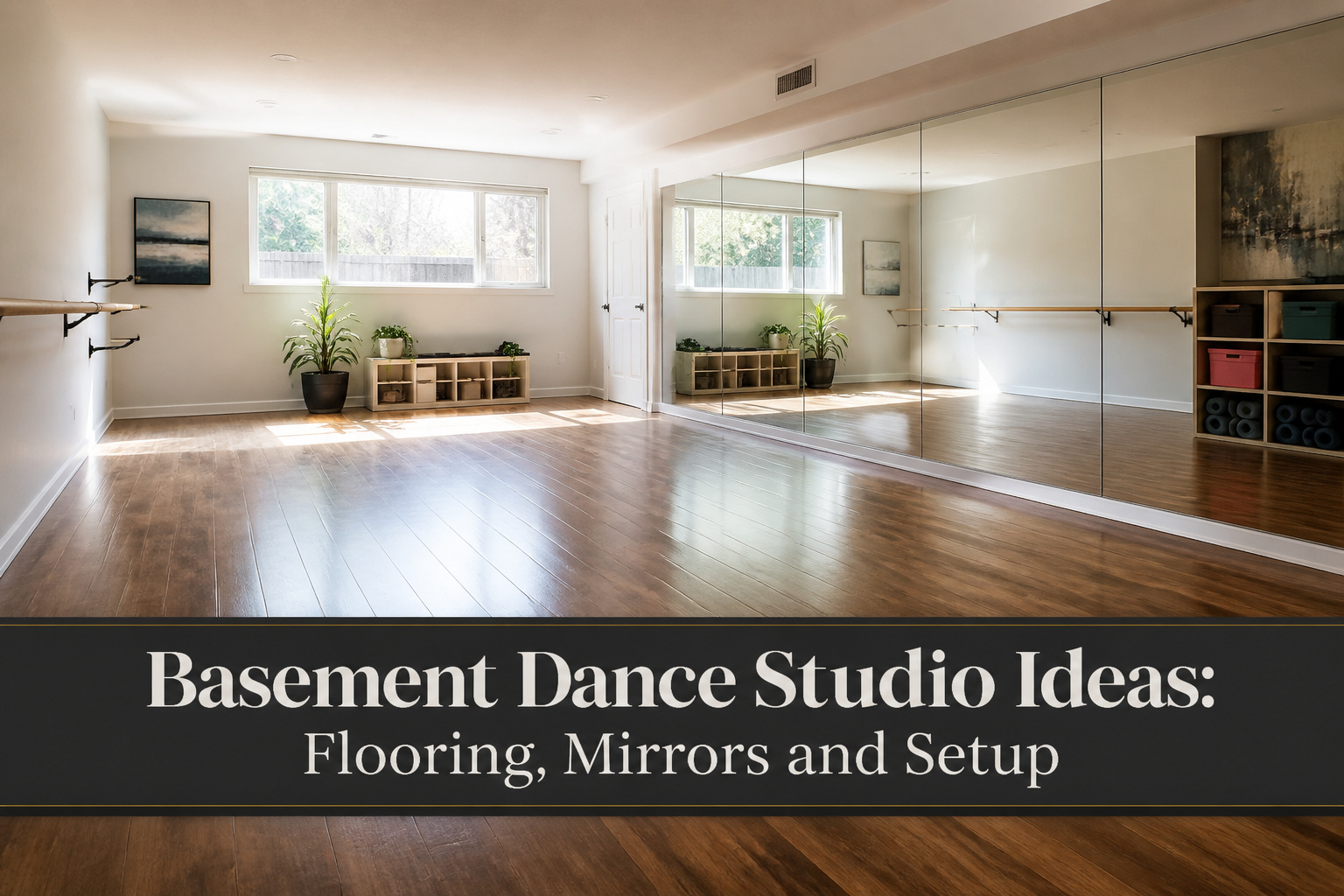
A basement dance studio is a converted lower-level space where flooring, mirrors and barres turn concrete into something you can actually train on. The catch is the slab itself: without a subfloor or cushioning layer, every jump sends impact straight back into your joints. Four out of seven retailers I checked put Rosco Adagio Marley at the top for the finished surface, though at $4 to $8 per linear foot, PVC shower pan liner is the budget swap that keeps appearing in builds people actually finish.
Marley Flooring

Rosco Adagio Marley Custom Cut sits at the top of most lists for a reason, and four out of seven places I checked had it ranked first. The vinyl surface gives enough grip for ballet barefoot or hip-hop in sneakers without catching, which matters more than you’d think at 10 p.m. when you’re too tired to swap shoes between videos. Rolls come custom-cut by the linear foot, so you’re not wrestling a standard width against a basement wall that bows six inches in the middle.
Expect to pay more than PVC shower pan liner, which runs about $4–$8 per linear foot and feels similar but wears faster under turning practice. Marley’s price stings upfront, yet the safety margin on traction pays off if anyone in the house jumps genres. I would skip the foam underlay unless concrete in your basement already bothers your knees; the thin cut layers fine over a plywood base if the subfloor is level, and that keeps the project inside a single weekend.
Recommended Products
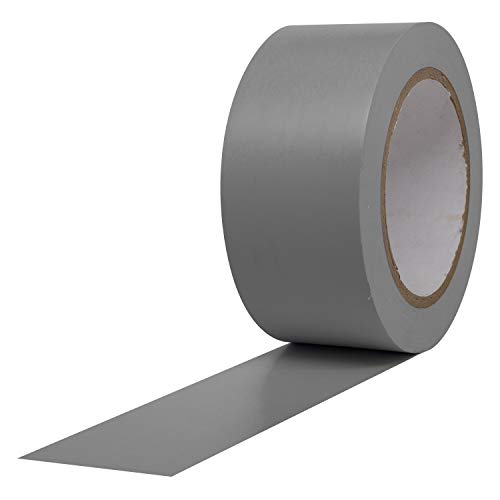
Pro 50 is a premium vinyl tape designed for safety marking and dance floor splicing

Professional Marley Dance Flooring | Controlled-slip matte vinyl dance floor with secure footing for ballet, contemporary, jazz, and lyrical. Low-reflection finish minimizes glare, with consistent medium-fast floor speed for home or studio use.

【SECURE & COMFORTABLE】- Color: Grey/Black; Thickness: 0.06"/1.5 mm; Product Weight: 31.8 lbs/14.4 kg; With the perfect balance of comfort and stability, this dance floor mat features a matte surface to keep the floor from sliding around and your feet from hurt.
Interlocking Foam Tiles

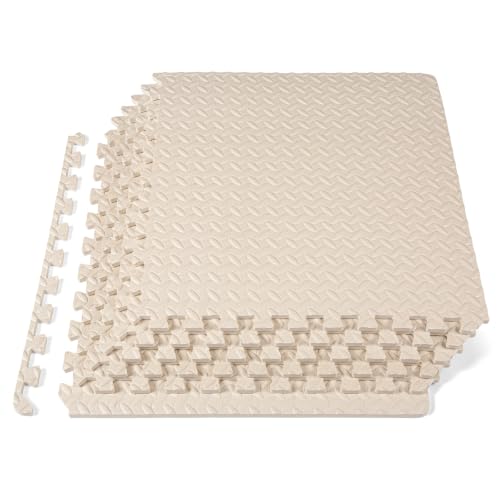
Interlocking foam tiles marketed as gym flooring are the cheapest way to cover cold basement concrete, and the 3/8-inch EVA versions ship light enough to carry down the stairs by yourself. You snap them together like puzzle pieces, trim the edges with a utility knife, and the included border strips hide the seams. The cushioning protects joints during jumps or floor work, and the slight grain on some models still lets you turn barefoot without sticking. For dancers with hard chargers in the house, that give underfoot matters more than the polished look.
The downside is real, though. Foam compresses under sustained pressure, so pointe work or repeated pivoting in the same spot will chew divots over time. It also deadens sound in a way that can throw off your rhythm if you are used to a harder floor. One family layered laminate over their foam base to solve this, screwing white border trim around the whole structure once the subfloor was down. That added cost and a weekend of terracing boards, but it turned the space into something closer to a real dance floor.
Foam tiles win for a temporary setup or a household mixing dance with play. For serious daily practice, they are a starting point you will likely outgrow.
Recommended Products

Ready-to-use waterproofing membrane

Ready-to-use waterproofing membrane

Ready-to-use waterproofing membrane
Plywood Subfloor

Concrete basement slabs are brutal on joints, and a plywood subfloor on 2×4 frames is the fix that separates a real studio from a taped-down afterthought. The build is straightforward: sleepers laid flat every 16 inches, topped with two layers of ACX plywood, the second layer offset to kill seams. A circular saw handles the cuts, a cordless drill drives the screws, and the whole thing floats without anchoring to the slab so it can breathe.
Marley goes on top, but the plywood layer matters even before that roll hits. Varnished ACX plywood runs cheaper than sprung systems and gives you a surface that is flat, slightly forgiving, and dry enough for vinyl. The total runs well under what commercial subfloor kits cost, though you lose the engineered bounce of plyometric rubber and modular court tiles.
Where this pays off: anyone doing jumps, turns, or repeated impact work. Where it is overkill: a yoga corner or light barre practice where foam-backed marley over a sealed concrete slab would do fine.
"The subfloor most closely resembles being in a studio. Any pains I had from dancing on tile were eased within one class on the subfloor."
That recovery in one session is what the frame-and-plywood route is buying. PVC shower pan liner at $4 to $8 per linear foot can substitute for marley if the budget tightens further, taped down with gaffer’s tape and rosin on top for grip.
Recommended Products

Protective & Cushioned - The high-density foam construction of We Sell Mats floor tiles provides a firm cushion to reduce the impact of exercising, playing, or standing for extended periods, protecting your joints, and minimizing fatigue.

Support for 24 Square Feet: Set of 6 black foam exercise tiles, each measuring 24 by 24 inches, features interlocking edges and includes 12 end borders, offering durable support for 24 square feet in your home, gym, or daycare

DUAL-TEXTURE DESIGN: This mat features textured top surface and textured bottom layer; dual-texture EVA foam delivers balanced comfortable touch, suitable for barefoot or shoe use
Sprung Dance Floor Panels

Sprung floor panels are built for dancers who plan to train seriously and want their joints to last. Unlike foam or vinyl laid directly on concrete, these systems use a layered construction of wood and elastomer blocks that compress and rebound, absorbing the shock of jumps and turns before it travels up through your ankles and knees. The difference underfoot is immediate: landing from a leap feels like touching down on a living surface rather than smacking solid ground.
The catch is always height. A proper sprung system adds several inches of stacked material, and in a basement with standard ceiling clearance that subtraction matters. Measure your lowest duct or beam before you price anything out, because the panel system plus a finished surface can easily eat up six to eight inches of headroom. For anyone under about seven and a half feet of total ceiling height, this option starts to feel like a dance studio built for hobbits.
Cost lands where you would expect for something engineered to professional standards. The investment runs well into four figures for a modest room, and that is before the actual dance surface goes on top. For a household with one dancer doing daily barre work or multiple people sharing the space, the durability and injury protection justify the price. For occasional practice or young children still learning alignment, the money probably sits better in a less specialized floor and a few years of lessons to see if the commitment sticks.
Recommended Products

Pro-grade Concrete T-Nails 2000PCS: meite 14 gauge concrete nails 2-1/2 inch, 400pcs/box & 5 boxes, feed 100% jam-free in all brands electric concrete nailer or pneumatic nail gun. T nails pierce poured basement walls or cured concrete without bending. Galvanized concrete T nails stop red rust when securing treated sill plates to exterior slabs

Pre-wired heating mat: Ultra-thin 1/8" (3 mm) pre-wired heating fabric allows for quick and easy installation, ensuring even heat distribution without cold spots.

✅ SUPER COMFORTABLE: Each tile has an attached 6 lb high density memory foam cushion. No additional cushion is needed as the attached memory foam cushion offers extreme comfort.
Vinyl Flooring
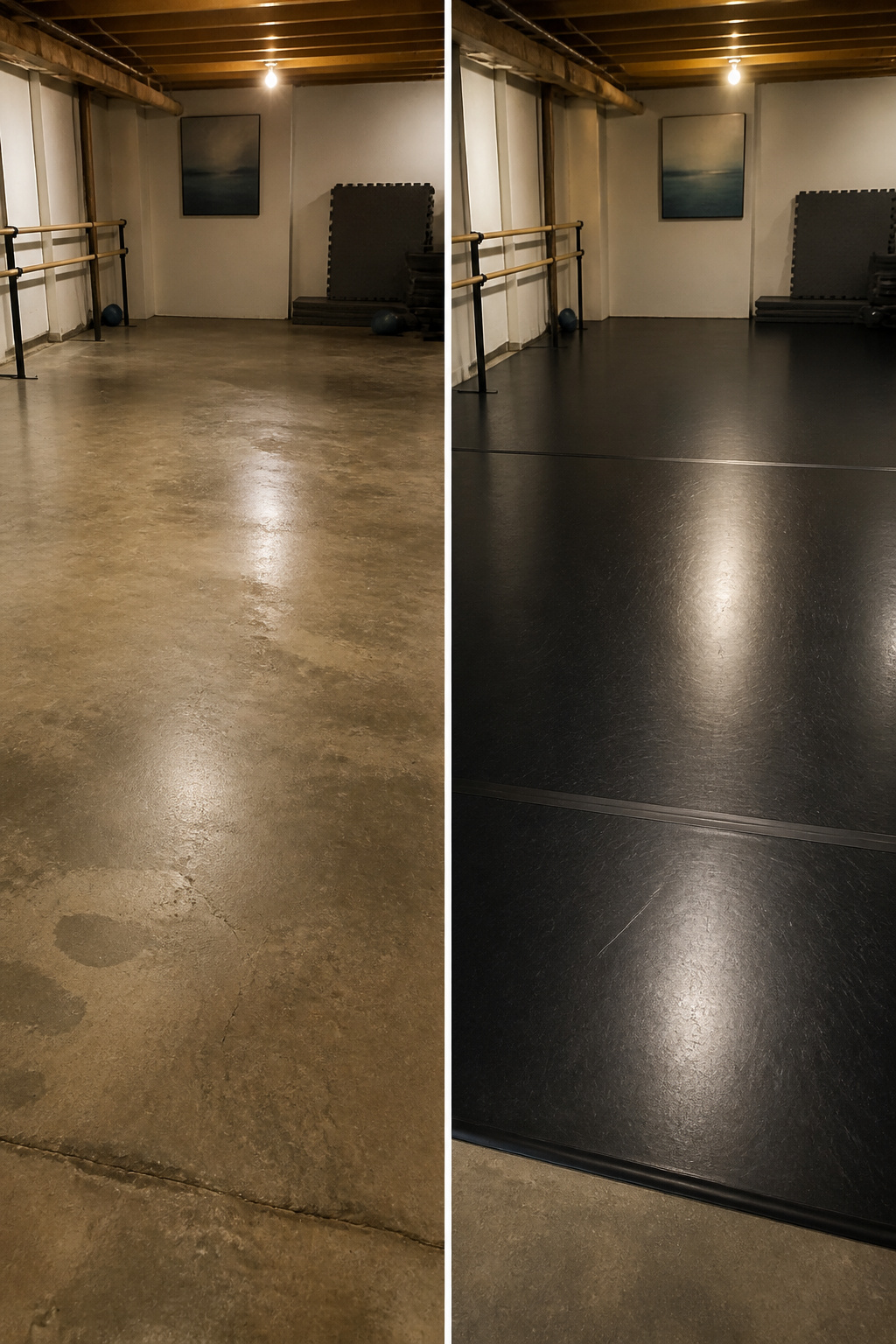
Vinyl flooring that mimics marley has become the budget workaround everyone talks about for basement dance studios. Rolls of PVC shower pan liner run about $4 to $8 per linear foot, which undercuts true marley by a wide margin, and the surface does feel similar at first step. The catch is how it behaves once you are actually moving on it. Marley is engineered for controlled slide and consistent traction across humidity levels; PVC liner grips differently, and that grip shifts depending on what is underneath it.
Where this works is low-impact practice and styles that stay mostly upright. Tap, on the other hand, will destroy it, and any turn-heavy work will have you fighting the floor. The material also needs an underlay, foam-lined subflooring or cushioned laminate over concrete, or you will feel every joint within twenty minutes. Gaffer’s tape holds the seams, but air bubbles are a constant fight, and rosin on top is not optional if you want to avoid landing hard.
For my money, the savings only hold if your basement is already dry and level, your dancing is casual, and you are willing to replace the surface in a couple of years. If you are teaching, performing, or working on pointe, the cost difference stops looking like a deal.
Recommended Products

Clear Full Body Reflection for Form Check: Made with HD tempered glass, this home gym mirror delivers a clear full body reflection so you can check squat depth, yoga alignment, dance posture, and daily workout form with more visual confidence.

HIGH QUALITY: The ballet barre is made of solid beech wood with metal brackets for a life time using.

From Baby Steps to Ballet Dreams: Whether she’s just learning to stand or already dancing in your arms, this ballet barre set is where future stars begin. Designed to support early development and inspire lifelong love of dance right from the nursery.
OSB Board

A 4×8 foot sheet of OSB board runs about $17 at Home Depot, and the store will cut it to size if you ask. That price makes it the cheapest way to cover a basement slab well enough to practice on. The surface is rougher than plywood, splinters more easily, and will never look finished, so it works best as a temporary floor or a practice layer you plan to cover later. I would use it only if the goal is to start dancing this weekend on the smallest possible budget, or if you are testing whether the basement studio idea sticks before spending more. Cement screws through the sheet and into the slab keep it from shifting when you jump, though any bowing in the boards will telegraph straight through. For a household with kids doing leaps and tumbling, that anchoring step matters; without it, the whole surface drifts.
Recommended Products

💃【STABLE MARLEY DANCE FLOOR FOR HOME】: Durable PVC marley dance floor for daily practice at home or studio. Smooth top with grippy backing helps reduce slips during turns and jumps.

PVC Comfortable Material: Color: Grey/Black; Product Weight: 31.1 lbs (14.1 kg). The high-quality dance floor is manufactured from scratch-proof, water-proof, and lightweight PVC material. Our product features a matte surface with the perfect balance of comfort and stability to keep the floor from sliding around and your feet from hurt.

Professional-Grade Flooring & Durability: This high-quality PVC dance flooring is a fantastic alternative to a traditional Marley floor. this durable vinyl dance mat is shock-absorbing, providing superior cushioning for your joints. It's built for intensive use in any dance studio or home practice space for dancers of all levels, from beginners to professionals.
Mirrors and Barres

Mirrors turn a basement wall into something you can actually use for self-correction. Without them, you are guessing at alignment. With them, you catch the tilt in a hip or the drop in an elbow the moment it happens. Studio-grade glass runs expensive, so the practical move is mirrored closet doors from a hardware store, mounted horizontally with a cordless drill. They are lighter to handle and far easier on a budget. For households with kids, acrylic dance mirrors trade some reflection clarity for being shatter-resistant, which matters more than perfect glass if someone takes a fall.
A barre gives hips and ankles the support ballet demands, but the real ones start around $80 and climb past $200. A basic wooden dowel or a standard handrail from the same store trip as the mirrors does the same job for a fraction of that. Mount it to studs, or build a freestanding frame if your basement walls are concrete and drilling is not worth the trouble.
For floor coverage, PVC shower pan liner at $4–8 per linear foot lays over your base layer and gives the grip Marley does without the Marley price. Tape it down with gaffer tape, smooth every bubble, and rosin on top if you need more bite. The whole setup, mirrors to barre to floor, runs a weekend and leaves enough budget to actually use the room.
Recommended Products

Material: PVC flexible type. Size: 5' x 6' shower pan liner sheet. Color: grey. Ready-to-use waterproofing membrane
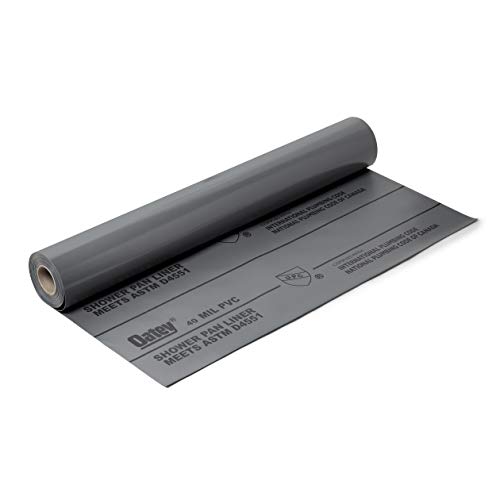
Ready-to-use waterproofing membrane

Material: PVC flexible type. Size: 5' x 5' shower pan liner sheet. Color: grey. Ready-to-use waterproofing membrane
Lighting and Ventilation

Basement windows rarely throw enough light to track your own footwork, so plan on at least two layers of artificial light before you hang a single mirror. Overhead fixtures alone flatten the body into silhouette; a row of shop lights down the center plus a few adjustable floor lamps at mirror height keeps you from guessing whether your knee is actually over your toe.
The temperature swing is the part that surprised me, reading through how people actually use these spaces. A basement that reads sixty degrees in October can sit at forty-five by January, and summer humidity turns the same room clammy once the concrete walls start sweating. Portable ceramic heaters with tip-over shutoffs work for warming up before a session, but they are not meant to run unattended; a wall-mounted fan paired with a basic dehumidifier handles the other three seasons more honestly than central air ever will. If the stairwell door is your only air path, a small window fan set to exhaust pulls enough circulation through to keep the mirrors from fogging mid-class.
Recommended Products
Protective & Cushioned - The high-density foam construction of We Sell Mats floor tiles provides a firm cushion to reduce the impact of exercising, playing, or standing for extended periods, protecting your joints, and minimizing fatigue.
PROTECTIVE GYM FLOOR MAT: Durable, non-skid gym flooring for home gym that covers and protects your floor or carpet while creating a comfortable workout room or play mat

CUSTOMIZABLE GYM FLOORING- Includes 18 interlocking 24 x 24 in tiles covering 72 sq ft for flexible floor protection in home gyms and workout areas.
Portable Studio Options

A portable basement dance studio lives or dies on how fast it stores and comes back out. The marley most people picture for a permanent install does come in smaller padded cuts, around 4 by 6 feet, light enough to roll up and slide behind a water heater. Pair that with a free-standing barre instead of anything wall-mounted, and the whole setup drops from a weekend project to something you carry downstairs in one trip.
The mirror is where most people stall out. A long mirror on wheels solves it. You roll it to the wall for practice, roll it flat against the wall or into a corner when the space needs to flip back to storage or laundry duty. No drilling, no patching, no explaining anything to a landlord.
What convinced me, reading through the setups that actually get used, is the subfloor question. A full sprung floor is out of the question for a temporary space. The cushioned kits built from plyometric rubber and modular court tiles, with marley laid over top, are the compromise that saves knees. They break down into stackable pieces. One dancer who built hers in Chicago said the tile pains from practicing on bare basement floor eased in a single class once the cushioning went in. That matches what I would expect: the body tells the truth faster than any product page.
Protecting the rest of the basement means thinking about moisture and weight. Marley itself is thin and easy to cut, so it conforms to uneven concrete without trapping water underneath. The modular tiles let air move. Store everything vertical if you can, barre collapsed, marley rolled tight. Horizontal stacks of flooring turn into mildew trays in a damp basement faster than you would guess.
Recommended Products

✅ SUPER COMFORTABLE: Each tile has an attached high density memory foam cushion. No additional cushion is needed as the attached memory foam cushion offers extreme comfort.

Install over concrete or wood sub-floors to protect them
Budget-Friendly Solutions

A real barre runs $80 to $200, which is enough to blow a basement budget before you even touch the floor. The wall-mounted version I kept circling back to would have eaten half my allotment for the whole room. What convinced me, reading through a dozen of these builds, was how many dancers were doing fine with a standard wooden closet rod and two heavy-duty brackets from the hardware aisle. The feel under your hand is not identical, but the height adjusts to your shoulder, and the whole setup lands under fifteen dollars.
For flooring, the leap to a sprung system is where cheap fails hardest. Concrete basement slabs send every landing straight back up your joints, and no surface layer fixes that. The compromise that keeps appearing is a sandwich: foam underlayment, a layer of OSB at roughly $17 per 4×8 sheet, then a top surface you can replace when it wears. Plywood works too, just a few dollars more per sheet, and the tongues and grooves line up cleaner.
The marley floor most studios use runs expensive in full rolls. The swap that keeps surfacing is PVC shower pan liner at $4 to $8 per linear foot, gaffer-taped down smooth and dusted with rosin for grip. It feels similar underfoot, and when a corner peels or a cat scratches it, you are out thirty dollars, not three hundred. Where this setup falls short is permanence; the tape loosens in humidity, and the rosin needs reapplying. For a space that doubles as storage on off days, that trade is usually worth it.
Recommended Products

Clear Full Body Reflection for Form Check: Made with HD tempered glass, this home gym mirror delivers a clear full body reflection so you can check squat depth, yoga alignment, dance posture, and daily workout form with more visual confidence.
Clear Full Body Reflection for Form Check: Made with HD tempered glass, this home gym mirror delivers a clear full body reflection so you can check squat depth, yoga alignment, dance posture, and daily workout form with more visual confidence.

Safety First, Train with Confidence:Made from 5mm automotive-grade tempered glass, Even if impacted, it shatters into small, rounded granules that won’t fall off—keeping your workouts safe and secure. Trusted by thousands for home and professional gyms.
Frequently Asked Questions
What is the best flooring for a home dance studio?
Rosco Adagio Marley Custom Cut ranks at the top of most lists for basement dance studios. The vinyl surface gives enough grip for ballet barefoot or hip-hop in sneakers without catching, and rolls come custom-cut by the linear foot to fit irregular basement walls. Expect to pay more than PVC shower pan liner, which runs about $4 to $8 per linear foot and feels similar but wears faster under turning practice.
How can I create a dance studio in a small space?
Use portable equipment that stores quickly and comes back out just as fast. A 4 by 6 foot padded marley cut, a free-standing barre, and a long mirror on wheels let you carry the whole setup downstairs in one trip and roll it away when the space needs to flip back to storage or laundry duty. No drilling, no patching, and no landlord conversations required.
What are the essential items for a home dance studio?
Mirrors, a barre, and appropriate flooring are the three pieces that turn a basement corner into something you can actually train on. Mirrored closet doors from a hardware store mounted horizontally work for reflection; a wooden dowel or standard handrail substitutes for an $80 to $200 real barre; and a floor layer, even just PVC shower pan liner at $4 to $8 per linear foot over concrete, protects your joints enough to practice safely.