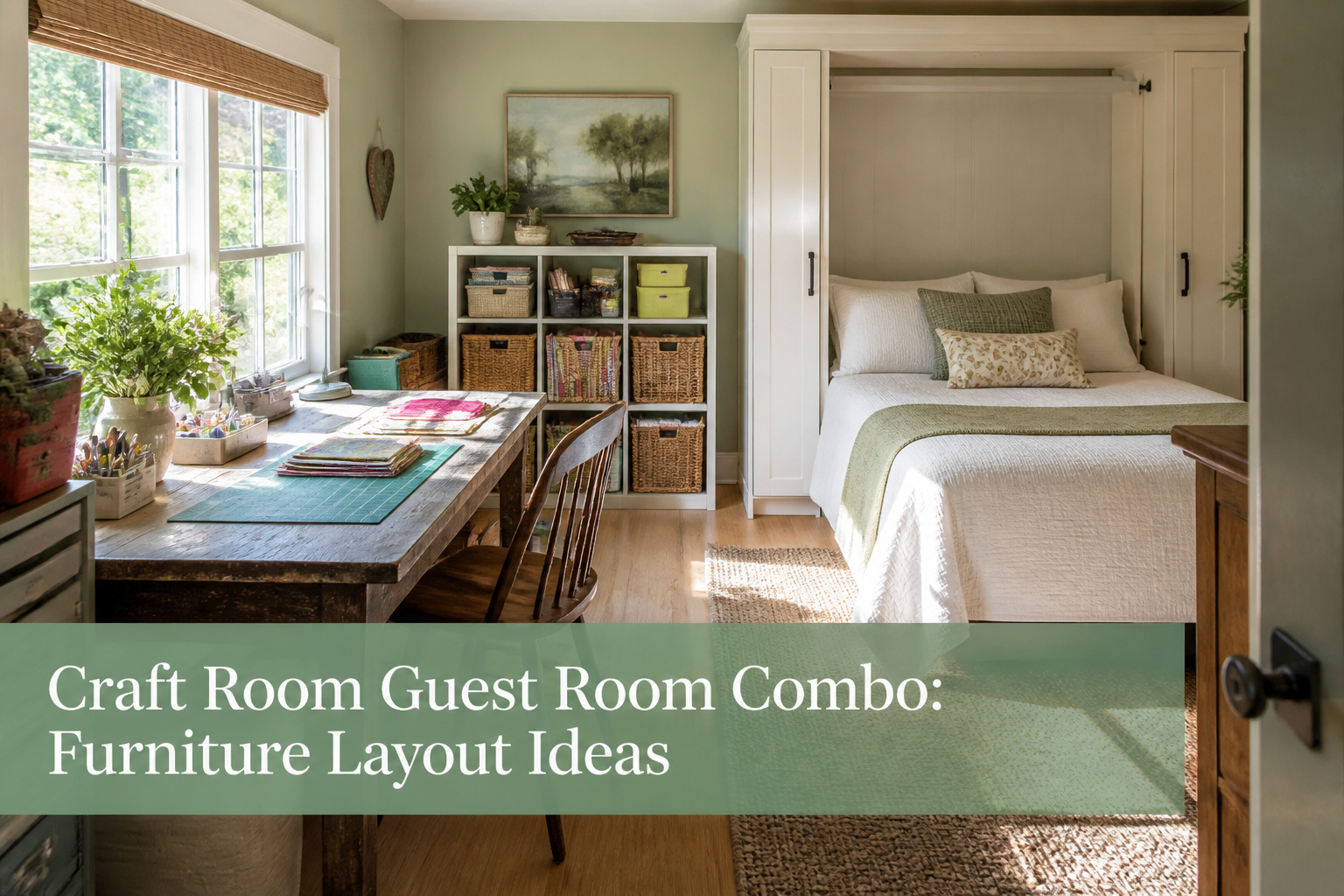
A craft room guest room combo is a single space that functions as a working studio most days and a sleeping area when visitors arrive. The catch is that neither role can permanently claim the room. A Murphy bed alone takes 16 inches of wall depth and needs studs spaced precisely right, or you will spend an unplanned day reframing. My own full-size wall bed split the difference between floor space and couple comfort on paper, but taught me the real limit was the wall itself.
Murphy Bed

Wall beds come in twin, full, and queen sizes, and the choice shapes what else fits in the room. A twin frees the most floor space for a cutting table or shelving, but only a queen lets a couple stay comfortably. My own setup uses a full, which split the difference on paper but taught me the real limit is the wall itself.
Installation is not a weekend project for one person. The bed frame bolts into wall studs, and the weight rating depends on both the hardware kit and whether those studs are 16 or 24 inches on center. I misread my own wall spacing and had to reframe a section, adding a day I had not planned. Most standard kits handle 250–600 pounds including mattress, but the mattress matters: memory foam keeps the weight down, while a traditional innerspring can push you past the limit without warning.
With the bed folded, the room reads as a studio. The vertical face takes about 16 inches of wall depth, roughly the same as a shallow bookcase, and you can mount a drop-leaf desk or pegboard directly to it. When guests arrive, the transformation takes about two minutes, though you will need to clear any project left on the floor beforehand.
Recommended Products

【SUPERIOR REBOUND FORCE】- One person can freely fold out or up the bed. Inside 5 premium springs, high rebound strength to ensure the whole process.
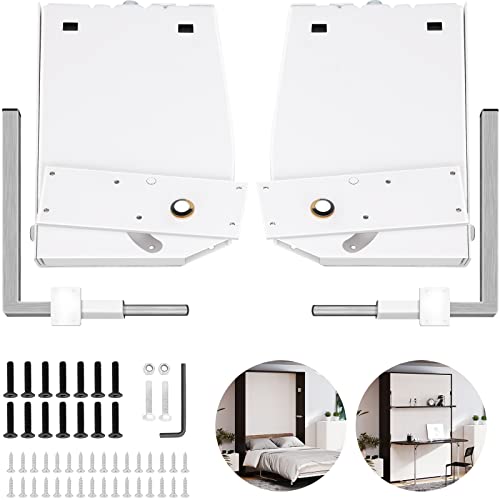
【SUPERIOR REBOUND FORCE】- One person can freely fold out or up the bed. Inside 9 premium springs, high rebound strength to ensure the whole process.

𝐂𝐎𝐌𝐏𝐋𝐄𝐓𝐄 𝐌𝐔𝐑𝐏𝐇𝐘 𝐁𝐄𝐃 𝐇𝐀𝐑𝐃𝐖𝐀𝐑𝐄 𝐒𝐘𝐒𝐓𝐄𝐌 — WHAT’S IN THE KIT — Includes gas piston lift system (smooth open/close rated for daily use), patented 2-in-1 auto-locking stainless steel pivot plates, heavy-duty square tube folding legs, quick-release mattress retention strap, all mounting hardware and fasteners, plus 3 fully illustrated guidebooks (Cut List Guide, Construction Guide, Assembly Handbook). No separate hardware store runs needed for the mechanical components.
Convertible Sofa

A convertible sofa that folds out to sleep a guest runs between 72 and 90 inches long, which is the footprint most craft rooms can spare along one wall. The mechanism matters more than the upholstery. The pull-out frame on my first one stuck halfway every third use, and the bar across the mattress woke me up for two years before I replaced it. The newer click-clack style, where the back drops flat, has no bar and no mattress to store, though the cushion itself is firm enough for one night and questionable for two.
Where this wins over a Murphy bed is easy to spot. A wall bed needs clearance to swing down, professional installation or a very patient weekend, and a budget that starts around a thousand dollars higher. A sofa works in rooms too small for that arc, functions as daily seating while you work, and moves with you when the lease ends. The trade is sleep quality. A Murphy bed accepts a real mattress; a sofa bed gives your guest foam inches and the memory of your craft room’s fabric scraps tucked in bins nearby.
For a space that hosts visitors four or five weekends a year, that trade felt right in my room. For someone expecting parents monthly, it probably would not.
Recommended Products

Minimalist and Modern:This full bed frame is made of metal, offering a simple and clean design.

【Murphy Bed Cabinet with Wardrobe & 3 Drawers】This murphy bed cabinet integrates a small wardrobe and three drawers, providing convenient storage space for clothes and everyday essentials. Use the wardrobe to hang clothes you'll need the next day, and organize other items across the three drawers for easy access. Perfect for apartments, guest rooms, or multi-purpose spaces.

【Storage Shelf with Built-in Charging Station/USB Ports】The Furnulem Full Bed Frame not only offers a spacious sleeping area, but also features a convenient storage shelf with a built-in charging station that includes 2 AC outlets and 2 USB ports or 1 USB Port and 1 Type C Port. This innovative design allows you to keep your devices within reach while providing ample space for books, Earphones, mobile phones, decor, and other essentials.
Storage Ottomans

A storage ottoman with a padded lid does three jobs in a craft room guest room combo: bench seating for guests, a footrest after standing at a cutting table, and a bin for the supplies you do not want visible. Some models hold up to 50 pounds inside, which is enough for a serious yarn stash or a full set of acrylic paints and brushes.
Mine holds yarn, sorted by weight into zip bags so the whole bin does not become a single tangled mass. The lid flips to become a tray for drinks or a phone, a small detail that matters when the ottoman doubles as a nightstand for someone sleeping over. The mistake I made was loading one corner with heavy fabric bolts while the rest stayed light; the base sagged within a month and the lid stopped sitting flat. Weight needs to be spread, and the floor underneath needs to be level, or the frame twists.
Recommended Products

A versatile tri-fold mattress designed for everyday living:Easily unfolds into a comfortable bed for overnight guests, offering cloud-like support that’s far better than sofas or air mattresses. It pairs perfectly with a murphy bed, folding compactly for easy storage in small spaces. Used in the living room, it works as a futon sofa bed or large floor mattress, offering generous space for couples’ movie nights and relaxed lounging.

【Foldable & Space-Saving】Tri-fold memory foam mattress folds flat for storage or travel. Great for guests, dorms, or camping—offers firm, body-aligned comfort anywhere

Flexible Sleep Solutions for Any Space: Maximize your room with this folding mattress. It quickly collapses into a triple-fold compact shape in seconds, making it the perfect portable mattress for small apartments, closets, or tucking under beds. An ideal compact guest bed solution that saves space while maintaining comfort.
Wall-Mounted Desks

A wall-mounted desk that folds flat against the wall keeps the middle of the room open when guests need to walk around or roll out a suitcase. Most hardware places the work surface at 28 to 30 inches from the floor once unfolded, which is the same height as a standard dining table and comfortable enough for cutting fabric or typing without hunching.
Mine is mounted into a single stud with lag bolts, and I was lucky. The wall I picked had a stud exactly where I wanted it. What I should have checked first was whether the bracket arms would clear the baseboard when folded up; they didn’t, so I had to trim a three-inch gap into the top of the trim after the fact. A half-inch spacer behind the mounting plate would have saved the trouble.
When the desk is down, the legs lock at an angle and the front edge sits solid. When it is up, a magnetic catch holds it against the wall, though I added a small bungee after the catch slipped once during a humid week.
Recommended Products

[Tool-Free Assembly & Instant Readiness]: This Convertible Sofa Bed features a unique fixed-shape frame and requires no assembly, arriving fully ready for use. Simply unpack your sofa bed couch, let the high-density foam rebound for 48-72 hours, and snap the metal support framework into place tool-free. Set up your new boneless couch in minutes for home, office, or waiting room use

[More Size Options] Six sizes available, including standard S/T/F for users up to 5'9" and XL versions SXL/TXL/FXL with extended legroom for taller sleepers up to 6'4". Our size range caters to all height needs from kids through adults. The S-Series offers a perfect fit for smaller body frames, including slim adults, teens, and kids.

[More Size Options] Six sizes available, including standard S/T/F for users up to 5'9" and XL versions SXL/TXL/FXL with extended legroom for taller sleepers up to 6'4". Our size range caters to all height needs from kids through adults. The S-Series offers a perfect fit for smaller body frames, including slim adults, teens, and kids.
Multi-Use Tables

A table that works for both crafting and hosting needs to earn its keep by switching roles fast. Mine sits at 42 inches wide, a size I picked because it fills the wall without blocking the door swing when guests pull their bags through. Anything over 60 inches starts to feel like a dining room fixture in a room that also needs to breathe; under 30 and you’re cutting fabric on the floor again.
The real trick is the ten-minute clear-off rule. I keep two shallow bins under the table, nothing with a lid that takes fussing. When the guest bed is open, supplies slide off the surface and into those bins in one sweep. The surface itself is laminate, not wood, because hot glue peels off laminate and wood does not forgive that mistake.
For desk work, the same height that feels right for sewing also works for a laptop if I add a slim keyboard tray underneath. The tray cost less than a new desk and stores flat against the apron when I do not need it. What I gave up was the dream of a built-in cutting mat; the self-healing mat rolls up and stores in the bin instead, and that compromise saved the whole layout.
Recommended Products

【Specification】: Top Length: 13", bottom length: 14.1", the height when use: 6.1"

Name: Small dual-purpose hinge,Material: metal,Color: black,Material thickness: 2.3mm
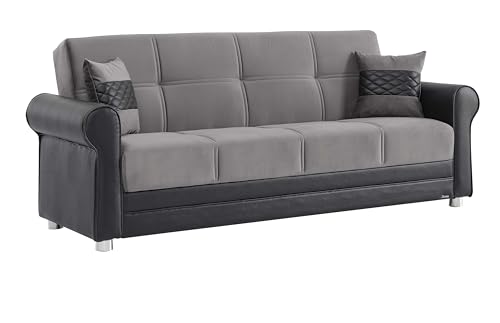
[Convertible Sofa Bed, Futon Couch & Sleeper Sofa in One]: Part of the Ottomanson Stratford Collection, this multifunctional seating furniture easily converts from a living room couch into a sleeper bed using a click-clack sit-to-sleep conversion mechanism. Designed for apartments, guest rooms, offices, and multipurpose living spaces.
Pegboards

Wall-mounted pegboards turn tool storage into something guests actually want to look at. The standard 24×48-inch or 32×48-inch boards fit most open wall sections between a door and a closet, and the steel or Masonite surface takes paint or fabric backing without warping.
I keep metal hooks on the left third for scissors, rotary cutters, and rulers so they hang handle-out and do not scrape the wall. The center holds clear acrylic bins for thread spools sorted by color; guests see a gradient instead of clutter. My bottom row is wider hooks for batting rolls and a clipboard with current project notes, which I flip to a printed landscape photo when company arrives.
The 32×48-inch board in my space leaves roughly eighteen inches of painted wall on either side, enough breathing room so the wall does not read as pure utility. A 24×48-inch board over a narrow console works better in tighter rooms where a guest might set down a bag. I painted mine Benjamin Moore Hale Navy against white walls; the contrast makes the tools read as deliberate, not leftover.
Recommended Products

TIME TESTED: Our kits have stood the test of time for over 35 years. If you’re going to build a high-quality murphy bed, you want it to last a lifetime. American-made steel, labor, and support are behind each kit.

Build With the Experts: With over two decades of proven reliability, our kits are designed to last a lifetime, making them perfect for constructing a premium Murphy bed. Commercial grade steel, exceptional strength, and durability are behind each kit. Engineered to support up to 2,000 lbs, our kits are the ultimate solution for maximizing your living area.

ADJUSTABLE DELUXE MURPHY BED KIT: Patented Adjustable mechanism allows you to perfectly balance the weight of your bed in seconds. A bed that is too heavy to lift, or too light to stay on the floor, is a thing of the past. The kit includes all the hardware you need to build the best Murphy Bed imaginable. All you need is a mattress, wood, and a few basic woodworking tools.
Decorative Dividers

A folding screen or bookshelf divider does the construction-free work of splitting one room into two zones. The best placement puts the divider perpendicular to the bed’s long side, creating a visual back wall for the craft area that guests do not have to look past on their way to sleep.
I tried a six-panel rattan screen first because it let light through and weighed almost nothing. That turned out to be the problem; a guest bumping it on the way to the bathroom sent my half-sorted fabric stack into view. A low, open-back bookshelf replaced it, positioned about four feet from the foot of the bed. The shelves faced the craft zone so supplies stayed hidden behind spines and bins, while the finished side faced the bed with a lamp and a small stack of books.
Folding screens work better for hiding works in progress that do not need daily access, since unfolding and refolding them becomes its own chore. Bookshelf dividers cost more floor space but earn it back in storage and stability; mine held a cutting mat on the top surface I would not have had otherwise. For renters, neither leaves a mark when the room needs to become something else.
Recommended Products

FASHIONABLE AND BEAUTIFUL:This bed frame adopts wrought iron frame,featuring a sleek and minimalistic design.The edges and corners of the bed frame have been carefully polished, making it easy to clean with a damp cloth.The bed frame's contemporary style will complement all your home decor, adding a touch of elegance and sophistication to your bedroom.

Minimalistic Modern Design with Ample Under-Bed Storage: The clean lines and minimalist design of the bed frame contribute to a modern aesthetic, ideal for various bedroom styles. And it provides enough space for storage under the platform bed, optimizing space utilization.

【All-in-One Charging Station】 Transform your bedside into a clutter-free charging hub. This innovative full size headboard combines two spacious tiers for books, devices, and decor with a built-in charging station—featuring 2 AC outlets, 1 USB port and 1 Type-C Port. Keep your lamp, phone, smartwatch, and tablet powered overnight, with everything organized and within arm’s reach. This full bed frame is the seamless fusion of function and calm that your modern life deserves.
Color Schemes That Unify

A craft room guest room combo lives or dies on whether the eye reads it as one room instead of two functions fighting for space. Light, neutral colors do that work better than anything I tried. A single warm off-white on every wall erases the visual border between the sewing corner and the sleeping area, so the room feels maybe a third larger than it did with the previous owner’s two-tone scheme.
I went with Benjamin Moore’s Swiss Coffee on walls, Pashmina on trim, and a quiet greige on the ceiling to keep the eye moving upward. The ceiling color matters more than I expected; a flat white overhead would have dropped like a lid and made the Murphy bed zone feel like a cave when it was down.
These tones also forgive the mess that makes combo rooms stressful. Swiss Coffee has enough yellow in it that a stray paint splatter from a Saturday project doesn’t jump out the way it would on a stark white. Pashmina on the baseboards hides the scuffs from a suitcase wheel or a dropped glue gun. Fabric clutter on the open shelving still reads as texture rather than chaos because nothing underneath it is screaming for attention.
The one place I broke the palette was inside the closet, where I used a deep sage on the back wall. That choice keeps the storage zone from feeling like a black hole when guests hang clothes, but the door closes it off entirely from the room’s main sight line.
Recommended Products

Upgraded PE Breathable Fabric: Our 6 inch queen size foldable floor mattress uses premium breathable fabric with a silky, gentle touch for great comfort. It avoids stuffiness and trapped heat during long-time use, supporting pleasant sleep all season.

Pressure Relieving Plush Contouring Memory Foam: Designed for use over your existing mattress, high‑density gel‑infused plush memory foam hugs your body curves to minimize pressure points for restful sleep. It refreshes worn mattresses and softens hard beds to extend mattress lifespan, perfectly suited for side, back and stomach sleepers with full contour support

Versatile Folding for All-Scene Comfort : A versatile tri-fold mattress designed for daily life.The neutral gray finish blends naturally into various interior settings. Easily unfolds into a comfortable bed for overnight guests, offering cloud-like support .It pairs perfectly with a murphy bed, folding compactly for easy storage in small spaces. Used in the living room, it works as a futon sofa bed or large floor mattress, offering generous space for couples’ movie nights and relaxed lounging
Lighting for Two Purposes

Task lighting in a craft room guest room combo has to serve two masters, and the ceiling fixture most rooms come with serves neither well. I learned that the hard way after straining through embroidery one evening while a guest slept two feet from a blazing overhead bulb.
The fix was splitting the room into zones. Bright, cool light lands exactly where my hands work: a swing-arm desk lamp clamped to the craft table and a floor lamp with an adjustable neck for the cutting mat. Both run 4000K LEDs that read as clear daylight without the blue cast that tires eyes after an hour. For the guest zone, a bedside wall sconce on a dimmer and a small table lamp with a fabric shade keep things warm at 2700K. The two temperatures never compete because they point in different directions and hit at different heights.
Guests control their side without touching my setup. The sconce dims from the bed; the table lamp turns on at its base. My craft switches sit on a power strip behind the desk, invisible from the sleeping area. No one has to ask how the room works, and no one accidentally floods the mattress with task light at midnight.
Recommended Products

[Tool-Free Assembly & Instant Readiness]This Convertible Sofa Bed features a unique fixed-shape frame and requires no assembly, arriving fully ready for use. Simply unpack your sofa bed couch, let the high-density foam rebound for 48-72 hours, and snap the metal support framework into place tool-free. Set up your new boneless couch in minutes for home, office, or waiting room use.

3-IN-1 CONVERTIBLE SLEEPER CHAIR: This sleeper chair features a hidden pull-out bed design that effortlessly transforms into a single sofa chair, lounge chair, or small sofa bed with just a pull! Perfectly suited for everything from daily relaxation or overnight guests, this multifunctional chair bed allows you to enjoy movies, reading, or sleep. Maximize your space utilization while enhancing your home’s functionality.

✅ Tri-Fold Convertible Sofa Couch :This corduroy trifold mattress folds and unfolds in seconds, an ideal foldable bed, futon sofa bed, floor sofa and full size floor mattress for small apartments, RVs and narrow living spaces. It can be fully laid flat as a comfy overnight guest floor bed, folded compactly for space-saving storage, or used as a soft yoga mat, reading lounge, nap mat to satisfy all daily rest demands.
Storage That Keeps the Peace

Vertical wall storage changed everything for keeping supplies within reach but off every surface a guest might touch. I mounted shallow cabinets with doors above the worktable; paint tubes, rotary cutters, and half-finished projects disappear inside in about three minutes. The closed containers matter more than I expected. Open baskets looked organized in daylight but turned into visual noise by lamplight, and guests do not need to know how many shades of teal thread I own.
My under-twenty-minute routine runs on two principles: everything on the worktable goes into a single wheeled cart that rolls into the closet, and the guest bed stays made with a quilt that covers the whole mattress, no tucked-in top sheet to wrestle with. What I underestimated was how long the floor takes. Scraps migrate. A single stray embroidery floss underfoot reads as negligence, not craft, so the last five minutes always go to crawling around with a handheld vacuum.
The thing I still trip over, literally, is the cutting mat. It lives behind the door, propped upright, and it slides. A narrow wall hook would solve it, but I have not drilled the hole yet.
Recommended Products

[Convertible Sofa Bed, Futon Couch & Sleeper Sofa in One]: Part of the Ottomanson Stratford Collection, this multifunctional seating furniture easily converts from a living room couch into a sleeper bed using a click-clack sit-to-sleep conversion mechanism. Designed for apartments, guest rooms, offices, and multipurpose living spaces.

[Convertible Sofa Bed, Futon Couch & Sleeper Sofa in One]: Part of the Ottomanson Stratford Collection, this multifunctional seating furniture easily converts from a living room couch into a sleeper bed using a click-clack sit-to-sleep conversion mechanism. Designed for apartments, guest rooms, offices, and multipurpose living spaces.

3-in-1 Convertible Futon Sofa Bed: With a smooth click-clack mechanism and 3 adjustable backrest angles (105°/145°/180°), this futon switches between sofa, lounger and sleeper modes in seconds and seats 2-3 people for apartment, home and office use
Personal Touches Without Clutter

The wall above the craft desk holds a single narrow ledge where three items sit at any given time: a small framed print, a ceramic dish that catches pins, and whatever finished piece feels closest to done. Everything else lives in a flat file drawer, rotated out when guests are due. Early on I kept a quilt frame permanently set up because the half-finished top felt like proof I actually used the room. A friend staying over mentioned, unprompted, that she had worried about knocking it over in the night. That comment stuck with me longer than I expected.
Guests register unfinished work as clutter faster than the person making it ever will. The quilt frame went to the closet that same weekend. Replacing it with a small basket of folded hand towels on the desk corner changed the feedback entirely; two different visitors have since mentioned the room felt "intentional," a word nobody used before. The basket cost nothing extra, just a reallocation of what I already owned, but the signal it sent was different. The towels say the room was prepared for someone, not borrowed from a project in progress.
Frequently Asked Questions
What are the best color schemes for a craft room guest room combo?
Light, neutral colors unify the space and make it feel larger. A single warm off-white on every wall erases visual borders between work and sleep zones, while slightly darker trim and a greige ceiling keep the eye moving. These tones also hide stray paint splatters and scuffs better than stark white.
How can I maximize storage in a small craft room guest room?
Use vertical wall storage like shallow cabinets with doors above the worktable, plus pegboards with metal hooks and clear bins for tools. A wheeled cart corrals everything on short notice, and storage ottomans hide supplies while serving as seating. Spread weight evenly inside ottomans so lids stay flat.
What furniture is essential for a craft room guest room combo?
A Murphy bed, convertible sofa, or storage ottoman handles sleeping guests. Add a multi-use table for crafting and hosting, plus a wall-mounted or fold-down desk to keep floor space open. Pegboards and room dividers round out the layout without requiring construction.