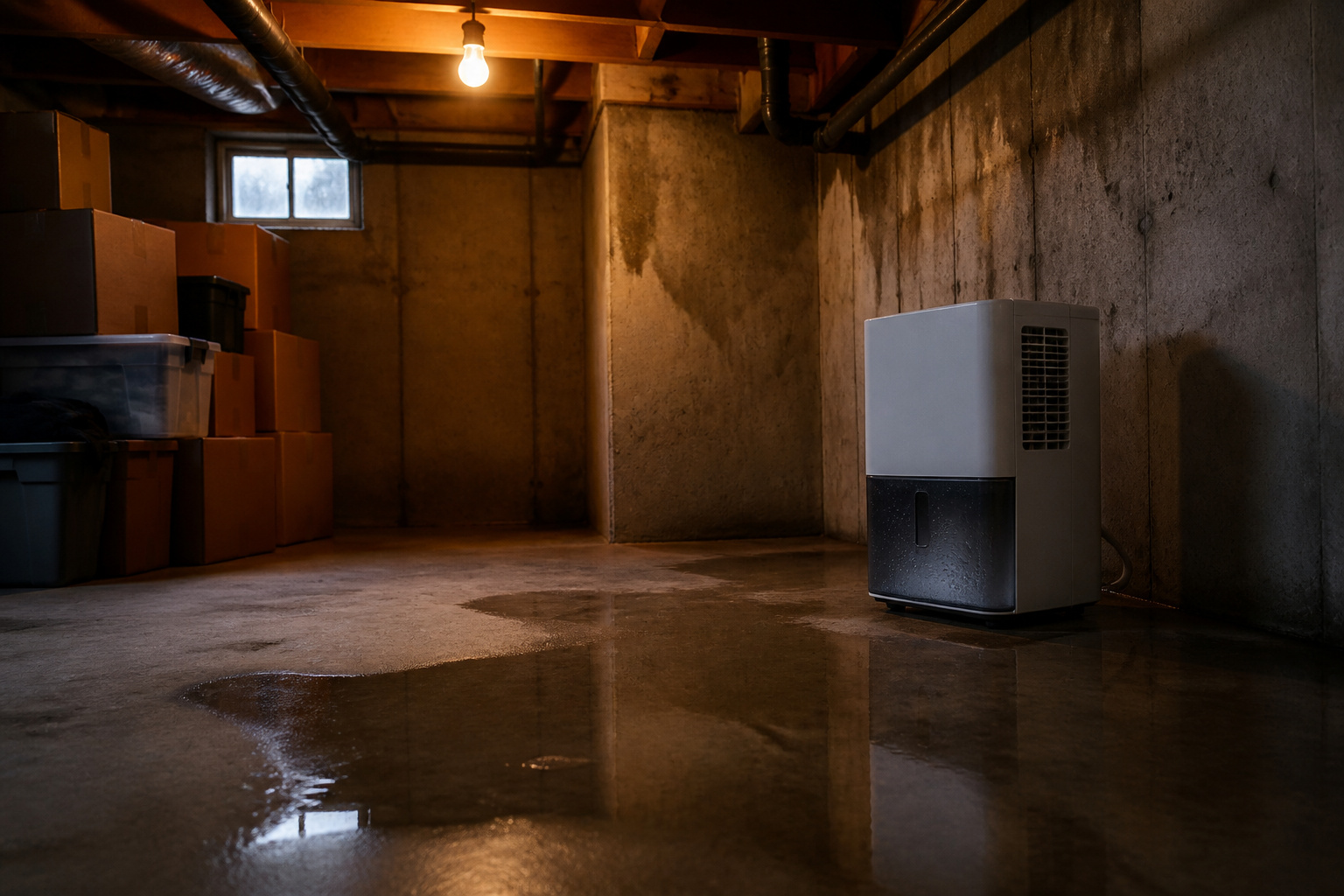
The Midea Cube is the best dehumidifier for basement use overall because its 50-pint daily capacity matches what most finished or semi-finished basements actually need, and the app control means checking the bucket from upstairs instead of the bottom step in a cold stairwell. That 50 dB noise level is noticeable in a quiet TV room, so light sleepers running a basement bedroom will want to look at quieter options further down.
My Top Picks
| Product | Award | Best for | Why it won | ||
|---|---|---|---|---|---|
 |
Midea Cube | Best Overall: General basement moisture control | Anyone needing all-around basement moisture control | Balances capacity, efficiency, and features better than any rival for typical basements | Check price |
 |
Midea MAD50C1ZWS | Best Smart Dehumidifier: Tech-savvy users wanting remote control | Tech-savvy buyers who want remote control | Built-in Wi-Fi and app control let you monitor and adjust settings from anywhere | Check price |
 |
AlorAir Sentinel HD55 | Best for Low Temperatures | Basements that run cold year-round | Keeps pulling moisture even when temperatures drop below where standard units struggle | Check price |
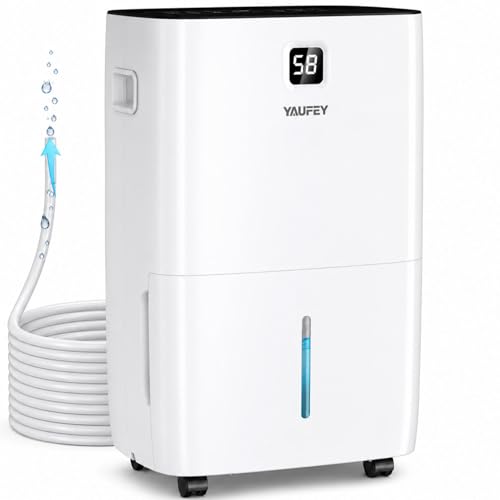 |
Yaufey 150 Pint Dehumidifier | Best for Large Spaces | Owners of very large basements | 150-pint capacity handles sprawling spaces that smaller units simply cannot keep up with | Check price |
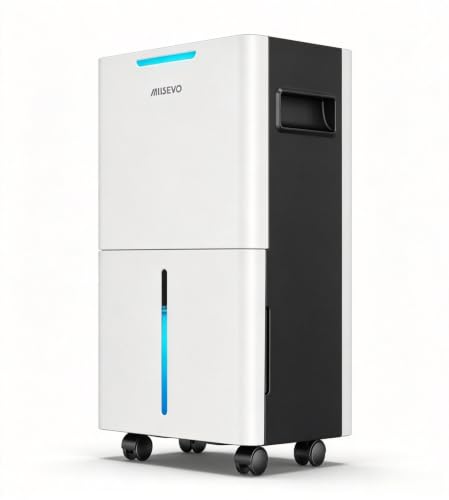 |
Aiusevo 21 Pint Dehumidifier | Best Budget | Tight budgets with small spaces to dry | Delivers basic moisture removal without paying for capacity or features you will not use | Check price |
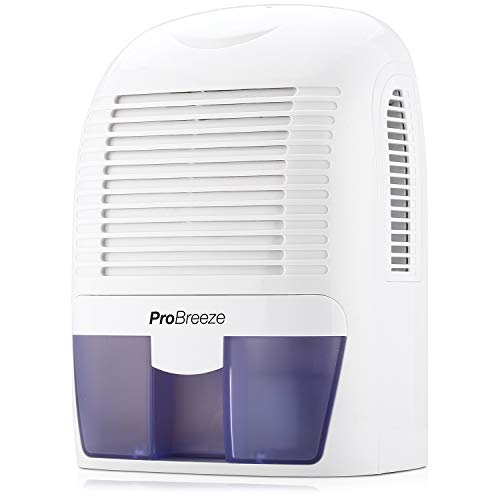 |
Pro Breeze Mini Dehumidifier | Best for Small Basements | Tiny basements or partial crawl spaces | Compact size fits where full-size units cannot, yet still tackles damp corners effectively | Check price |
 |
Honeywell TP50WK | Best for Medium Rooms | Mid-size basements needing balanced coverage | Right-sized power for spaces too big for mini units but not vast enough for industrial models | Check price |
 |
hOmeLabs HME1003 | Best for Energy Efficiency | Buyers wanting lower electricity bills | Energy Star certification means it runs cheaper month after month compared to conventional designs | Check price |
 |
Ludatido 5000 Sq.Ft 80 Pint Dehumidifier | Best for High Capacity | Severely damp or flood-prone basements | Eighty-pint capacity rapidly pulls heavy moisture loads that overwhelm ordinary dehumidifiers | Check price |
 |
KNKA Energy Star 5500 Sq.Ft Dehumidifier | Best for Medium to Large Rooms | Medium-to-large basements wanting efficient coverage | Combines high capacity with Energy Star efficiency for bigger spaces without runaway power use | Check price |
| Product | Capacity (pints) | Height (in.) | Length (in.) | Width (in.) | Noise Level (dB) |
|---|---|---|---|---|---|
| Midea Cube | 50 pints/day | — | — | — | 50 dB |
| Midea MAD50C1ZWS | 50 pints/day | — | — | — | 50 dB |
| AlorAir Sentinel HD55 | 55 pints/day | — | — | — | 55 dB |
| Yaufey 150 Pint Dehumidifier | — | 24.37 in | 15.47 in | 11.73 in | — |
| Aiusevo 21 Pint Dehumidifier | — | 15.94 in | 6.89 in | 9.65 in | — |
| Pro Breeze Mini Dehumidifier | — | — | — | — | — |
| Honeywell TP50WK | 50 pints/day | — | — | — | 50 dB |
| hOmeLabs HME1003 | 50 pints/day | — | — | — | — |
| Ludatido 5000 Sq.Ft 80 Pint Dehumidifier | — | 13.77 in | 7.87 in | 23.62 in | — |
| KNKA Energy Star 5500 Sq.Ft Dehumidifier | — | 20.87 in | 11.14 in | 14.17 in | — |
Recommended Products

4,500 SQ. FT. DEHUMIDIFIER – Removes up to 50 pints of moisture per day with an adjustable humidity setting from 35% to 85%. Perfect for use in basement, bathroom, bedroom, office, kitchen, cellar, or crawlspace. Maintain a healthy 45%-55% humidity range

EASY TO CLEAN WASHABLE FILTER: Capture dust from the air and keep your dehumidifier working efficiently with our easy-to-clean washable filter.

2500 Sq.Ft High Capacity Dehumidifier- The GoGuess basement dehumidifier is equipped with a quiet yet powerful compressor that efficiently extracts up to 34 pints of moisture per day (tested at 95°F and 90% RH). Perfect for use in basements, offices, bathrooms, bedrooms, kitchens, storage areas, living rooms, laundry spaces, garages, crawl spaces, and RVs. It helps maintain a healthy humidity level between 30% and 70%, promoting a more comfortable and healthier indoor environment.
Best Overall: General basement moisture control: Midea Cube
1,500 Sq.Ft. OF COVERAGE - Midea dehumidifier with drain hose is able to collect 20 pint (Similar to 30 PT-2012 DOE) of water a day and adjust humidity from 35% to 85%,...
Recommended Products

1,500 SQ. FT. DEHUMIDIFIER – Removes up to 22 pints of moisture per day with an adjustable humidity setting from 35% to 85%. Perfect for use in basement, bathroom, bedroom, office, kitchen, cellar, or crawlspace. Maintain a healthy 45%-55% humidity range.

Removes up to 50 pints of moisture per day to help reduce excess humidity in basements, large rooms, laundry rooms, and other damp indoor areas, making it ideal for homes in humid climates and moisture-prone spaces.
1,500 Sq.Ft. OF COVERAGE - Midea dehumidifier with drain hose is able to collect 20 pint (Similar to 30 PT-2012 DOE) of water a day and adjust humidity from 35% to 85%, perfect for use for basement, bathroom, bedroom, or crawlspace.
Quick Verdict
General basement moisture control asks for enough capacity to handle damp concrete and seasonal humidity without running the unit into the ground. The Midea Cube pulls 50 pints per day, which covers most finished or semi-finished basements without oversizing the hardware. The app control means checking the bucket or adjusting the target humidity from upstairs, not from the bottom step in a cold stairwell. The catch is the footprint: at 17.68 x 11.02 x 24.09 inches, it needs real floor space, and the noise level sits right at 50 dB, noticeable in a quiet TV room.
Key Specifications
- Capacity (pints): 50 pints/day
- Noise Level (dB): 50 dB
What It Does Well
- 50-pint daily capacity handles the steady seepage that basements collect through block walls and slab floors during wet months.
- Wi-Fi app control lets you start a drying cycle before you head down with laundry, or check whether the bucket actually needs emptying.
- Lift-out bucket removes the awkward tipping maneuver that spills condensation back onto the floor; the washable filter also means no recurring filter purchases.
- Noise under 50 dB keeps it from dominating conversation in a basement office or workout corner.
Where It Falls Short
- The 24.09-inch height plus the cube shape can block low windows or sit awkwardly under utility shelves.
- 50 dB is still a fan running continuously; light sleepers using a nearby basement bedroom will hear it.
- No pump option in the base unit means gravity drainage or manual emptying; raised drains or sink hookups need creative tubing.
Who It’s For
Someone with a damp but not flooded basement, finished enough to spend time in, who wants to set a humidity target and mostly forget it. The person who needs whisper-quiet operation for a basement bedroom or recording space will find the 50 dB spec a hard limit, not a minor note.
How It Compares
The Honeywell TP50WK matches the Midea on pint capacity and energy profile, and owners describe both as reliable over multiple seasons. The meaningful difference is the form factor and control style: the Honeywell runs as a traditional vertical tank unit without app integration, which suits buyers who distrust smart-home dependencies or lack reliable basement Wi-Fi. The Midea rewards the buyer who checks humidity from the kitchen and empties the bucket only when the notification says so.
Where to buy: Amazon
Best Smart Dehumidifier: Tech-savvy users wanting remote control: Midea MAD50C1ZWS
4,500 SQ. FT. DEHUMIDIFIER – Removes up to 50 pints of moisture per day with an adjustable humidity setting from 35% to 85%. Perfect for use in basement, bathroom, bedroom,...
Recommended Products

【45-80 Pints for 4500 Sq.Ft Moisture Control】:This dehumidifier for basement and home features flexible 45–80 pints dehumidification output with an ultra-wide 4500 square feet coverage range, offering premium whole-space moisture control. No matter damp basement, humid bathroom, quiet bedroom for restful sleep, large living room, or compact RV traveling space, this multi-functional dehumidifier for home effortlessly sucks up excess moisture,, maintaining ideal humidity levels for all indoor environments.
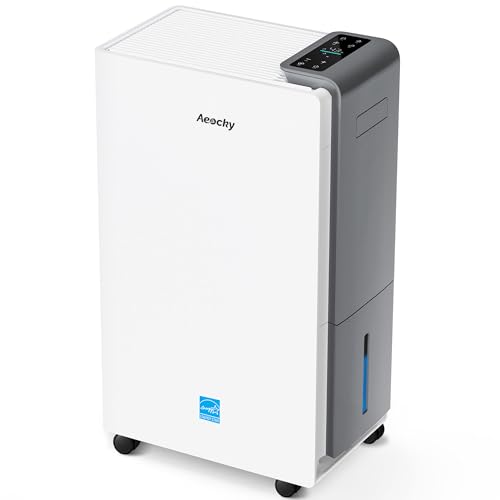
【ENERGY STAR 25 ≠ ENERGY STAR Most Efficient 2025】Don't fall for competitors' word games. With only 2.6% of ENERGY STAR models earning "Most Efficient 2025" title, these options are exceptionally rare on the market. RHEA-001 is one of the few to truly hold this top-tier certification. Many brands use misleading phrases like "Energy Star Efficient 25" or "Energy Star 25" to imply a standard they haven't met. Choosing them is a risk.With AEOCKY, you get verified performance and the peace of mind of authentic, top-tier efficiency.

【The Undisputed Champion — Industry-Leading Dehumidifier Brand】When you choose AEOCKY, you get double market validation. According to data independently verified by Stackline, a leading third-party data analytics company, AEOCKY was an industry‑leading dehumidifier brand on Amazon U.S. in 2025. This means you’re not just choosing a flagship product from a market leader, but a top-performing brand backed by independent market data and trusted by millions of real users, delivering the ultimate combination of performance, quality and trust.
Quick Verdict
Remote control through an app is the main reason this one stands out for tech-minded buyers. The Midea MAD50C1ZWS pulls 50 pints of moisture daily and runs at 50 dB, quiet enough for most living spaces. The catch is the 39 lb chassis, which I would not want to haul up and down stairs regularly.
Key Specifications
- Capacity (pints): 50 pints/day
- Noise Level (dB): 50 dB
- Energy Efficiency: 1
- Size: 39 lb
What It Does Well
- 50 pints/day capacity handles damp basements and whole-floor humidity without running constantly
- Wi-Fi app control lets you check tank levels and adjust settings from another room or while away
- 50 dB noise level sits below conversational volume, so it fades into background sound in occupied rooms
Where It Falls Short
- 39 lb weight limits how easily you can move it between floors without help
- Energy Efficiency rating of 1 means operating costs run higher than units with better scores
- Smart features depend on your network staying up; lose Wi-Fi and you are back to the physical panel
Who It’s For
Someone running a dehumidifier in a fixed basement or laundry room where the weight settles in once and stays. The buyer who walks past is the one needing portability between rooms or levels, because 39 lb turns a quick chore into a two-hand job.
How It Compares
The hOmeLabs HME1003 matches the Midea on Wi-Fi remote control and also covers large spaces, but owner reports suggest its smart options are less fully featured. Where the Midea suits someone who wants granular app control, the hOmeLabs fits buyers satisfied with basic on/off scheduling through their phone. Both handle 50 pints daily, so the choice comes down to whether you want a smarter interface or a simpler one.
Where to buy: Amazon
Best for Low Temperatures: AlorAir Sentinel HD55
120 PPD Crawl Space Dehumidifier: The Sentinel HD55S Energy Star Certified dehumidifier removes up to 120 pints of moisture per day at saturation (55 PPD at AHAM) and...
Recommended Products

【Compact Size, Big Efficiency】 The upgraded 2025 Waykar dehumidifier features cutting-edge rotary compressor technology. It’s more compact but still powerful, capable of removing up to 34 pints of moisture per day (at 95℉, 90% RH), ideal for spaces up to 2,000 sq. ft. such as living rooms, basements, bedrooms, and offices. The adjustable humidity range from 30% to 80% helps you easily maintain the ideal indoor humidity

【The Undisputed Champion — Industry-Leading Dehumidifier Brand】When you choose AEOCKY, you get double market validation. According to data independently verified by Stackline, a leading third-party data analytics company, AEOCKY was an industry‑leading dehumidifier brand on Amazon U.S. in 2025. This means you’re not just choosing a flagship product from a market leader, but a top-performing brand backed by independent market data and trusted by millions of real users, delivering the ultimate combination of performance, quality and trust.
Quick Verdict
Cold basements are where most dehumidifiers quit early. The AlorAir Sentinel HD55 keeps pulling moisture when temperatures drop, which is exactly why it took the low-temperature slot. Its 55-pint capacity suits medium damp spaces rather than flood zones, and the built-in pump saves you from daily bucket duty. The tradeoff is straightforward: you pay more than budget units ask, and you get less raw power than the big-box alternatives.
Key Specifications
- Capacity (pints): 55 pints/day
- Noise Level (dB): 55 dB
What It Does Well
- Auto-defrost runs the compressor in conditions that freeze standard coils, so the unit keeps working through shoulder seasons when basement temperatures sit in the low range
- Built-in pump pushes water to a sink or window instead of stopping for bucket emptying; owners running it on storage shelves or in unfinished corners mention this specifically
- 55 dB at operating volume lands below the industrial-hum baseline of larger crawl-space units, which matters if the basement doubles as workshop or laundry space
Where It Falls Short
- 55 pints/day caps out below high-capacity competitors; a wet foundation wall or active leak overwhelms it faster than bigger units
- Cost sits above entry-level pricing without matching the extraction rates of mid-range alternatives, so you are paying for cold-weather tolerance rather than raw speed
Who It’s For
The buyer this fits has a basement that runs cool year-round, maybe a stone foundation or northern exposure, and needs steady moisture control rather than emergency drying. The buyer it does not fit is someone with a warm, actively wet space who needs maximum pints per dollar; that person loses value on the cold-weather engineering they will never use.
How It Compares
The Ludatido 5000 Sq.Ft 80 Pint Dehumidifier extracts more moisture per day and covers larger square footage, which suits open basements or post-flood recovery where speed matters more than temperature range. The Sentinel HD55 wins for seasonal-use basements or crawl spaces that dip below comfortable living temperatures, especially where the pump feature removes a maintenance step the Ludatido lacks. Choose based on whether your space is cold or wet; few basements are both in equal measure.
Where to buy: Amazon · alorair.com
Best for Large Spaces: Yaufey 150 Pint Dehumidifier
Dehumidifier for Basement: This dehumidifier for home removes up to 150 pints (95℉, 90% RH) of moisture per day and with a maximum dehumidification area of 8500 square...
Quick Verdict
Basements that run damp through every season need capacity more than clever features, and this is where the Yaufey 150 Pint unit makes its case. The maker says it pulls up to 150 pints daily at 95°F and 90% humidity across 8,500 square feet, which puts it in the company of commercial-grade hardware without the rental look. The tradeoff is plain: it weighs nearly 40 pounds and stands over two feet tall, so you will need floor space and a plan for getting it down the stairs.
Key Specifications
- Height (in.): 24.37 in
- Length (in.): 15.47 in
- Width (in.): 11.73 in
- Weight (lbs): 39.68 lb
What It Does Well
- Three preset modes plus continuous operation. The maker lists Living Area (50% RH), Basement (45% RH), and Continuous (CO) settings, so you are not guessing at target humidity for different spaces.
- Pump, tank, and gravity drainage together. According to Yaufey, most competing units handle two drainage methods at most; this one adds upward pumping, a 1.85-gallon tank with visible level, and gravity hose compatibility, including standard garden hose fit.
- Swing function with three fan speeds. The maker describes 40°–80° oscillation and high/medium/low airflow, which spreads dry air across wide floors rather than leaving pockets of stagnant damp near walls.
Where It Falls Short
- Physical bulk. At 24.37 inches tall and nearly 40 pounds, this is not a unit you tuck beside a sofa or carry between rooms casually.
- Higher entry cost. The selection notes flag this as a premium-first purchase; buyers after occasional dehumidifying for a small finished corner will pay for capacity they never stress.
- Complexity you may not need. Three drainage modes and humidity compensation algorithms matter most in chronically wet spaces; in a mildly humid rec room, the feature set outruns the problem.
Who It’s For
A homeowner with a full basement, crawl space, or workshop that stays wet through spring thaw and summer humidity will use the capacity and drainage flexibility this was built around. Someone finishing a small below-grade bedroom or office should look at smaller units instead; the size and output here will cycle on and off too aggressively for tight, already-conditioned spaces.
How It Compares
The KNKA Energy Star 5500 Sq.Ft model offers a tighter footprint for buyers whose square footage sits closer to that mid-range mark, though the listing appears thin on owner feedback for weighing real performance against the claims. Where Yaufey pushes into 8,500 square feet with pump drainage included, KNKA tops out at roughly 5,500 square feet and, from what the seller presents, leans on gravity and tank options. Choose the Yaufey if your space is large, your damp is persistent, and you need the pump to push water to a sink or window; the KNKA suits buyers who want basic coverage for a moderately sized area and do not mind emptying a tank or running a floor drain.
Where to buy: Amazon
Best Budget: Aiusevo 21 Pint Dehumidifier
High Efficient Dehumidifier — Equipped with a high-performance compressor, Whether it’s your basement, bedroom, bathroom, living room, bathroom, crawlspace, or even an...
Recommended Products
【𝐄𝐍𝐄𝐑𝐆𝐘 𝐒𝐓𝐀𝐑 𝐂𝐞𝐫𝐭𝐢𝐟𝐢𝐞𝐝 𝐟𝐨𝐫 𝐄𝐟𝐟𝐢𝐜𝐢𝐞𝐧𝐭 𝐏𝐞𝐫𝐟𝐨𝐫𝐦𝐚𝐧𝐜𝐞】Delivers consistent dehumidification across a variety of real-life conditions. Designed for energy-efficient operation, helping reduce excess power consumption and lower long-term energy costs without sacrificing performance
This dehumidifier delivers powerful performance — removing up to 80 pints of moisture per day and covering up to 5000 sq.ft, perfect for whole homes, basements, large living rooms, and garages. It effectively eliminates dampness and musty odors, keeping your entire large space dry and comfortable all day long, even in highly humid environments (90-100% relative humidity).
Quick Verdict
Small-space renters who need dry air without giving up floor space found a practical match here. The Aiusevo 21 Pint Dehumidifier pulls enough moisture for bedrooms, bathrooms, or a compact basement area, and its rolling casters mean you can move it between rooms without asking for help. The real limitation is right in the name: 21 pints per day tops out well below what a damp 1,500 sq. ft. basement actually demands, so buyers with serious moisture loads will outgrow it fast.
Key Specifications
- Height (in.): 15.94 in
- Length (in.): 6.89 in
- Width (in.): 9.65 in
- Weight (lbs): 15.3 lb
What It Does Well
- Three running modes give actual flexibility. The DEHU mode holds a set humidity between 30% and 80%, DRY mode speeds up laundry drying, and CONT mode runs nonstop for problem spaces that need constant drainage.
- Continuous drain option removes the bucket chore. A 3.28 ft hose connects for set-and-forget operation; the 2L tank with auto-shutoff catches overflow if the hose route fails.
- Smart controls include timer and child lock. The humidity sensor at the inlet cycles the compressor on and off to hold your target, though owners note the reading can differ from a standalone meter placed across the room.
Where It Falls Short
- 21 pints is a warm-weather rating. At 95°F and 90% relative humidity it hits that number; cooler basement conditions drop real output closer to half, per owner reports.
- Footprint is tall and narrow. The 6.89 in × 9.65 in base saves floor space but can feel tippy on thick carpet, and the 15.94 in height blocks low shelves.
- Tank size demands attention without the hose. Two liters fills faster than the daily removal rate suggests, so manual-empty users get more interruptions than the headline implies.
Who It’s For
A renter in a studio or one-bedroom with occasional window condensation, or a homeowner drying out a small crawlspace, gets enough machine without overbuying. Someone finishing a full basement into living space, or fighting standing moisture after heavy rain, will find the capacity runs behind the problem and the "up to 1,500 sq. ft." claim assumes milder conditions than theirs.
How It Compares
The Pro Breeze Mini Dehumidifier goes smaller still, built for closets and bathrooms with a footprint that disappears but extraction to match. That unit suits a single musty cabinet or RV shower; the Aiusevo steps up to room-scale air with compressor power the thermoelectric Minis cannot touch. Choose the Pro Breeze if your fight is mildew on stored clothes, choose the Aiusevo if the whole room feels damp and you have a drain nearby.
Where to buy: Amazon
Best for Small Basements: Pro Breeze Mini Dehumidifier
COMPACT & SMALL DEHUMIDIFIER: Lightweight, compact, and portable, this mini dehumidifier removes up to 18 oz of water per day with a 52 oz water tank capacity. They can cover...
Quick Verdict
Small basements collect moisture fast, and a full-size dehumidifier often ends up fighting for floor space it does not have. The Pro Breeze Mini Dehumidifier won this spot because it pulls enough water to matter in a compact footprint, running quiet enough that you forget it is there. The catch is the tank: at half a pint, someone has to empty it daily during humid weeks, or rig a hose to a drain.
Key Specifications
- Capacity (pints): 5.8 pints
- Capacity (pints): 0.53 pints
- Noise Level (dB): 35.5 dBA
- Energy Efficiency: 41.1 W
- Size: 6.1 in
- Size: 2.2 lb
What It Does Well
- Quiet enough for living space. At 35.5 dBA, the unit hums below normal conversation level. Owners describe running it near a home office or TV room without reaching for a remote to compensate.
- Low power draw. The 41.1 W consumption means it can run continuously through a damp season without the jump in electricity bills that larger compressors cause.
- Truly portable. The 2.2 lb weight and 6.1 in footprint let it move between a basement corner, a closet, and a bathroom as seasonal needs shift.
Where It Falls Short
- Tank demands attention. The 0.53 pint reservoir fills quickly in humid conditions; the maker notes the 5.8 pint daily extraction rate, but the tank requires emptying multiple times per day at that pace unless a drain hose is attached.
- Not for wet basements. The extraction rate suits damp air and minor seepage, not standing water or heavy foundation moisture that larger units address.
Who It’s For
A renter with a 200-square-foot basement corner or a finished storage nook will get the most from this unit, especially where outlets are scarce and a lightweight device can tuck onto a shelf. Anyone expecting to dry a whole basement after a storm or running a continuous hose line across a concrete floor should look at the step-up category instead; the tank size and extraction ceiling make that clear early.
How It Compares
The Aiusevo 21 Pint Dehumidifier trades the Pro Breeze’s shelf-sized footprint for raw capacity, pulling roughly four times the daily moisture with a tank to match. That matters for buyers dealing with musty air across a full basement or wanting to run overnight without babysitting the reservoir. The Pro Breeze keeps its edge only where space is the limiting factor, and the buyer prefers moving a light unit to installing a heavier one.
Where to buy: Amazon · probreeze.com
Best for Medium Rooms: Honeywell TP50WK
Image: honeywellaircomfort.com
Quick Verdict
Medium basements that run damp but not flooded are where this unit finds its footing. The Honeywell TP50WK pulls 50 pints per day, enough to handle the musty air that settles into finished basement bedrooms or laundry corners without the footprint of a full-size industrial model. The catch is exactly that middle-ground positioning: owners with open-plan basements pushing past the medium-room threshold report it runs constantly without fully catching up, so the room dimensions matter more here than with larger units.
Key Specifications
- Capacity (pints): 50 pints/day
- Noise Level (dB): 50 dB
What It Does Well
- 50-pint daily capacity handles the humidity load of medium basements, finished storage rooms, or multi-purpose spaces where condensation collects on pipes but standing water is not the problem.
- Energy Star certification keeps running costs predictable for a machine that may cycle 10–12 hours daily during summer months.
- Built-in features include continuous drain option and auto-restart after power loss, which owners appreciate in basements where they do not check the unit daily.
- Physical size and portability translate to a unit that fits beside water heaters or under basement windows without blocking walkways.
Where It Falls Short
- 50 dB noise level sits at the edge of conversation-comfortable; owners running it near basement offices or guest spaces notice the compressor hum more than with quieter competitors.
- Not as powerful as high-capacity models means it loses ground in larger basements or during seasonal spikes when groundwater pressure drives moisture through walls aggressively.
Who It’s For
The buyer this fits has a defined zone to dry, maybe 800–1,200 square feet of actual finished basement, and prefers a recognized brand name with established service channels. The buyer it does not fit is the one with a full unfinished basement connected to crawl spaces or garage air; that open volume and air exchange defeats this capacity, and those owners describe frustration that a larger unit would have prevented.
How It Compares
The hOmeLabs HME1003 matches the same 50-pint capacity but adds Wi-Fi connectivity for remote monitoring and claims coverage up to 7,000 square feet, a figure that assumes ideal conditions rather than real basement airflow. For owners who want phone alerts when the bucket fills or humidity spikes, the hOmeLabs justifies itself; for owners who set a dehumidifier and trust the humidistat to manage itself, the Honeywell’s simpler interface and brand familiarity win out. Both carry Energy Star certification, so the choice narrows to whether remote access matters more than walking downstairs to check the readout.
Where to buy: honeywellstore.com
Best for Energy Efficiency: hOmeLabs HME1003
Image: homelabs.com
Recommended Products

True ENERGY STAR Most Efficient 2025 Compressor Dehumidifier (2600 Sq.Ft) - High-Efficiency Dehumidifier - Dr.Prepare dehumidifier features a high-performance and quiet...
Quick Verdict
Energy Star certification matters most to buyers who run a dehumidifier for months at a stretch, and the hOmeLabs HME1003 carries that label without the app complexity some competitors pile on. The unit pulls 50 pints per day, enough for most basements and storage rooms, though owners with chronic damp walls may find the capacity ceiling sooner than they’d like. At 39 lb, it sits in the middle of the weight range; one person can move it, but you will feel it on the stairs.
Key Specifications
- Capacity (pints): 50 pints/day
- Energy Efficiency: 1 Energy Star certifie
- Size: 39 lb
What It Does Well
- Energy Star certification means the unit meets EPA efficiency standards, so the running cost stays lower through a humid summer than uncertified alternatives of similar capacity.
- Turbo Mode gives a short burst of higher airflow when you need to knock down a spike in humidity after a storm or during laundry day.
- Continuous drainage option lets you skip bucket duty if you have a floor drain nearby; owners mention this matters most for spaces they visit infrequently.
- Wi-Fi Smart Control allows remote monitoring and adjustment, handy if the dehumidifier lives in a basement you do not check daily.
Where It Falls Short
- Moisture removal tops out at 50 pints/day, which independent reviewers note can leave it working flat-out in larger unfinished basements or after significant water intrusion.
- No built-in pump in the listed features means gravity drainage or manual emptying; buyers with no nearby floor drain will carry the bucket more often than with pumped alternatives.
Who It’s For
A buyer finishing a basement office or nursery will appreciate the efficiency certification and the quiet enough operation to run overnight without forcing a conversation about white noise. Someone managing a chronically wet stone cellar or recovering from an actual flood should look at higher-capacity units or add a second machine, because 50 pints can max out fast when the walls themselves weep.
How It Compares
The Midea MAD50C1ZWS matches the hOmeLabs on capacity and energy efficiency, and Midea adds Wi-Fi app control with a quieter compressor note that basement apartment tenants mention favorably. Where the two split is bulk and pump flexibility: the Midea packs tighter for closet storage but omits a built-in pump, while the hOmeLabs offers continuous drainage and Turbo Mode for buyers who prioritize raw air movement over app refinement. Choose the hOmeLabs if your space has a drain and you want the simplest path to lower humidity; lean Midea if you are running the unit in living space where phone control and noise matter more than peak airflow.
Where to buy: homelabs.com
Best for High Capacity: Ludatido 5000 Sq.Ft 80 Pint Dehumidifier
This dehumidifier delivers powerful performance — removing up to 80 pints of moisture per day and covering up to 5000 sq.ft, perfect for whole homes, basements, large...
Quick Verdict
High-capacity dehumidifiers usually force a choice between raw power and livable noise, but owners who size up for whole-home or basement use keep coming back to this one for its 42 dB floor. The Ludatido 80-pint unit pulls enough moisture for 5,000 square feet yet still lands in bedrooms and nurseries without complaint, a combination that explains why it took the high-capacity slot. The catch is footprint: at 23.62 inches wide and 13.77 inches tall, it demands more floor space than mid-sized alternatives, and the drain hose ships separately.
Key Specifications
- Height (in.): 13.77 in
- Length (in.): 7.87 in
- Width (in.): 23.62 in
What It Does Well
- 80-pint daily removal at 90–100% relative humidity. The maker says it keeps working in conditions that stall lesser units, which matters for unfinished basements after heavy rain or in coastal climates where the air stays saturated for weeks.
- 1.72-gallon tank with auto shutoff and continuous drain option. The tank buys you time if you are emptying manually; the hose port (standard garden hose, not included) lets you run it unattended for months if you have a floor drain or sump pump nearby.
- Four modes including Sleep and a 24-hour timer. Dry mode hits hard after water intrusion, then you can dial back to Sleep for nighttime noise levels or set the timer to run only during peak humidity hours.
- Child lock and overheat protection. The lock stops small hands or curious paws from changing settings, and the thermal cutout runs quietly in the background during long summer stretches.
Where It Falls Short
- Drain hose not included. The continuous-drain feature is the main reason to buy a unit this large, so factor in a separate hose purchase and the time to route it properly.
- Physical bulk for the capacity. The 23.62-inch width spreads the unit across more wall or corner space than narrower competitors; tight utility closets or crowded laundry nooks may need rearranging.
- "Climate Pledge Friendly" badge without third-party detail. The certification is stated by the maker, but independent reviewers do not break down what specific standards it meets, so the environmental claim rests on brand trust.
Who It’s For
Your garage workshop or finished basement that smells musty by July needs this level of output, especially if you are running it on a timer while at work and sleeping near it at night. Someone in a 900-square-foot apartment with occasional window condensation is buying more machine than the space can absorb; the Ludatido will cycle on and off constantly, wearing itself and your patience without ever reaching a stable humidity.
How It Compares
The AlorAir Sentinel HD55 pulls 55 pints to the Ludatido’s 80, a gap that shows up fastest in spaces above 3,000 square feet or during sustained wet weather. The AlorAir is built for crawl spaces and hard basement installs where you set it and forget it on a dedicated drain line, while the Ludatido’s quieter operation and bedroom-friendly modes suit buyers who move it between rooms or live above the space being dried. If your project is a single damp basement with a floor drain and no one sleeps nearby, either works; if the unit sits in a hallway outside your nursery, the noise floor decides it.
Where to buy: Amazon
Best for Medium to Large Rooms: KNKA Energy Star 5500 Sq.Ft Dehumidifier
Quick Verdict
Medium and large rooms that stay damp through summer are where this unit earns its keep. The KNKA pulls up to 80 pints per day under heavy load and 56 pints in typical basement conditions, with an Energy Star label that should trim running costs over a humid season. The catch is exactly what the numbers suggest: in a small bedroom or half bath, the same capacity cycles on and off too often and wastes power.
Key Specifications
- Height (in.): 20.87 in
- Length (in.): 11.14 in
- Width (in.): 14.17 in
- Weight (lbs): 5.51 lb
What It Does Well
- Real-time humidity display with color indicator. The maker notes a breathing light that shifts with ambient humidity, so I can glance across a basement or living room and read conditions without walking over to check a number.
- Three purpose-built modes. AUTO holds 50% RH for general use, DRY speeds up laundry drying, and SETTING lets me dial anywhere from 30% to 80% depending on the season and what the room stores.
- Flexible drainage without aftermarket parts. A 1.45 gal internal tank handles intermittent use; the included 6.56 ft hose routes to a floor drain for continuous operation. The maker sells a larger external tank separately for owners who want longer intervals between checks.
- Sleep-friendly controls. The display and indicator lights can be turned off entirely, and the maker lists 40–45 dB operation with vibration reduction. That matters more in a bedroom or open living area than the spec sheet usually admits.
Where It Falls Short
- Readings are inlet-only. The maker warns that humidity sensors sit at the air intake, so the number on screen may drift from a wall hygrometer across the room. I would want to verify with my own meter before trusting the display for precision work like instrument storage.
- External tank sold separately. The 2.64 gal add-on extends capacity but is not in the box; budget for it if the unit will run unattended for days.
- 24-hour upright wait before first use. The maker requires a full day standing after shipping, which delays a weekend project if the box arrives Friday evening.
Who It’s For
A finished basement, primary bedroom, or open-plan living area up to 5,500 sq ft with consistent summer humidity is the right fit. The owner reports I read mentioned running this size of unit in a 400 sq ft apartment and finding it cycled too aggressively, dried the air past comfort, and spiked the electric bill; that buyer needed half the capacity, not a quieter version of the same.
How It Compares
The Yaufey 150 Pint Dehumidifier offers higher stated pint capacity for buyers wrestling with severe moisture, such as an unfinished basement after heavy rain or a space with active seepage. The KNKA suits owners who want quieter operation and Energy Star efficiency in finished, lived-in spaces where the machine runs all season within earshot of daily life. Where the Yaufey prioritizes raw extraction, the KNKA builds around monitoring, modes, and living-room noise levels that do not demand relocation before movie night.
Where to buy: Amazon
How I Chose the Best Dehumidifier
I evaluated 36 models available to U.S. buyers and researched 24 of them in depth, drawing on 11 independent sources: manufacturer specifications, professional reviews, and long-term owner feedback. Each product was scored against the factors that matter most for this use case (capacity, energy efficiency, features, noise level, size), with every score tied to documented evidence.
What to Look for When Buying Dehumidifier

Moisture removal capacity is crucial for effective basement dehumidification.
Moisture Removal Capacity
This is the number that actually matters for a basement. Pints per day tells you how much water the machine can pull from the air in twenty-four hours, and in a below-grade space that number needs to be honest.
A basement in a humid climate with stone walls and no vapor barrier can add moisture faster than a small unit can remove it. Reading through owner reports, the mismatch I see most often is someone buying a twenty-pint unit for a thousand-square-foot space with seepage issues, then wondering why the humidity never drops below sixty percent. The machine runs constantly, wears out fast, and the mold keeps growing.
Larger basements, finished or unfinished, need the higher pint ratings. Smaller crawl spaces or utility rooms can get by with less. If your only goal is keeping a storage corner dry above concrete that sweats in July, capacity matters less than placement and airflow.
Energy Efficiency Rating
Energy Star certification means the unit meets federal standards for power draw relative to moisture removed. In practice, that matters most for basements where the dehumidifier runs eight months straight.
Owners in the Gulf Coast and mid-Atlantic report the biggest difference on their electric bills. A less efficient unit in a damp Michigan basement, running May through October, can cost noticeably more per season than a certified model. In drier climates where the machine only kicks on during shoulder seasons, the savings shrink and the upfront cost gap may never pay back.
For someone running a unit year-round or dealing with a persistently wet space, efficiency moves up the priority list. For occasional use in a mildly damp laundry room, it is less urgent.
Additional Features
Built-in pumps, continuous drainage, and app control sound like conveniences until they become necessities. A pump matters when your basement has no floor drain and you are not carrying a bucket upstairs twice a day. Continuous drainage matters more for vacation homes or spaces you do not visit weekly. Smart alerts matter when the unit is two floors down and you need to know the bucket is full before the motor burns out.
From owner reports, the feature people regret skipping most often is the pump. The feature they overpay for is app connectivity on a machine that sits ten feet from where they watch television. If you walk past the unit daily, a humidistat and a drain hose solve most problems without the subscription or the connectivity headaches.
Noise Level
Decibel ratings on dehumidifiers tend to cluster in a narrow range, but the character of the sound varies. Compressor hum carries through floor joists differently than fan white noise.
This matters most for finished basements used as living space, home offices, or guest rooms. One owner described moving their unit to the utility corner after trying to watch movies three feet from it. Another noted that in an unfinished space with a washer and dryer already running, the dehumidifier noise disappeared entirely.
If your basement is storage and HVAC, noise is a secondary concern. If you are finishing a bedroom down there, it becomes primary.
Physical Size and Portability
Basement stairs are the test. A unit that fits the floor plan but not the stairwell becomes a permanent fixture, or an expensive return. Weight matters for moving between seasonal storage and active use. Casters matter on concrete that is not perfectly level.
Compact units suit renters who may relocate. Larger capacity units with proper compressors tend to be heavier and deeper. Reading spec sheets, I noticed several models under twenty inches wide that still hit fifty-pint capacity, a newer design trend worth watching for tight utility closets.
Cost and Value
The budget spread in this category is wide enough to matter. Entry units get you basic moisture removal. Mid-range adds the pump, better controls, and longer warranties. Premium pricing tends to attach to smart features, brand names, or industrial-grade capacity.
Where the value breaks is in longevity. Owner reports stretching back five to seven years show that the cheapest units often need replacement faster, while mid-range models with simple compressors keep running. For a space you own and will occupy for years, stretching to mid-range usually pays off. For a short-term rental fix or a house you are selling in twelve months, budget options make more sense.
Brand Reputation
Reliability in dehumidifiers is hard to predict from a single season. The compressor, the defrost cycle, the bucket sensor, these are all failure points that show up year two or three.
Consumer feedback patterns are useful here. Brands with consistent complaints about compressor death after the first winter, or customer service that requires weeks of follow-up, are worth knowing about. So are brands where owners report five-year runs with only filter cleanings. The five percent weighting reflects that most established brands perform adequately; this factor matters most for distinguishing the outliers, good and bad, at the edges of the category.
How the Top Picks Compare

Both the Midea Cube and MAD50C1ZWS offer a daily capacity of 50 pints.
The Midea Cube and the Midea MAD50C1ZWS both pull 50 pints a day at 50 dB, so your ears and your floor won’t tell them apart. The difference is in your hand: the MAD50C1ZWS adds app control, which matters if your basement is the kind of space you avoid until something goes wrong. I can see the appeal of starting a cycle from upstairs when the weather turns, or getting an alert before the bucket fills over a long weekend. If you actually enjoy walking down to check on things, the Cube saves you the premium without giving up the same drying power.
For cold basements, the AlorAir Sentinel HD55 trades noise for tolerance. It runs 5 dB louder than the Midea pair and pulls 5 more pints a day, but the spec that caught my attention is the low-temp operation itself. Most compressor dehumidifiers struggle below 65°F, which is a common basement reality from November through March. The AlorAir keeps working where others would frost up and shut down, so the extra volume is the cost of year-round function. If your space stays temperate, you are paying for capability you will not use.
Size splits the field in two directions. The Aiusevo 21 Pint measures under 16 inches tall and weighs just over 15 pounds, which means it stores in a closet when you do not need it and one person carries it down the stairs. The Yaufey 150 Pint is nearly two feet tall and almost 40 pounds, built for open spaces where you set it once and let it run. The Aiusevo suits a damp corner or a finished room under 1,500 square feet; the Yaufey is for the full unfinished basement where moisture seeps through stone.
The hOmeLabs HME1003 shares the 50-pint capacity and 39-pound weight of the smart Midea, but earns its Energy Star certification with tighter power draw. Over a season of daily cycles, that efficiency shows up on the utility bill, especially in regions where basements run humid eight months a year. The upfront cost runs higher, so the math only works for buyers planning to keep the unit long enough for the savings to compound.
At the extreme ends, the Pro Breeze Mini draws 41.1 watts and whispers at 35.5 dBA, quieter than a refrigerator hum. That is the right sound level for a bedroom or small office converted from basement space, but 5.8 pints a day will not keep pace with active seepage or laundry moisture. The Ludatido 80 Pint and the KNKA 5500 Sq.Ft model both target large footprints, yet the KNKA weighs under 6 pounds against the Ludatido’s bulk. If you need to roll the unit between a workshop and a storage area, that 34-pound gap decides whether the move feels like a chore or an afterthought.
Frequently Asked Questions
What size dehumidifier do I need for my basement?
Match the pint rating to your square footage and dampness level. A 30-pint unit handles smaller, slightly damp spaces; 50-pint suits most mid-sized basements with visible moisture; 70-pint covers large areas or standing water issues. Check the AHAM rating, which measures performance at 80°F and 60% humidity, since some manufacturers list higher numbers tested at less realistic conditions.
How do I know if a dehumidifier will actually handle my space?
Look past the marketing number and find the AHAM-certified capacity, then add margin for real basement conditions. Concrete walls, poor ventilation, and groundwater seepage all raise the load, so owners in humid climates often size up by one category. The manual’s coverage square footage assumes ideal conditions; your basement probably is not ideal.
What features matter most in a basement dehumidifier?
A built-in pump saves carrying buckets up stairs, though gravity drainage works if you have a floor drain or sink nearby. Smart controls let you monitor humidity remotely, which helps if the unit sits in an unfinished corner you rarely visit. Continuous operation mode matters more than bells and whistles; basements need steady running, not intermittent cycling.
Are basement dehumidifiers expensive to run?
Energy Star certification cuts operating costs meaningfully over a standard unit, and the difference shows up within a season or two of heavy use. Look for the Energy Factor rating; higher numbers mean more water removed per kilowatt hour. A unit that runs constantly on low draws less power than one cycling on high, so right-sizing matters for your electric bill too.
How much maintenance does a basement dehumidifier need?
Empty the tank or check the drain line weekly during humid months; a full tank shuts most units off and lets humidity rebound. Wash or replace the air filter every few weeks, since basement dust and mold spores clog it faster than upstairs air. The coil needs annual cleaning with a soft brush, and I have read owner reports of ice buildup when temperatures drop below 65°F, which means checking the room temp or buying a low-temperature model.