
The best basement bathroom paint colors are the ones that survive your lightbulbs, not the ones that look right on the swatch. A sage green that reads pastoral in the can can turn institutional olive under a single overhead fixture in a windowless room. I learned that with a sample that looked perfect until the walls were up and the LED went in.
1. Soothing Off-White

Off-white shades do the heavy lifting in a basement bathroom because they bounce what little light exists without turning clinical. White Dove carries a soft warmth that keeps a windowless room from feeling like a medical suite; the undertone reads creamy rather than yellow once the walls are up. Chantilly Lace sits cooler and crisper, which works if your bulb choice leans warm since that pairing keeps the balance from tipping too far in either direction. Alabaster lands in the middle, brightening the space while still holding enough pigment to feel inviting after dark.
I used Alabaster in a half-bath with zero natural light and a single overhead fixture. The color held up through evening hours without flattening into gray the way a pure white can, and it let a black-framed mirror and brass hardware sit on top without competing. The classic look comes from that restraint: the wall steps back so fixtures and textiles can move in and out as tastes shift. For renters especially, that neutrality means the paint survives three curtain swaps and a vanity change without clashing.
Recommended Products
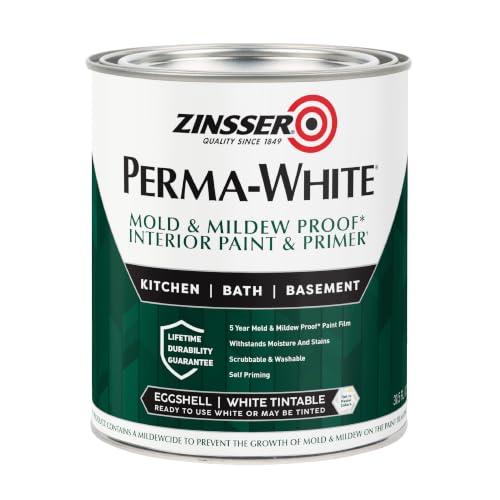
Self-Priming formula - requires no sanding

Apply Tub and Tile Spray Paint to ceramic, porcelain or fiberglass including tiles, sinks and tubs

WHERE TO USE THIS COLOR - SNOWDRIFT (MATTE FINISH) – A creamy, warm white found typically for wall applications and some trim
2. Relaxing Green

Green reads differently under basement lighting than it does on a sunny kitchen wall, which is why the undertone matters more than the shade name. Blue-leaning greens stay clean under artificial bulbs; yellow-leaning ones often shift toward olive or khaki in a room with no natural light. I learned this the hard way with a sample that looked sage in the can and turned institutional on the wall.
Benjamin Moore’s Van Alen Green HC-120 carries enough blue to hold its color in a windowless bathroom, and Louisburg Green HC-113 stays similarly steady. Landscape 430 sits slightly warmer but still reads as nature rather than murk. For vintage-influenced spaces, Lush AF-475 and Buckingham Gardens 545 both keep their pastoral feel without turning muddy.
If you’re testing swatches, check them at night under the actual bulbs you’ll use. Morning light won’t reach this room, so don’t let it decide for you.
Recommended Products

Beyond paint counter top paint pint - color - bone

Ideal for fixing scratches and imperfections on interior metal, porcelain and enamel appliances

COLORS CRAFTED BY ANNIE SLOAN: A timeless off-white, that works with everything. Old White is a sophisticated and understated neutral that will give your walls a soft, chalky, traditional look and feel.
3. Tranquil Blue

Blue settles a bathroom like almost nothing else, though the shade you pick in a basement matters more than upstairs. Stormy Sky and lighter blues in that family keep the space from feeling like a cave, but the real test is the bulb overhead. Warm light pushes blue toward green and cream, while cool light drags it icier and grayer. In a basement with zero windows, that shift happens fast, and a blue that looked restful on the swatch can feel like a cold fishbowl once the fixtures go in.
I lean toward mid-depth blues with some gray already baked in, something like November Skies or Breath of Fresh Air. They hold their character under warm bulbs without turning murky, and they do not flatten out into hospital gray under cool ones. Deeper navies and inky shades can work, but only if you layer the light: sconces beside the mirror, maybe a small lamp on a shelf, so the color gets to read as intentional rather than accidental darkness. A single overhead fixture in a basement bathroom will defeat even the prettiest navy.
If you are starting from scratch on lighting, plan the bulb temperature before you commit to the paint. Swinging the other direction after the fact means repainting, and no one wants that on a weekend timeline.
Recommended Products
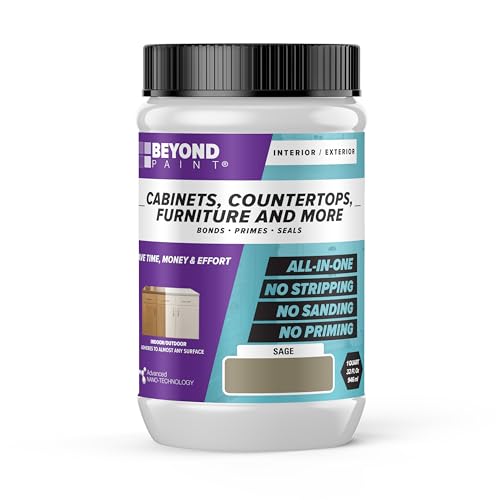
Beyond Paint furniture, cabinets and more all-in-one refinishing paint - quart - color: Sage

Ideal for use on interior/exterior surfaces including wood, plastic, plaster, metal, masonry and unglazed ceramic

Includes 30 featured and newest released color card. Sprayed on color to see our colors in your homes lighting for more accurate color choices.
4. Soft Pink

Warm pinks turn a basement bathroom into something closer to a home spa than a utility space, which matters when the concrete walls and cool tile floors already feel clinical. The trick is saturation: too bright and the room reads nursery, too dusty and it goes muddied under fluorescent light. A blush with enough brown or gray in the base keeps it adult, something like Benjamin Moore’s First Light 2102-70 or Dream Whip 2174-60. Cream Puff 2174-70 sits even quieter if you want barely-there warmth.
I like these pinks best against charcoal floor tile or matte black hardware, where the softness gets something to push against. Pairing pink with more pink works too, but only in a monochromatic scheme with real variation in value, think trim two steps lighter or a ceiling that nearly disappears. What fails is matching the wall exactly to a pink floral shower curtain or towel set; the room collapses into one note and the spa feeling evaporates. Spend the money on good paint and keep textiles neutral.
Recommended Products

Includes 30 featured and newest released color card. Sprayed on color to see our colors in your homes lighting for more accurate color choices.

PAINT + PRIMER IN ONE: Evolve’s paint-and-primer formula helps you get great coverage from the start, sealing your surface and reducing the extra work of multiple coats.

【Multiple Construction Tools Included】JUNGARIAN bathtub refinishing paint comes with a complete set of tools to make glazing your bathtub easier. You can refurbish your bathtub yourself without the involvement of a bathtub refinishing expert! refinishing a bathtub saves you the time, effort involved and money in a larger bathroom remodeling project
5. Deep Gray

Chelsea Gray and its neighbors in the deep-gray family work in a basement bathroom only when the room gives them something to push against. The sources flag this as a color for larger footprints or spaces with good artificial lighting, and that qualifier matters in a below-grade room where daylight rarely shows up uninvited.
The warmth in Chelsea Gray keeps it from reading cold, but the depth still pulls walls inward. A compact half-bath under a stairwell will feel like a cave. A wider full bath with a proper vanity light arrangement above the mirror gains a backdrop that makes white fixtures and brushed nickel hardware stand up and announce themselves. Dark paint in a higher sheen, another detail the sources note, turns that artificial light into something almost reflective, so the color performs rather than swallows.
Fixture choice becomes the balancing act. White porcelain and pale quartz counters give the eye somewhere to rest. Brass or matte black fittings add weight that competes rather than complements; chrome or nickel stay quieter and let the gray do the work it was chosen for. I would not use this shade beneath a single flush-mount ceiling fixture in a room under forty square feet. The color deserves better light, or it deserves a different room.
Recommended Products
CONVENIENT SIZE - This Apple Barrel Acrylic Paint comes in a versatile 2 oz size that is great for basecoating, stenciling, and so much more
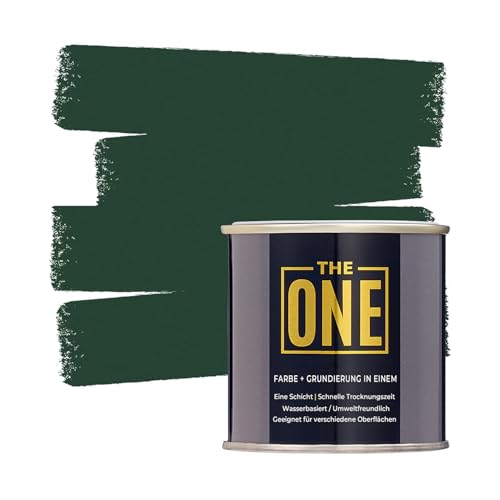
ALL-IN-1 PAINT & PRIMER: A hardy multi-purpose and multi-surface one-coat paint and primer in one for almost any indoor or outdoor surface. A wall, ceiling, floor, skirting board, cabinet, furniture and door paint for your bathroom, kitchen, home and garden.

Use for a variety of indoor and outdoor project surfaces including wood, metal, plaster, masonry or unglazed ceramic
6. Bright White

Pure bright white bounces the most light around a basement bathroom with no windows, which is exactly why it works and exactly why it goes wrong. I have seen Chantilly Lace read crisp and clean in a dark space, but I have also seen it turn a half-bath into something that felt like a clinic hallway. The difference was never the paint itself.
The fix is material. A bright white wall needs something to break it: wood-toned shelving, a woven basket, brass or black fixtures instead of chrome. Sources pair white granite with Farm Fresh AF-360, but in a basement bath the same logic applies in reverse, start with the white and add the warmth after. Texture matters more than tone here. Rattan, driftwood, a matte black towel bar, these stop the eye before it registers institutional.
White Dove and Alabaster soften the effect at the source if pure bright white still feels too stark. Either route works. The mistake is choosing the color for brightness alone and forgetting what lives against it.
Recommended Products

Use for a variety of indoor and outdoor project surfaces including wood, metal, plaster, masonry or unglazed ceramic

Use for a variety of indoor and outdoor project surfaces including wood, metal, plaster, masonry or unglazed ceramic
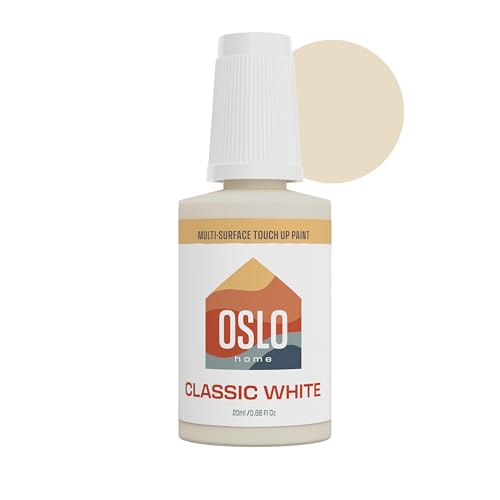
WHERE TO USE THIS COLOR - CLASSIC WHITE (MATTE FINISH) – A warm white color with a dash of beige, typically found on walls of more traditional home builds
7. Warm Cream

Creamy, from Sherwin-Williams, is the warm cream that actually earns its name in a basement bathroom. The subtle yellow undertones read as cozy rather than dated, which matters when you’re working with zero natural light and bulbs that shift the wall color after dark.
Under incandescent light, those yellow undertones deepen and the room wraps around you like a lit candle. Switch to LED without checking the temperature and the same wall can turn flat and slightly sickly. The fix is layered light: ceiling fixtures paired with sconces so you control where the warmth lands, not the hardware store bulb aisle.
Floors are where this color finds its footing. Creamy pairs best with warm wood-toned vinyl or tile that carries some brown; cool gray floors fight the undertone and make both surfaces look muddy. I would skip the gray grout too. Warm cream wants warm neighbors, or the basement starts to feel like a space you settled for rather than one you chose.
Recommended Products
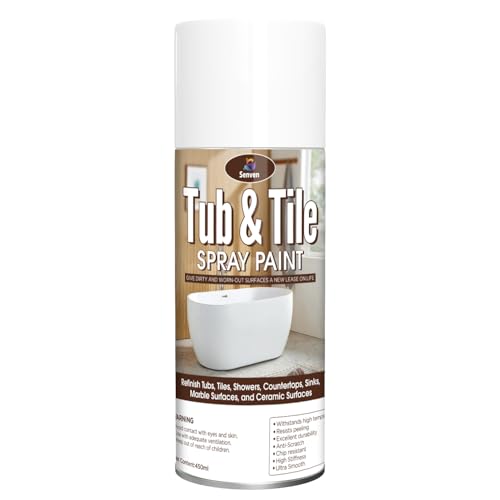
SENVEN TUB & TILE REFINISHING SPRAY PAINT: Apply this Tile Spray Paint to ceramic, porcelain, or fiberglass surfaces, including tiles, sinks, and tubs. Specifically for ceramic, porcelain surfaces like bathtubs, tile floors/walls, toilets, sinks and countertops. DIY refinish your bathroom with just one quick and easy spray step for a refreshed look. The SENVEN Tub & Tile Refinishing Kit is here to reduce costs without breaking the bank on new fixtures or hiring a contractor

【Universal Multi-Surface Adhesion】Designed for versatile renovation, this white furniture paint features premium acrylic resins that bond firmly to diverse materials. It is expertly engineered for cabinets, furniture, walls, doors, metal appliances, ceilings, and porcelain sinks (exterior). By creating a strong, peel-resistant bond, it effectively restores household items without the cost of professional refinishing

The information below is per-pack only
8. Light Gray

Mid-tone grays sit in the sweet spot for basement bathrooms because they refuse to pick a side. Agreeable Gray and Revere Pewter both carry warm undertones, which keeps them from turning cold under fluorescent tubes or the weak daylight that filters through a half-window. I have watched both colors shift across a day: warm in morning lamplight, quietly cool by afternoon, never jarring.
Revere Pewter leans slightly warmer and deeper, a good move when your tile runs beige or your vanity hardware is brushed brass. Agreeable Gray stays a touch lighter and more neutral, which helps if you are still deciding between chrome and matte black fixtures. Either one forgives a change of plan six months in.
The real utility is in the bridging. Basement bathrooms often inherit whatever fixtures came with the house or what was cheapest at the home center. A mid-tone gray does not fight warm wood-look tile or a cool white subway; it lets both coexist. Paint the room before you commit to the shower curtain, the mirror frame, the towel bars. The gray will still cooperate when you finally choose.
Recommended Products

Size & Quantity: Each pack contains 1 pieces, 60" wide and 14" long, total length is 15.5" including 1.5" header. The rod pocket applicable to curtain rods no wider than 1", the bottom hem rod pocket fits for curtain rods no wider than 1".

ALL-IN-1 PAINT & PRIMER: A hardy multi-purpose and multi-surface one-coat paint and primer in one for almost any indoor or outdoor surface. A wall, ceiling, floor, skirting board, cabinet, furniture and door paint for your bathroom, kitchen, home and garden.

ALL-IN-1 PAINT & PRIMER: A hardy multi-purpose and multi-surface one-coat paint and primer in one for almost any indoor or outdoor surface. A wall, ceiling, floor, skirting board, cabinet, furniture and door paint for your bathroom, kitchen, home and garden.
9. Charcoal Gray

Charcoal gray sits a shade past deep gray, carrying enough black to read as almost-solid in a basement bathroom. Iron Ore and Cyberspace both land here, and the difference between them matters once the paint dries. Iron Ore leans warmer, picking up whatever yellow your bulbs throw; Cyberspace stays stubbornly cool, closer to slate with the lights off.
That extra black in charcoal is what makes it dramatic and what makes it tricky. In a basement bathroom with a single overhead fixture, charcoal walls flatten into one dark plane. You lose the corners, the architecture, any sense of depth. The fix is placement, not brightness: a sconce beside the mirror, something grazing across the tile, so the light hits the wall at an angle and lets the color show its range.
I would not use charcoal in a basement bath under about 60 square feet unless I was committed to the lighting plan first. The color demands it. Done right, it reads as elegant, intentional, expensive in a way lighter grays rarely manage. Done wrong, it reads as a cave you painted shut.
Recommended Products

PAINT + PRIMER IN ONE: Evolve’s paint-and-primer formula helps you get great coverage from the start, sealing your surface and reducing the extra work of multiple coats.

Ultra premium paint and primer in one

Prestige Paints has created a comparable Color based on Color specifications of the original Color using industry leading technology
10. Muted Navy

Muted navy stays calm enough for a basement bathroom that guests actually use. The trick is the gray in the mix; a true navy pulls the walls inward in a space with little natural light, but a softened, dustier version reads as color without the cave effect.
Brass fixtures warm it up in a way that feels intentional, like a small hotel bath. Chrome keeps things cooler and more contemporary, though the contrast can feel sharp if the trim work is white. Black hardware lands somewhere between the two, and in my reading it is the safest bet for renters who cannot swap the vanity faucet.
The risk sits at the corners. Muted navy pools shadow where walls meet ceiling, especially under the single ceiling fixture common in basement layouts. Painting the ceiling the same tone, or a shade lighter, stops the room from boxing itself in.
Recommended Products

ALL-IN-1 PAINT & PRIMER: A hardy multi-purpose and multi-surface one-coat paint and primer in one for almost any indoor or outdoor surface. A wall, ceiling, floor, skirting board, cabinet, furniture and door paint for your bathroom, kitchen, home and garden.

All-in-One Kit:Our tub and tile refinishing kit has everything you need, whether you’re a beginner or pro. It comes with 1kg/35oz tile paint, hardener, gloves, sandpaper, a 4-inch roller, tape, film, a stir stick, and instructions. With this kit, anyone can handle home or commercial renovation jobs

ALL-IN-1 PAINT & PRIMER: A hardy multi-purpose and multi-surface one-coat paint and primer in one for almost any indoor or outdoor surface. A wall, ceiling, floor, skirting board, cabinet, furniture and door paint for your bathroom, kitchen, home and garden.
Mood and What You Actually Want the Room to Do

The mood you want should drive the color choice, not the other way around. Calming hues like soft grays, pale greens, and barely-there neutrals settle a space down. Bolder, more saturated colors add energy. A basement bathroom that doubles as a quick stop before work needs a different feel than one where you sink into a tub at the end of the day.
Most basement bathrooms try to do both, and that is where the decision gets sticky. The mood that wins is the one you use the bathroom for most. If the space is a functional pass-through, the energizing or pragmatic palette keeps it from feeling like a cave you are hiding in. If it is where you actually slow down, the softer, spa-like direction pays off. Pick one job for the room and let that single purpose settle the color.
Light That Lies

Paint in a basement bathroom rarely looks the same at 7 a.m. as it does at 7 p.m. because most of these spaces get little to no natural light. What registers as a clean white under a daylight LED can turn flat gray under an incandescent bulb, or pick up an unexpected blue cast under cooler LEDs. The bulb you install changes the color as much as the paint itself. Warmer light pushes whites toward cream and can flatten cool grays; cooler light sharpens gray undertones and can leave warm whites looking dirty. The sources that test this well all point to the same habit: paint a swatch, then look at it during the actual hours you use the bathroom, with the actual fixture you plan to keep. A color sampled at noon with a daylight LED tells you almost nothing about how that same wall reads during a winter evening shower. Layering helps. A mix of overhead light and a sconce near the mirror gives you two reference points instead of one, and catches undertones a single source hides. If you are choosing between White Dove and Chantilly Lace for a dark basement bath, that second light source is often what separates a warm white that works from a cool white that fights the room.
What the Bathroom Is For

A basement bathroom usually starts as a utilitarian afterthought: a toilet, a sink, and a path you hope guests skip on their way upstairs. But the color you put on the walls decides whether that path stays purely functional or becomes a room someone actually wants to pause in. A spa retreat and a quick-stop powder room need completely different palettes, and most basement bathrooms have enough square footage for only one identity.
If the goal is a place to decompress, soft pinks, tranquil greens, and barely-there neutrals from the list do the heavy lifting. These are the colors that turn a windowless box into something that reads as intentional calm. The barely-there neutrals especially suit basement conditions, where light is already scarce and a wall color that fights for attention just adds noise.
For the pragmatic, minimalist option, the saturated hues and surprisingly bold choices work better than you expect. A basement powder room that wows guests can handle more drama precisely because it is small and brief. Deep blue or a saturated accent reads as confidence, not clutter, when someone steps in for thirty seconds.
The mistake I see most is splitting the difference, a soft color that wants to relax and a bright fixture that wants to energize. The room ends up doing neither. Pick the purpose first, then commit.
Paint That Survives the Damp

A basement bathroom sits below grade where concrete walls wick moisture year-round, so the paint has to do more than look right. Semi-gloss and gloss finishes still win on pure durability: the harder surface beads water and wipes clean without streaking, which matters when every square foot sees hard use.
Matte finishes used to be a gamble down here. Benjamin Moore Aura Bath & Spa changed that equation with a mildew-resistant formula built for high-humidity rooms. I have used it in a basement half-bath where the exhaust fan barely moves air, and the walls stayed clean through two summers without the plastic sheen that makes small rooms feel smaller.
The tradeoff is cost and availability. Aura Bath & Spa runs steeper than standard cans and not every hardware stockist carries it. For a tight weekend budget, a quality semi-gloss in a light-reflecting color still solves the moisture problem without the premium.
Ceiling Color and Where the Eye Goes

A light ceiling in a basement bathroom does what mirrors do in a powder room: it pushes the eye up and bounces whatever light you have back into the space. In the half-bath I finished under our stairs, the joists sat only seven feet above the slab. White ceiling paint bought me the only vertical breathing room the room could offer. The walls were a soft gray, but keeping the ceiling a clean, reflective white stopped the whole thing from feeling like a crawl space you happened to put a toilet in.
Color drenching, running the same tone from wall to ceiling, works the opposite way. Instead of height, you get cohesion, and in a tight basement bath that can matter more. The boundary disappears, the room reads as one continuous shape, and your eye stops hunting for where the wall ends and the ceiling begins. Benjamin Moore pairs like Cloud White OC-130 walls with Cumulus Cotton 2063-70 ceilings suggest the same idea in softer degrees, close enough to feel unified without being identical.
The choice depends on what the room lacks. Low ceiling, no natural light, claustrophobic proportions: go light and reflective. Awkward angles, bulkheads, or a ceiling broken up by ductwork: drench it and let the color do the hiding.
Floor Color and Wall Balance
Most basement bathrooms I see start with the floor already in place, and that existing surface does more to narrow the paint field than people expect. Dark vinyl plank or sealed concrete begs for lighter walls; the contrast keeps a below-grade room from feeling like a cave. I have paired warm off-whites with charcoal vinyl and the balance held up under the weak light that reaches most basements.
Light floors flip the rule. Pale tile or whitewashed concrete can handle deeper walls; a muted navy or soft charcoal adds weight without closing the space. The danger sits in the middle. Two mid-tones, say a greige floor and a taupe wall, flatten everything into one visual plane. The room reads smaller, not larger, and the eye has nowhere to land.
Tile gives the most flexibility because its pattern breaks up the field. I have used slightly deeper walls with light subway tile and the grout lines did enough work that the contrast never felt forced. Vinyl reads as one continuous surface, so the wall needs to do more to create the same effect.
Frequently Asked Questions
What are some popular basement bathroom paint colors?
Off-whites like White Dove, Chantilly Lace, and Alabaster rank high because they bounce limited light without turning clinical. Soft pinks such as First Light and Cream Puff, plus greens and blues with clean undertones, also hold up well under artificial bulbs in windowless spaces.
How can I make a small basement bathroom look bigger using paint color?
Light, reflective colors on the ceiling push the eye upward and bounce light back into the room. Pair lighter walls with dark floors for contrast, or try color drenching walls and ceiling in one tone so boundaries disappear and the space reads as continuous.
What type of paint finish is best for a basement bathroom?
Semi-gloss and gloss finishes still win on pure durability because the harder surface beads water and wipes clean. For a softer look, Benjamin Moore Aura Bath & Spa offers a mildew-resistant matte formula built for high-humidity rooms, though it costs more and can be harder to find.
How can I create a spa-like atmosphere in a basement bathroom?
Soft grays, pale greens, and barely-there neutrals settle the space down and read as intentional calm in a windowless box. Warm pinks with enough brown or gray in the base, like blush tones against charcoal tile or black hardware, also push the room toward spa rather than utility.
Can you suggest basement bathroom color schemes for a modern look?
Light and airy colors set the tone for modern schemes, with crisp off-whites, cool blues with gray baked in, and clean mid-tone grays like Agreeable Gray or Revere Pewter reflecting contemporary lines. Pair with matte black or chrome fixtures and avoid competing warm and cool elements.