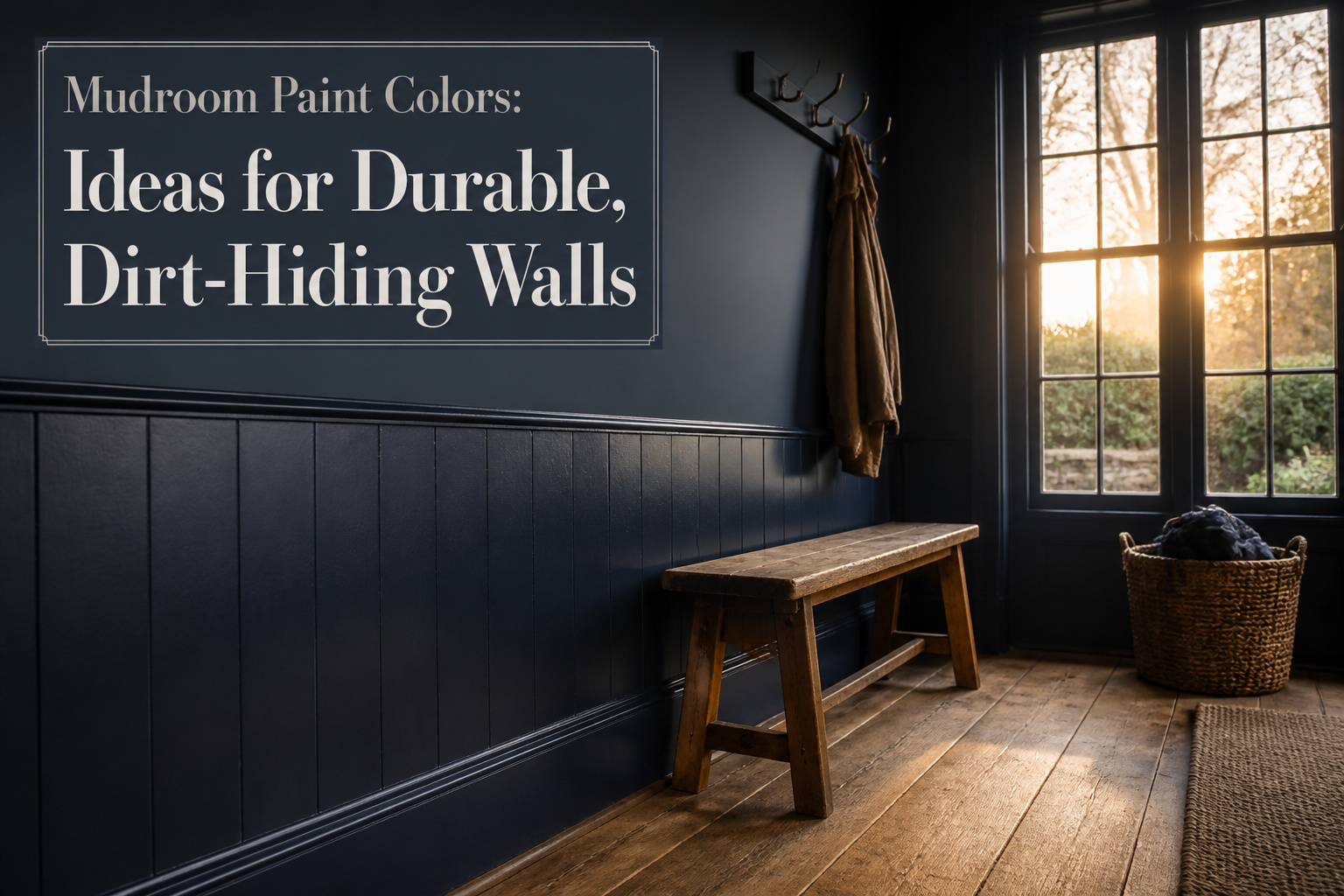
The best mudroom paint colors are the dark, saturated ones that hide scuffs between wipe-downs, not the airy neutrals that show every boot mark by Tuesday. The catch is finish: a color like Benjamin Moore Hale Navy only earns its keep when paired with a scrub-rated formula rated past 10,000 cycles. Eggshell above, semi-gloss on wainscoting, and the wall survives years of muddy boots instead of months.
1. Hale Navy

Benjamin Moore HC-154 Hale Navy carries enough saturation to swallow scuffs before they announce themselves. The deep blue-black value absorbs the chalky halo road salt leaves behind after winter, which is why it keeps surfacing in mudroom photos that look lived-in rather than staged. Scuff resistance depends on the paint line you specify it in: pair it with Benjamin Moore Scuff-X or a comparable scrub-rated formula and the finish survives the 10,000-cycle mark that separates wall paint from wishful thinking.
Trim and hardware set the mood from there. Warm whites keep the navy from reading cold, and natural wood benches or shelves add the layer of texture that makes the color feel collected rather than corporate. Brass hooks against this background read intentional, not trendy. The combination works because the navy does the hiding while the wood and metal do the warming, and neither job gets compromised.
Recommended Products

Ready to use, pre-mixed door and trim paint offers a fresh new look on interior or exterior metal, wood and fiberglass
Use for a variety of indoor and outdoor project surfaces including wood, metal, plaster, masonry or unglazed ceramic

Use for a variety of indoor and outdoor project surfaces including wood, metal, plaster, masonry or unglazed ceramic
2. Iron Ore

Sherwin-Williams Iron Ore SW 7069 sits right at the edge of black without quite crossing it, a near-black charcoal that reads softer and warmer than a pure neutral would. That slight softness matters in a mudroom, where walls take daily contact from boots, bags, and elbows. The depth masks organic soil, mineral dust, and rubber scuffs all at once, so the four worst offenders in a garage-adjacent entry fade into the surface instead of flashing across it.
Brass hardware picks up the warmth and keeps the mood from going cave-dark; matte black pulls and hooks sink in and disappear, which works if you want the wall itself to carry the visual weight. Sherwin-Williams built its durability reputation on scrubbable formulations, and a color this dark forgives more than a pale tone ever could between wipe-downs. If you are already living with scuffs that show up by Tuesday, this is the shift that buys you until Saturday.
Recommended Products


Indoor and outdoor

ALL-IN-1 PAINT & PRIMER: A hardy multi-purpose and multi-surface one-coat paint and primer in one for almost any indoor or outdoor surface. A wall, ceiling, floor, skirting board, cabinet, furniture and door paint for your bathroom, kitchen, home and garden.
3. Essex Green

Essex Green, Benjamin Moore HC-188, sits at the deep end of forest greens without crossing into accent-wall territory. In a mudroom, that depth matters: the color hides mud, scuffs, and pet prints between cleanings rather than broadcasting every boot that passes through. I see it reading as outdoor color brought indoors, not a statement shade that fights with whatever coats and bags already live in the space.
The paint performs best in scrub-resistant lines, with eggshell on upper walls and semi-gloss on wainscoting where contact happens most. Mudroom light tends to be limited, often from a single window or an overhead fixture, and HC-188 absorbs some of that light rather than reflecting it back. Over months, the green settles into something quieter than it reads on the chip, a shift I notice more in north-facing entries where daylight is scarce. For renters or first-home owners working a weekend timeline, one coat of primer plus two finish coats in a line like Benjamin Moore Scuff-X gives 10,000+ scrub cycles, enough to outlast several years of heavy entry traffic.
Recommended Products
Self-Priming formula - requires no sanding

ALL-IN-ONE PAINT AND PRIMER: Saves time and effort by priming, sealing, and finishing in one step for smooth, efficient coverage

Mold & Mildew-Proof paint film
4. Caliente

Benjamin Moore AF-290 Caliente reads as a rich burgundy that swallows clay stains and brick dust whole. That depth of pigment makes it the move for mudrooms that see serious garden traffic or the occasional construction boot, not just a wet dog and a pair of sneakers.
The catch is the bulb. Under warm light Caliente leans into that wine-red warmth and feels almost historic, like old library walls. Flip to cool LEDs and the same wall turns sharper, more dramatic, almost theatrical in a space that usually does not want to be the star of the house. Most mudrooms run cool by default, so test it with the actual fixture you have before committing to the full wall.
Scuff-X carries it with the scrub cycles to match the color’s ambition. Eggshell above, semi-gloss on any wainscoting, and the finish lasts as long as the hiding power does.
Recommended Products

Use for a variety of indoor and outdoor project surfaces including wood, metal, plaster, masonry or unglazed ceramic

Use for a variety of indoor and outdoor project surfaces including wood, metal, plaster, masonry or unglazed ceramic
Use for a variety of indoor and outdoor project surfaces including wood, metal, plaster, masonry or unglazed ceramic
5. Simply White

Benjamin Moore Simply White OC-117 runs warm enough that a mudroom feels bright rather than sterile, but the same cream undertone that softens the light will show boot scuffs faster than a dirt-hiding mid-tone. In my own reading through project threads, the homeowners who make it work treat the color as an upper-wall and ceiling choice, not a full-room solution. Pairing it with BM Scuff-X in a darker shade below chair-rail height gives you the airy entry feel without committing every surface to a scrubbing schedule. Scuff-X is warranted under ASTM D6279 and rated for 10,000+ scrub cycles, so the lower wall actually takes the hit while Simply White stays where traffic is lighter. If the mudroom doubles as a laundry corner, that same warm white on the ceiling bounces light down without the gray cast cooler whites pick up under fluorescent bulbs.
Recommended Products

PAINT + PRIMER IN ONE: Evolve’s paint-and-primer formula helps you get great coverage from the start, sealing your surface and reducing the extra work of multiple coats.
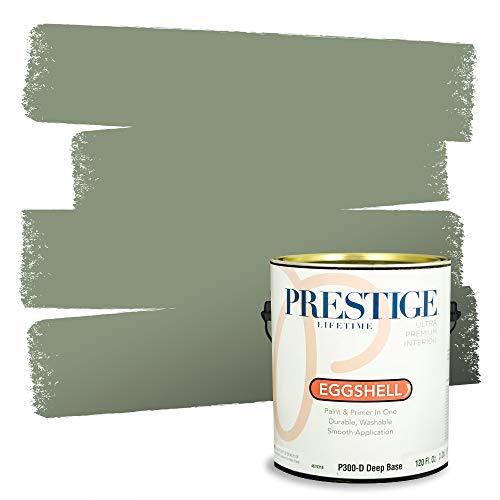
Ultra premium paint and primer in one

Ready to use, pre-mixed door and trim paint offers a fresh new look on interior or exterior metal, wood and fiberglass
6. Gettysburg Grey

Benjamin Moore Gettysburg Grey lands in that useful middle ground where a mudroom color needs to live: dark enough to hide the dirt that tracked-in boots and wet dogs leave behind, warm enough that the space never feels like a cellar. The subtle green undertone does the real work here. Under the LED fixtures most of us have in these spaces, a flat gray can turn sterile and cold; that faint green keeps the wall reading as a color instead of a shadow, even after sundown.
Pairing it is straightforward. The sources note it works with natural wood, black hardware, and crisp white trim, which covers most cabinetry situations. In my reading, the shade seems happiest against warm wood tones or painted cabinets in a deep green-black. If your mudroom opens into a kitchen with white oak or walnut shelving, Gettysburg Grey bridges the two spaces without demanding a full redesign.
Recommended Products

Use for a variety of indoor and outdoor project surfaces including wood, metal, plaster, masonry or unglazed ceramic

*Prestige Paints has created a comparable color based on color specifications of the original color using industry leading technology.

*Prestige Paints has created a comparable color based on color specifications of the original color using industry leading technology.
7. Fresh Balsam

Sherwin-Williams Fresh Balsam sits at that useful crossroads where a color feels intentional but not staged. The depth of the green reads as natural rather than trendy, and in a mudroom that distinction matters because the room itself is about function first. Scuffs from boots and the general grime of daily traffic fade against this tone in a way that lighter colors simply do not permit.
Benjamin Moore’s Essex Green offers a point of comparison worth weighing. It carries a slightly lighter value and a stronger sage influence, which shifts the mood from forest toward herb garden. In a north-facing mudroom, that difference becomes practical. Fresh Balsam holds enough warmth to keep a dim space from feeling cavernous, while Essex Green’s sage note can turn a touch cooler where natural light is scarce. For a room that sees morning coats tossed onto hooks and wet shoes lined against a wall, the slightly deeper saturation of Fresh Balsam wins on hiding power. Both perform well with warm wood benches or brass hardware, but Fresh Balsam’s richness pairs more naturally with the kind of worn, utilitarian pieces that actually belong in an entry space.
Recommended Products

ALL-IN-1 PAINT & PRIMER: A hardy multi-purpose and multi-surface one-coat paint and primer in one for almost any indoor or outdoor surface. A wall, ceiling, floor, skirting board, cabinet, furniture and door paint for your bathroom, kitchen, home and garden.

Apply to metal, wood, plaster, masonry and unglazed ceramic

Use for a variety of indoor and outdoor project surfaces including wood, metal, plaster, masonry or unglazed ceramic
8. Stony Ground

Farrow & Ball Stony Ground sits right where warm beige meets soft taupe, a combination that keeps mudrooms from feeling like an afterthought. The undertone matters more than the lightness: without that taupe pull, beige goes yellow and shows every scuff. With it, boot marks and the daily drift of grit sink into the color rather than shouting across the wall.
This is the shade for mudrooms that open directly into traditional or cottage-style homes, the ones where oak trim and a worn bench already live. It handles the human traffic well enough, but paw prints are a different calculation. Dog hair and the occasional nose smear sit on top of the warm base rather than blending in, so the finish matters as much as the color. A satin or eggshell sheen lets you wipe without taking the pigment with it. Flat paint here is a mistake you make once.
Recommended Products

PROFESSIONALLY RECYCLED PAINTS: Lower cost alternative to virgin paint, without sacrificing quality. One quart of Recolor Interior Finish, Wave covers about 100 square feet. This is interior, latex paint with a finish that is between flat and eggshell—produced in the USA!
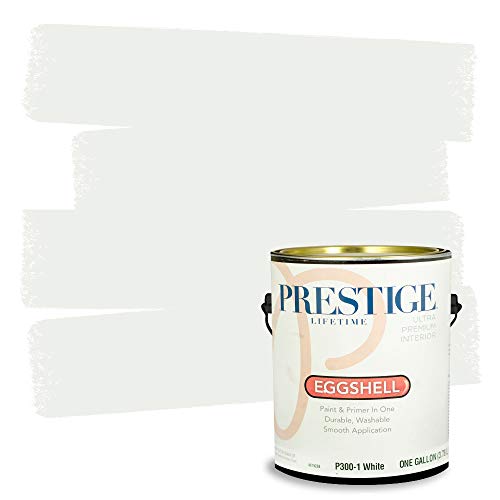
Ultra premium paint and primer in one

9. Foggy Day

Sherwin-Williams Foggy Day sits in that useful middle space where a color has presence without shouting. The gray undertones keep this muted blue from drifting toward nursery territory, and its mid-tone value means it will not disappear against white trim the way a paler shade might.
Morning light pulls the blue forward, giving a mudroom a clean, pulled-together feel when people are most likely to be passing through. By evening, the gray takes over and the wall settles back, which keeps a small space from feeling busy at the end of the day. Natural wood benches or black metal hooks both read clearly against it, and crisp white trim keeps the whole combination from slipping into institutional territory. The slightly dusty quality also does practical work: scuffs and splatter do not announce themselves the way they would on a cleaner, brighter blue.
Recommended Products

CABINET TRANSFORMATION: Refresh outdated cabinets, vanities, furniture and trim with rich Pure White color and a smooth semi-gloss finish

Ideal for use on interior/exterior surfaces including wood, plastic, plaster, metal, masonry and unglazed ceramic
ALL-IN-ONE PAINT AND PRIMER: Saves time and effort by priming, sealing, and finishing in one step for smooth, efficient coverage
10. Mizzle

Farrow & Ball Mizzle sits in that narrow space between grey and green, soft enough to feel calm after a chaotic afternoon of boots and backpacks. In a mudroom with decent natural light, it reads as a quiet sage that hides scuff marks better than true neutrals. The problem comes when the light drops. In a windowless or north-facing space, the same color can turn surprisingly cold and flat, almost like a pale concrete that does nothing for the room’s mood.
That shift is why testing matters more with Mizzle than with simpler mid-tones. The pigment load that gives it depth in morning light becomes its weakness under fixtures alone. Tape a sample board to the wall and look at it across three different times of day, including the artificial evening light when most mudrooms actually get used. What feels serene at 10 a.m. can feel sterile at 8 p.m., and a mudroom painted in a rush on Saturday morning has to live with that mistake for years.
Recommended Products

ALL-IN-1 PAINT & PRIMER: A hardy multi-purpose and multi-surface one-coat paint and primer in one for almost any indoor or outdoor surface. A wall, ceiling, floor, skirting board, cabinet, furniture and door paint for your bathroom, kitchen, home and garden.

Extremely durable interior paint ideal for use on properly prepared interior walls, ceilings or trim composed of new or previously painted drywall, plaster, masonry, wood and metal

ALL-IN-1 PAINT & PRIMER: A hardy multi-purpose and multi-surface one-coat paint and primer in one for almost any indoor or outdoor surface. A wall, ceiling, floor, skirting board, cabinet, furniture and door paint for your bathroom, kitchen, home and garden.
11. Card Room Green

Farrow & Ball’s Card Room Green carries a gray base that sets it apart from the cleaner, brighter greens on this list. The muted tone reads vintage rather than botanical, and that historical reference gives a mudroom the feeling of a space that has actually been used for decades.
The gray undertones do practical work too. Dirt and scuffs fade into the color rather than shouting against it, which matters in a room where boots hit the floor first. In my reading, what distinguishes Card Room Green from near-neighbors like Treron is the degree of gray: Treron sits deeper and earthier, while Card Room Green stays softer, more understated, closer to a neutral that happens to be green.
For pairing, warm wood tones and matte black hardware pull out the heritage quality without turning the room into a period set. Soft whites keep it contemporary enough for a 2026 install. The risk is going too traditional with the trim and ending up with a mudroom that feels costumed rather than collected. Skip the beadboard ceiling and keep the lines simple.
What Finish Holds Up

Eggshell belongs on the upper walls of a mudroom, where the occasional wipe-down does not need a mirror-like surface. Semi-gloss takes the lower half: wainscoting, bench backs and seats, baseboards, doors, and trim. Those surfaces see daily scuffs from boots and bags, and the higher sheen lets you scrub without burnishing the finish. Flat and matte paints absorb dirt and fail under cleaning, so skip them entirely in this room.
For paint that survives real use, Sherwin-Williams Emerald Urethane and Benjamin Moore Scuff-X both deliver. Spec either one in a scrub-resistant line and you are looking at roughly six to ten years before the walls need repainting, even with kids, dogs, and muddy boots in rotation. The premium price stings less when you divide it across that timeline.
How Light Changes the Color

Morning light through a single mudroom window washes everything out by nine and turns warm grays cold by four. I learned this the hard way after painting a swatch of what looked like a soft putty at the store into something that read institutional by afternoon. Test every color on the wall that actually gets the window, not the adjacent one with better exposure.
Overhead fixtures do the opposite damage. A flush-mount LED with a high color-rendering index keeps mid-tone blues and sage greens honest, but cheaper bulbs push everything toward yellow or flatten it to ash. Hold your phone flashlight under a cabinet and watch the same paint drop two shades darker; that shadow line is where scuffs collect and where undertones you never noticed suddenly announce themselves.
The practical move is to paint two-foot squares on every wall that receives a different light source, then visit them four times in a day. Bring a scrap of your flooring and the towel you hang on the hook. Colors read against what sits next to them, and a mudroom is never empty walls alone.
Pairing With Trim and Cabinets

A mudroom is mostly millwork, not wall space, so the paint has to talk to the bench, the trim, and the hardware all at once. Warm white trim against navy or deep green walls is the pairing that keeps coming up for 2026; it gives the eye somewhere clean to rest without fighting the darker color below. If the cabinets or cubbies are wood rather than painted, gray and beige walls pull the same trick: they let oak or walnut read as the feature without turning the room into a wood box.
Hardware finish is the third piece. Matte black or aged bronze locks in with charcoal grays like Gauntlet Gray, while brass or aged brass needs the warmer side of the palette, burgundy or forest green, to keep from looking like jewelry on the wrong outfit. Paint the bench, hook-backer, and wainscoting in the same product and sheen, usually a semi-gloss urethane trim enamel, so the whole lower half wipes down as one surface. The upper walls can stay in eggshell; they do not take the same beating.
Bold Colors and Textures

Bold colors in a mudroom need to earn their place. A saturated burgundy like Caliente or a near-black green like Studio Green hides scuffs and dirt better than any pale neutral, but the same depth that masks wear also shrinks a narrow space. Two ways to play this: keep the drama on one wall and run something lighter above chair-rail height, or commit fully and light the room hard.
Texture is the quieter trend. Wainscoting, beadboard, or a hand-troweled plaster finish catches light and distracts from the smears that flat paint shows within a week. The catch is labor. A textured wall takes a weekend to prep and prime properly, and renters may not have that permission from a landlord. For a first-home owner with a few hundred dollars and Saturday to spare, scuff-resistant paint in a satin sheen on flat drywall outperforms the Pinterest board when mud season actually hits.
The 2026 lean toward burgundy and deep forest green works in New England Colonials where the architecture carries the weight. In a generic builder-grade laundry-mudroom off a garage, those same colors can feel like a costume. What convinced me, reading through the durable-paint roundups, was the scrub-cycle data: colors like Hale Navy and Iron Ore are specified in lines rated past 10,000 cycles. The bold choice that survives is the one you can wipe down without watching the pigment lift.
Frequently Asked Questions
What is the most durable paint color for a mudroom?
Deep saturated tones like Sherwin-Williams Iron Ore and Benjamin Moore Hale Navy are the most durable choices. Their dark values absorb scuffs, road salt residue, and rubber marks rather than highlighting them, and both perform best when specified in scrub-resistant lines like Benjamin Moore Scuff-X or comparable formulas rated past 10,000 scrub cycles.
Is eggshell or semi-gloss better for a mudroom?
Use both. Eggshell belongs on upper walls where contact is occasional; semi-gloss takes the lower half including wainscoting, bench backs, baseboards, doors, and trim. Those surfaces see daily scuffs from boots and bags, and the higher sheen lets you scrub without damaging the finish. Flat and matte paints absorb dirt and fail under cleaning, so avoid them entirely in this room.
How often do I need to repaint a mudroom?
With premium scuff-resistant paint like Sherwin-Williams Emerald Urethane or Benjamin Moore Scuff-X in a saturated color, expect six to ten years before a full repaint. Standard wall latex and light colors typically need redoing every two to four years. Touch-ups on wainscoting and bench fronts are normal annually regardless of product.