
Hanging pictures on concrete walls means matching the hardware to the weight of the frame and the condition of the surface beneath it. A hook that holds on bare concrete may fail on sealed or painted concrete, and the wrong choice leaves frames on the floor. Adhesive wall hooks top out at 6 pounds for two hangers together, which covers most small prints without drilling a single hole.
Adhesive Wall Hooks for Lightweight Pictures

Adhesive wall hooks are the place to start for lightweight frames, small prints, and anything under a few pounds. Two hangers together hold up to 6 pounds total, which covers most single 8-by-10 or 11-by-14 frames in standard glass and wood. The backing strips stick directly to the concrete, no drilling, no dust, no patching later. That zero-damage promise is why renters reach for them first; a landlord inspection never spots what was never there.
Surface prep makes or breaks the hold. The wall needs to be clean, dry, and free of the powdery residue concrete tends to shed. A quick wipe with rubbing alcohol does more than plain water here. Press the strip firmly for the full count the manufacturer gives, usually around thirty seconds, then wait an hour before hanging anything on it. The adhesive needs that set time to grip the porous surface.
These hooks suit temporary setups and gallery walls you plan to rearrange. For anything heavier, or any frame with wire that puts torque on a single point, the strip peels away under stress. But for a row of small prints or a lightweight mirror under the limit, the speed and the clean removal win every time.
Recommended Products


Skip drilling, nails, and wall damage with these no drill curtain rod brackets. Designed for renters, apartments, dorms, and RVs, they install quickly and help keep walls neat and intact. Each adhesive curtain rod holder fits curtain rods from 0.6—1.5 inches, making it easy to upgrade your window space without complicated tools
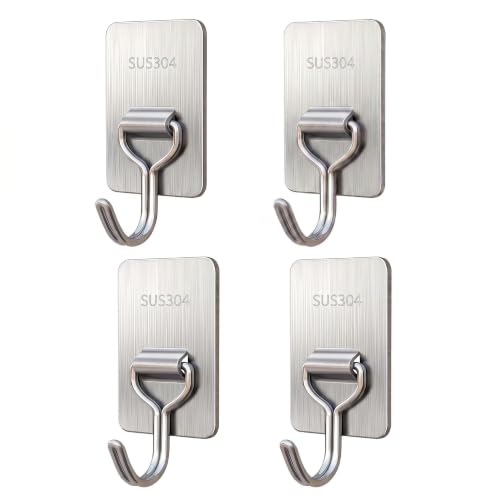
🏗️ No-Drilling Adhesion for Tough Surfaces Our industrial-grade adhesive concrete hooks bond firmly to porous concrete, stucco, textured ceilings, brick walls, and uneven rough surfaces without drills or tools. These concrete hangers no drill and no drill stucco hooks reduce wall damage, making them perfect as outdoor hooks that stick to stucco and hooks for concrete walls.
Hardwall Hangers for Medium-Weight Frames

Hardwall hangers fill the gap between sticky tabs and full drilling. The small ones hold 20 pounds, the large ones 30 pounds, and installation takes about two minutes with a hammer and the small metal nails that come built into the hook. Tap them into the concrete at a slight angle, same as you would with a picture hanger on drywall, but with enough force to seat the nail into the masonry.
Concrete, cement, cinder block, thin plaster over concrete, small smooth brick, soft stone, and hardwood all take these hooks. That range matters for basement walls especially, where you might hit a skim coat over block or an old hardwood lintel and not want to switch methods mid-project.
The real advantage here is skipping the drill entirely. A framed mirror, a small shelf, or a heavier piece of art that would peel adhesive off the wall in a week stays put on a 30-pound hardwall hanger. You trade the absolute weight capacity of a masonry screw for speed and near-zero dust. For renters who cannot patch a dozen holes before move-out, two tiny nail holes are easier to hide than a 3/16-inch anchor.
Recommended Products

[Its USES] You Can Freely Combine The No Damage Wall Hangers To Hang Different Items To Decorate, Suitable For Hanging Pictures, Photos, Clocks, Paintings, Small Mirrors, Art,keyhole, Clothes, Umbrellas, Bags,sawtooth

Package List: You will receive 50 picture hangers for concrete walls, which are sufficient to meet daily hanging needs.
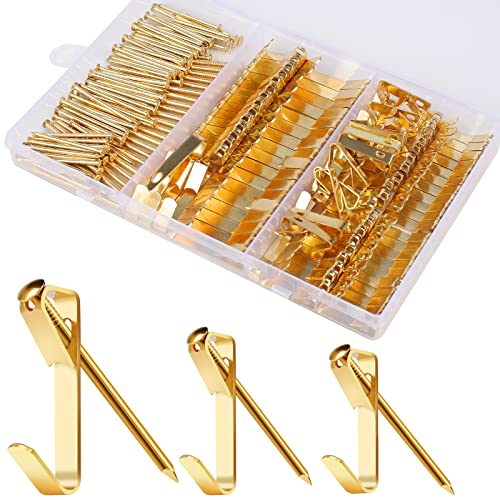
Great Assortment: You will receive 90 sets of picture hanging hardware, including 20 sets of 50LB hooks,50 sets of 30LB hooks, and 20 sets of 20LB hooks with 94 nails, With different 3 sizes of professional hanging kits very convenient.
Masonry Screws for Heavy Items

Masonry screws sit at the heavy end of concrete-wall hardware, and they are the option that turns a temporary install into a permanent one. Most of the ones you will find are 3/16 inch in diameter, with either Phillips or hex heads, and they anchor directly into the wall without a separate sleeve or toggle behind it. The trade is that you need a hammer drill and masonry bits sized to whatever the manufacturer specifies for that exact screw, hole depth, embedment, and edge distance all included. I have seen people try to eyeball this with a regular drill and a worn bit; the hole walls out, the screw spins, and you are left with a loose fastener and a wall that will not take another try an inch over. Concrete screws are the strongest of the three methods, and they become necessary once you are past what adhesive hooks or hardwall hangers can manage: large mirrors, solid shelving, substantial framed pieces where failure would mean real damage. The other two methods keep your wall intact; this one does not, but it holds.
Recommended Products

STRONG MATERIAL – All the blue concrete anchors and screws are made of selected materials with premium quality just to ensure the best performance. The Philips screws are made of high-strength carbon steel and finished with galvanizing technology, which is highly resistant to rust and corrosion. The concrete anchors are made of new PE material for higher strength and better resistance to rub and aging.
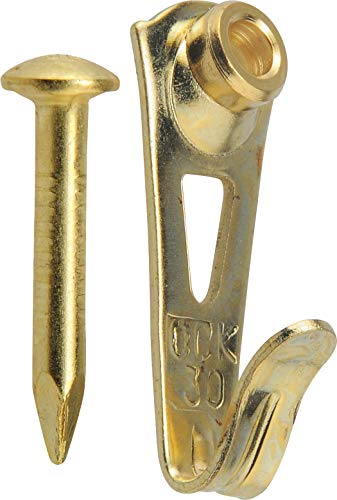
HANGS ART ON BRICK AND CONCRETE: This professional picture hook hangs framed art and mirrors on brick, block, and concrete walls, using two hardened nails and a wide steel base for a strong hold where standard hangers cannot bite.

Valuable Cement Anchors And Screws Kit:This is a great value pack,Includes 30PCS # 12-16 (1.38 "length) anchors, 30PCS # 10 (1.58" length) screws, 60PCS # 10-12 (1.06 "length) anchors, 60PCS # 8 (1.18" length) screws, and 2PCS drill bits suitable for anchors, box packaging
Picking Hardware by Weight and Wall Condition

The hardware that actually works on concrete starts with an honest read of the label. Adhesive hooks list a weight limit and a surface requirement, and both matter more than the marketing photo. A hook rated for two pounds on smooth drywall might hold less on painted concrete if the paint is chalky or the wall is cold. Hardwall hangers and masonry screws carry their own limits, and the manufacturer means them. Exceeding them by even a few ounces is where frames end up on the floor at two in the morning.
Wall condition decides which method is even on the table. Clean, bare concrete takes adhesive if the texture is right. Painted concrete is trickier: latex paint can peel under stress, and oil-based paint may reject adhesive entirely. Sealed concrete, the kind with a glossy garage-floor finish, often needs mechanical fastening because nothing bonds to the sealer. Crumbling or spalling concrete is the worst case; adhesive pulls out chunks, and screws bite into dust. In that situation, a hardwall hanger with its spreading wings or a properly set masonry anchor into solid substrate behind the loose layer is the only reliable path.
The mistake I see most often is matching the hardware to the frame instead of the wall. A lightweight print in a heavy glass frame reads as heavy, but the real question is what the concrete will accept. If the surface is painted or sealed, test adhesion in a hidden spot before committing the frame. Manufacturers print surface requirements for a reason; skipping that check is how renters lose security deposits to pulled paint and failed hooks.
Recommended Products

Complete 62-Piece Hanging Solution for Every Project: This kit includes 7 types of hooks to handle any hanging need: 40 small nails (5 lb capacity) for lightweight frames; 4 medium hooks (13 lb) for standard photos; 4 large hooks (17 lb) for heavier art; 4 extra-large hooks (30 lb) for substantial pieces; 4 four-footed concrete hangers (22 lb) for maximum stability on hard walls; 2 heavy-duty frame hangers (22 lb) for bulky items; 2 auxiliary brackets (8 lb) for picture frames; plus a mini level and auxiliary clip to ensure alignment every time

Strong Zinc Plated Steel Picture Hanger For Framed Mirrors, Framed Artwork, Picture Frames, tools and more.

Mr. Pen concrete wall hooks set includes 50 white picture hangers designed for secure mounting on concrete, cinder block, and brick walls.
Weight Limits for Each Method

Adhesive wall hooks top out around 6 pounds when you use two hangers together. Hardwall hangers run heavier: the small size carries 20 pounds, and the large jumps to 30 pounds. Anything above that needs masonry screws.
| Method | Weight Capacity | Best For |
|---|---|---|
| Adhesive hooks (2) | Up to 6 lb | Small frames, lightweight prints |
| Hardwall hanger, small | 20 lb | Medium frames, canvas art |
| Hardwall hanger, large | 30 lb | Larger frames, heavier pieces |
| Masonry screws | Beyond 30 lb | Heavy mirrors, large art, shelving |
The gap between 30 pounds and masonry screws is where most gallery walls land. Two hardwall hangers at 20 pounds each won’t combine to 40; you are still limited by the single point. For anything pushing that ceiling, a screw into the concrete is the only move that won’t leave you anxious.
Recommended Products

Value Pack: It includes 50 pieces picture hangers with a storage box. Each one is 1.65*0.79 inch. Enough quantities with bigger size, great value to buy

Tough steel hooks that dig deep into drywall - Hold up to 40 lbs each, built to last through all your hanging needs.

✅ Premium Japanese Steel Construction: Crafted with high-hardness Japanese alloy steel and a durable powder-coated finish, these J-shaped mirror clips resist corrosion, rust, and wear. Their one-piece molded design ensures superior load-bearing strength for heavy mirrors up to 1/4" thickness.
Tools and Installation Steps

A level and measuring tape keep frames straight and evenly spaced, so grab both before you start.
For adhesive hooks, wipe the wall clean first. Oils and dust kill the bond. Press the hook firmly for the time the manufacturer lists, then wait the full cure period before hanging anything. Rushing this step is the main reason adhesive strips fail.
For hardwall hangers, position the bracket where you want it, then tap the pins flush with a hammer. The nails are small, so needle-nose pliers work better than fingers for holding the bracket steady.
For masonry screws, mark your spot, then drill with a hammer drill fitted with the bit size the fastener maker specifies. Hold the drill perpendicular to the wall, pull the bit out now and then to clear dust, and stop at the depth marked on the bit. Insert the anchor if your system uses one, then drive the screw. A HEPA vacuum controls silica dust far better than blowing it out with compressed air, and eye and hearing protection are worth wearing.
Recommended Products

Skip drilling, nails, and wall damage with these no drill curtain rod brackets. Designed for renters, apartments, dorms, and RVs, they install quickly and help keep walls neat and intact. Each adhesive curtain rod holder fits curtain rods from 0.6—1.5 inches, making it easy to upgrade your window space without complicated tools
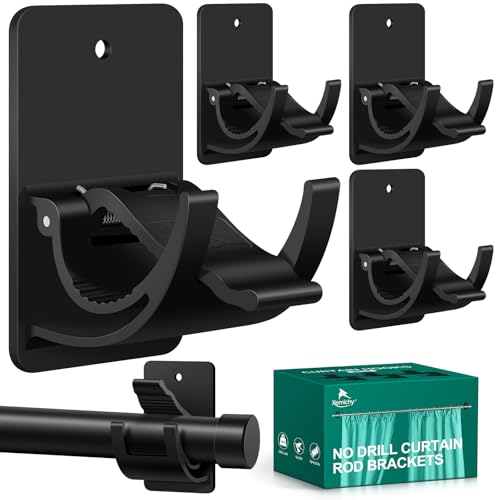
【No Drill Curtain Rod Brackets】You will receive 4 pcs self adhesive curtain rod holders using upgraded adhesive, sturdy and durable. The spring lock system ensures that the curtain rod is stable and does not slide. It fits curtain rods for windows or towel rods with diameters from 0.55 to 1.2 inches, perfect for shower curtain hooks, curtain hangers, and closet rod brackets

STURDY: Made of premium 304 stainless steel with incredible lifespan; Besides, the superb plating process makes them rustproof and be corroded despite even in humid environments
Ceiling Tracks and Cable Systems

Ceiling tracks and cable systems hand you a way to hang pictures on concrete walls without touching the wall itself. The track mounts to the ceiling, usually tucked into a recess or gap above a floating ceiling where it stays out of sight, and stainless steel cables drop down to hold the art. A standard system rated for up to 25 pounds per linear foot carries most frames and small canvases without strain.
This setup suits renters perfectly, since the concrete stays completely untouched and the only holes go into ceiling drywall or joists that a little spackle fixes later. Gallery-style arrangements get easier too; sliding the cable along the track or adjusting the hook height lets you move pieces around without new anchors or fresh dust from the drill. The tradeoff is upfront planning: you need enough ceiling access to install the track straight and true, and the cables hang in fixed vertical lines rather than wherever you want on the wall. For raw concrete you want to preserve, though, that tradeoff often wins.
Recommended Products

✔️M Size: 20pcs 40 x 19mm/ 1.6 x 0.75inch (L*W) non-marking nails. Maximum weight capacity is 8kg/17lbs. They are enough for daily changing and hanging picture frames in all corners of your home.
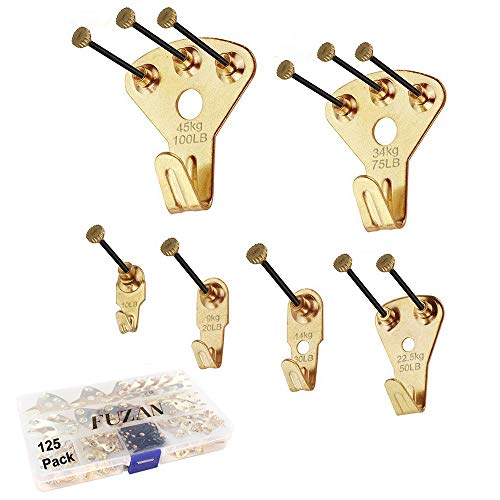
【Wide application】As an effective tool, 125 PCS picture hangers is widely applicable to most items in the home or office. It can hold 10-100 pounds and easily hang photos, decorations, clocks, clothes, kitchenware, small ledges, canvas.

Lightweight Items Only Application: designed for lightweight photos, small art prints, keys and small decor; Not suitable for large picture frames, thick coats, mirrors or heavy items; Please confirm the size before purchasing
Hammer Drills and Masonry Bits

A standard drill spins the bit; a hammer drill adds a rapid back-and-forth pounding motion that fractures concrete as it cuts. Without that hammering action, the bit skates, overheats, and barely dents the surface.
Masonry bits are non-negotiable here. Their carbide-tipped flutes are built to take the abuse, and the dust needs somewhere to go. The manufacturer for your specific fasteners will list the exact bit diameter, hole depth, embedment, and edge distance; those numbers change from product to product, so the package is worth reading twice. Mark the required depth on the bit with tape so you know when to stop. Keep the drill perpendicular to the wall, pull it out periodically to clear dust with a vacuum, and skip the compressed air; NIOSH guidance warns against blowing silica dust around. Wear eye, respiratory, and hearing protection while you work.
Recommended Products

Tree-Shape Wall Anchors: Special expanding design with jagged edges provides strong holding power in drywall, concrete, brick, stucco, and wood walls.

Among the Strongest Picture Hooks Available - Holds 110lbs: Heavy-duty zinc-plated steel hooks engineered for your heaviest pictures, mirrors, canvases & wall art. No more wondering if a hook can take the weight.

HANGS HEAVY ART ON MASONRY: This masonry picture hanger mounts heavy framed pieces, mirrors, and shelves on brick, block, and concrete walls, holding securely with no wall stud needed and no heavy drilling or expansion anchors to set.
Frequently Asked Questions
Recommended Products
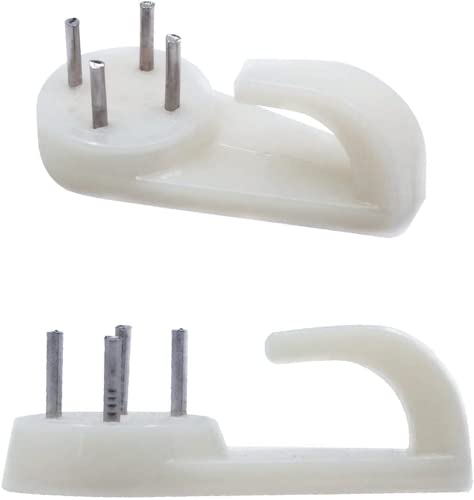
[The Size Of It] Picture Frame Hooks M:1.57"*0.75" Load Weight 20 LBS; L:2.01 "*0.83" Load Weight 30 LBS, Complete installation in 30s
Value Pack: It includes 30 PCS picture hangers with a storage box. Each one is 1.65*0.79 inch. Enough quantities with bigger size, great value to buy

TRUSTED STRENGTH: Pack of five 15 lb. 3M CLAW(TM) Drywall Picture Hangers; each picture hanger made of hardened steel, proven to hold 15 lbs., so you can hang decor, such as pictures, mirrors and other heavy objects; Also includes five spot markers
What is the best way to hang pictures on concrete walls?
The best method depends on weight. Use adhesive wall hooks for anything under 6 pounds, hardwall hangers for 20 to 30 pounds, and masonry screws for anything heavier. Match the hardware to your wall condition too: painted or sealed concrete may reject adhesive, and crumbling concrete needs mechanical fasteners into solid substrate.
How much weight can adhesive hooks hold?
Two adhesive wall hooks together hold up to 6 pounds total. That covers most single 8-by-10 or 11-by-14 frames in standard glass and wood. One hook alone holds less, so pair them for anything near the limit.
What tools do I need to hang pictures on concrete walls?
For adhesive hooks, you only need rubbing alcohol and a clean cloth. For hardwall hangers, a hammer and needle-nose pliers do the job. For masonry screws, you need a hammer drill, masonry bits sized to your fastener specs, a level, measuring tape, and eye, respiratory, and hearing protection. A HEPA vacuum controls silica dust better than compressed air.